

In a rapidly growing global economy, supply chains have become one of the most important sources of competitive advantage. Businesses that understand where competitors source products, how strong their supplier networks are, and which markets they serve, can help them make more informed strategic decisions. This is where Competitor Supply Chain Analysis along with trade intelligence becomes important.
By leveraging import-export data, shipment records, supplier information, and trade flows, organizations can gain deeper visibility into competitor supply-chain structures, strengths, vulnerabilities, and market positioning. These insights help businesses identify opportunities, mitigate risks, and enhance operational efficiency.
What Is Competitor Supply Chain Analysis?
Competitor Supply Chain Analysis is the process of evaluating a competitor’s sourcing, procurement, manufacturing, logistics, and distribution activities to gain a deeper understanding of their operational strategy. Using trade intelligence and import-export data, businesses can uncover valuable insights into supplier relationships, sourcing locations, shipment patterns, product movements, and market reach. These insights enable organizations to analyze competitor operations, assess supply chain resilience, and identify strategic opportunities for growth and differentiation.
Key Aspects of Competitor Supply Chain Analysis
Recent global changes have demonstrated the importance of supply chain visibility. Organizations that understand their competitors’ supply-chain strengths and weaknesses are better positioned in the highly competitive market. Trade intelligence supports Competitor Supply Chain Analysis in several critical areas:
Identifying Supplier Networks
A competitor’s supplier can reveal valuable insights into its sourcing strategy, operational efficiency, and supply chain resilience. By analyzing trade data, businesses can better understand supplier relationships and identify opportunities to strengthen their own strategies. Through Competitor Supply Chain Analysis, organizations can identify:
- Primary and secondary suppliers
- Manufacturing locations
- Preferred sourcing regions
- Supplier concentration risks
Understanding supplier relationships can help businesses discover vendors and improve procurement strategies.
Identifying Product Flow Patterns
Trade data provides valuable insights into how products move across global supply chains, helping businesses understand competitor demand trends, inventory strategies, and market demands. By analyzing product flow patterns, organizations can uncover insights that support more informed planning and competitive decision-making. Companies can analyze:
- Shipment frequencies
- Trade volumes
- Product categories
- Seasonal fluctuations
These insights help businesses understand competitor demand patterns and supply planning strategies.
How Trade Intelligence Reveals Supply-Chain Strengths
Trade intelligence provides businesses with valuable insights into competitor sourcing and distribution strategies. By analyzing trade patterns and supply chain activities, organizations can gain assistance in:
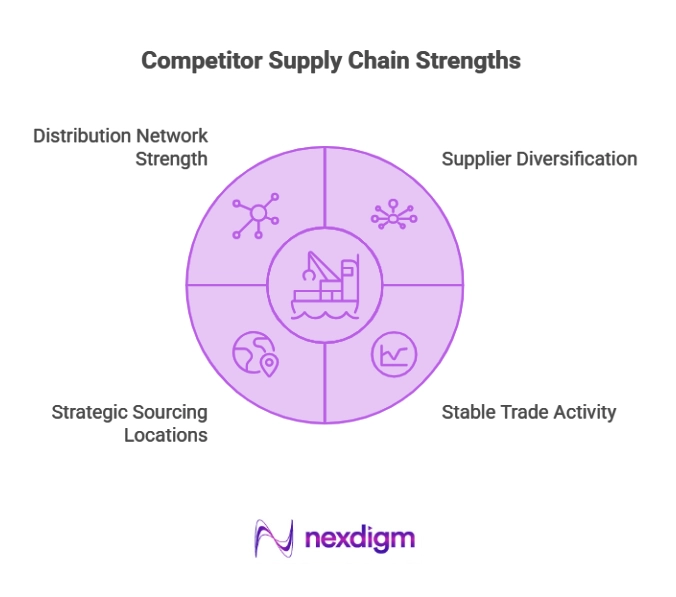
- Supplier Diversification: A diversified supplier network reduces dependency on individual vendors and helps ensure greater resilience against disruptions, pricing fluctuations, and changing market conditions.
- Stable Trade Activity: Consistent import and export volumes often indicate strong supplier relationships, reliable demand forecasting, efficient logistics operations, and overall supply chain stability.
- Strategic Sourcing Locations: The selection of sourcing regions can reveal cost optimization strategies, access to specialized manufacturing capabilities, proximity to raw materials, and logistics advantages.
- Distribution Network Strength: A broad distribution demonstrates the ability to serve multiple markets, reduce regional dependencies, and support sustainable business growth.
How Trade Intelligence Reveals Supply-Chain Exposure
While trade intelligence helps identify supply chain strengths, it can also reveal challenges that may impact business continuity and operational performance. By analyzing the following factors, organizations can identify potential risks within competitor supply chains and assess their level of exposure:
- Over-Reliance on Single Suppliers: Trade intelligence helps identify whether competitors have concentrated supplier networks that may be vulnerable to disruptions, price changes, or supplier-related challenges.
- Geographic Dependence: Heavy reliance on specific countries or regions can increase exposure to external factors such as geopolitical events, trade regulations, tariffs, and transportation disruptions. Thus, trade analysis provides insights into the level of regional concentration within competitor supply chains.
- Logistics Bottlenecks: Trade data can reveal potential logistics challenges through shipment delays, declining trade activity, or overdependence on specific transportation routes and ports.
Business Applications of Competitor Supply Chain Analysis
Competitor Supply Chain Analysis helps organizations convert trade intelligence into strategic business decisions. By understanding how competitors’ source, distribute, and manage their supply chains, businesses can identify opportunities for:
- Strategic Procurement: Procurement teams can identify alternative suppliers and benchmark sourcing strategies against competitors.
- Market Expansion Planning: Organizations can evaluate regions where competitors are increasing distribution activity and assess market potential.
- Risk Management: Supply-chain exposure analysis enables proactive risk mitigation and contingency planning.
- Competitive Positioning: Businesses can benchmark operational efficiency and uncover opportunities to differentiate from competitors.
Why Businesses Trust Nexdigm for Competitor Supply Chain Analysis
Nexdigm combines deep industry expertise and helps businesses assess supply chain visibility through advanced trade intelligence and analytics. The strategic solutions enable businesses to conduct comprehensive Competitor Supply Chain Analysis, helping them with:
- Identifying competitor supplier networks and sourcing strategies
- Tracking import-export activities across global markets
- Measuring supply-chain concentration and exposure risks
- Monitoring product movement and trade trends
- Benchmarking operational resilience against industry competitors
By combining industry knowledge, data analytics, and global trade intelligence, Nexdigm supports businesses to make smarter decisions, strengthen supply-chain resilience, and gain sustainable competitive advantage.
Nexdigm’s Case
Nexdigm supported a manufacturer with trade intelligence to assess competitor sourcing networks, supplier concentration, geographic reach, and disruption exposure. Within eight months, the engagement identified 17% supply-risk reduction opportunities, expanded alternative supplier coverage, improved sourcing visibility by 15%, and strengthened resilience planning across six strategic international markets.
To take the next step, simply visit our Request a Consultation page and share your requirements with us.
Harsh Mittal
+91-8422857704