

The connected device ecosystem is expanding beyond hardware ownership toward control of platforms, connectivity layers, software intelligence, and data ecosystems. Enterprises, technology providers, telecom operators, semiconductor companies, and investors are increasingly evaluating where long-term value will accumulate across the connected-device value chain.
Recent market indicators highlight the scale of opportunity. The number of connected IoT devices worldwide is expected to exceed 29 billion by 2030, driven by industrial automation, smart infrastructure, healthcare, mobility, and consumer applications. Additionally, global IoT spending continues to grow as enterprises prioritize connected operations, real-time monitoring, and data-driven decision-making.
However, value capture remains fragmented. Hardware manufacturers compete with cloud platforms, connectivity providers, software companies, and data platforms for control over customer relationships and ecosystem ownership.
For device manufacturers, platform companies, telecom providers, semiconductor firms, investors, private-equity firms, enterprise technology companies, and strategy teams, a Connected device ecosystem market analysis helps evaluate market structure, adoption trends, competitive positioning and future growth opportunities.
Why Connected Device Ecosystem Control Matters
Connected device ecosystems create value across multiple interconnected layers, enabling businesses to enhance efficiency, unlock insights, and drive innovation.
- Hardware Layer: Devices, sensors, processors, and embedded systems form the foundation of connected ecosystems. Evaluating market demand, supply chain dynamics, manufacturing innovations, and product differentiation is essential for building competitive and scalable solutions.
- Connectivity Layer: Reliable networks enable seamless communication between devices, platforms, and enterprise applications. Understanding connectivity technologies, infrastructure requirements, ecosystem partnerships, and deployment opportunities is critical to ensuring performance and scalability.
- Data Layer: Data generated by connected devices powers insights, automation, predictive capabilities, and new business models. Evaluating data utilization strategies, analytics potential, and monetization opportunities helps organizations transform information into measurable business outcomes.
The future of the connected device ecosystem will be defined by those who can effectively integrate hardware, connectivity, platforms, and data. Organizations that control and optimize these interconnected layers will be best positioned to capture long-term value, drive innovation, and strengthen their competitive advantage.
Why Partner with Nexdigm for Connected Device Ecosystem Insights?
Nexdigm helps businesses navigate the evolving connected-device landscape through comprehensive market intelligence, ecosystem mapping, competitive benchmarking, and growth opportunity assessments.
By analyzing the entire value chain, from hardware and connectivity to platforms and data, Nexdigm enables organizations to identify emerging trends, evaluate strategic positioning, and make informed decisions that drive sustainable growth and ecosystem leadership.
How Nexdigm Supports Connected Device Ecosystem Market Analysis
As connected technologies reshape industries, organizations need a clear understanding of where value is being created and captured across the ecosystem. Nexdigm’s experts conduct Connected device ecosystem market analysis that helps businesses, investors, and technology providers evaluate market dynamics by:
- Ecosystem & Value Chain Mapping: Analysis of relationships across hardware, connectivity, platforms, software, and data layers to identify key value drivers, market participants, and ecosystem control points.
- Market Sizing & Growth Opportunity Assessment: Evaluation of market potential, adoption trends, demand drivers, and future growth opportunities across industries, use cases, and geographies.
- Competitive Intelligence & Strategic Positioning: Assessment of competitor strategies, technology differentiation, partnership networks, and market positioning to support informed decision-making and investment planning.
Nexdigm’s market analysis provides organizations with the insights needed to navigate ecosystem complexity, identify high-value opportunities, and build strategies that drive sustainable growth in an increasingly connected world.
Key Areas Assessed in Nexdigm’s Connected Device Ecosystem Analysis
Nexdigm evaluates the critical components shaping ecosystem competitiveness and long-term value creation across the connected device landscape. This involves evaluation of the following major areas:
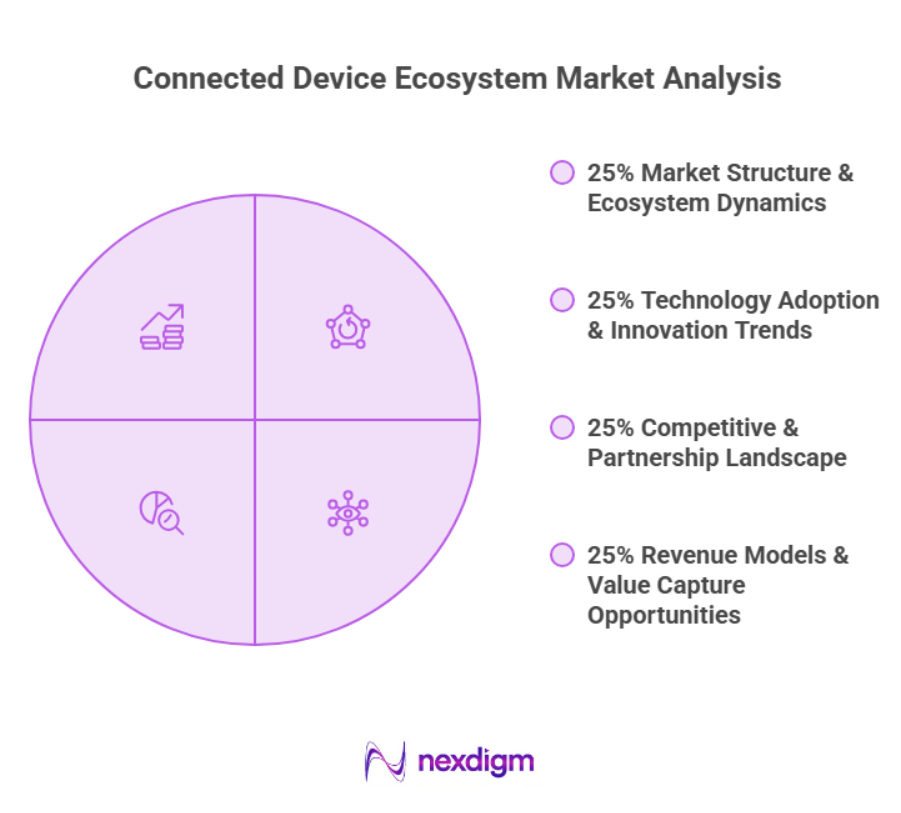
- Market Structure & Ecosystem Dynamics: Understanding the roles of device manufacturers, platform providers, connectivity operators, semiconductor companies, and data platform vendors.
- Technology Adoption & Innovation Trends: Tracking developments in IoT, AI, edge computing, cloud platforms, and next-generation connectivity technologies.
- Competitive & Partnership Landscape: Assessing market positioning, strategic alliances, ecosystem collaboration models, and emerging disruptors.
- Revenue Models & Value Capture Opportunities: Analyzing how organizations generate, retain, and monetize value across hardware, software, connectivity, and data layers.
By assessing these critical ecosystem dimensions, Nexdigm helps organizations identify strategic opportunities, anticipate market shifts, and strengthen their position within the evolving connected-device value chain.
Business Impact of Nexdigm’s Connected Device Ecosystem Market Analysis
Nexdigm’s comprehensive Connected device ecosystem analysis helps organizations understand evolving market dynamics, identify growth opportunities, and make informed strategic decisions across the connected-device value chain. This lets businesses gain the following benefits of:
- Identifying High-Growth Opportunities: Uncovering emerging applications, industry use cases, and technology segments with the greatest revenue and investment potential.
- Strengthened Competitive Positioning: Assessment of competitors, ecosystem leaders, and market disruptors to refine business strategies and differentiate offerings.
- Optimized Partnership & Ecosystem Strategies: Identify strategic partners across hardware, connectivity, software, and data layers to enhance market reach and ecosystem influence.
- Support Product & Innovation Roadmaps: Aligning of product development initiatives with customer needs, technology trends, and future market requirements.
- Enabled Informed Investment Decisions: Evaluated market attractiveness, acquisition opportunities, and ecosystem value pools to support growth and investment planning.
By leveraging these benefits, businesses can better navigate market complexity, prioritize growth opportunities, and build strategies that drive innovation, competitive advantage, and long-term value creation.
Nexdigm’s Case
A global technology company engaged with Nexdigm to evaluate connected device ecosystem opportunities across hardware, connectivity, platforms, and data monetization models. The assessment mapped 40+ ecosystem players, identified high-potential market opportunities, and improved partnership prioritization by 18%, enabling stronger ecosystem positioning and a focused market expansion strategy.
To take the next step, simply visit our Request a Consultation page and share your requirements with us.
Harsh Mittal
+91-8422857704