

In a world where copper hits USD 9,800/ton, crude swings USD 20 in a quarter, and freight rates spike 4× overnight, procurement cannot rely on guesswork anymore.
Cost competitiveness now depends on real-time commodity intelligence, not retrospective reports.
Volatile global markets, shifting production hubs, and geopolitical shocks are reshaping how procurement teams operate. Inflation alone added USD 1.9 trillion to global input costs, making procurement decisions more strategic and data-dependent than ever.
To stay ahead, procurement leaders need forward-looking intelligence, not historical charts.
The Hidden Challenges Procurement Teams Face Today
Even the strongest procurement teams are navigating unprecedented uncertainty, and these challenges hit margins the fastest:
- Price Volatility That Outpaces Forecasting Models: Over USD 1.9 trillion in global input inflation was recorded in 2024.
- Supply Chain Shocks Spread Faster Than Ever: Freight rates on key Asia–EU lanes surged 200–250% in weeks.
- Weak Visibility Into Tier-2 and Tier-3 Supplier Costs: Only 27% of companies have full Tier-2+ supply chain transparency.
- Inflation Drivers Are Multi-Layered and Unpredictable: Energy price spikes alone added USD 600 billion to global manufacturing costs in 2024.
Smarter Commodity Tracking With Historical + Forward Indicators
Procurement teams often react late because they lack structured visibility. Nexdigm bridges this gap with a research-led commodity intelligence model that blends 5–10 years of price history with real-time global indicators.
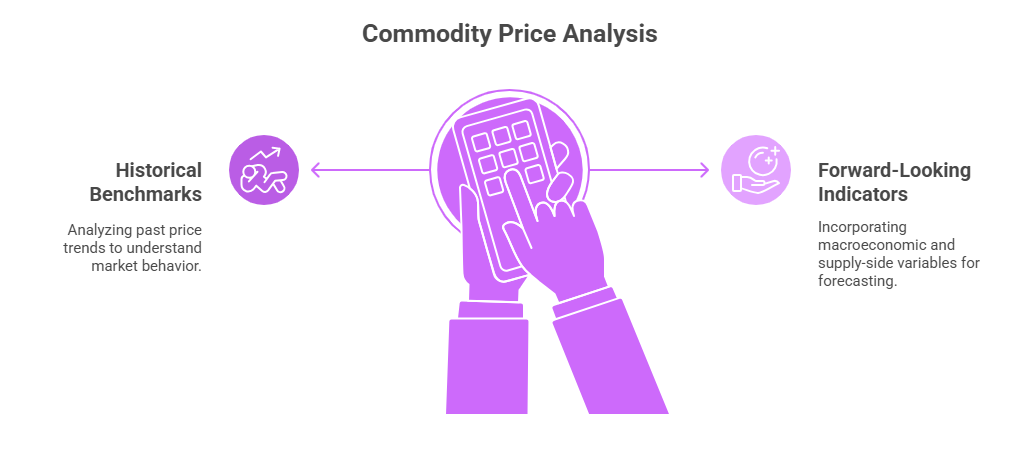
Historical Benchmarks That Add Context
We analyze long-term price curves using globally trusted sources such as LME, USDA, and Platts. This helps procurement teams understand:
- How current metal prices compare to past inflation cycles
- How supply disruptions (like 2021–22 shipping crisis) affected input costs
- How demand shifts in China/EU influence global commodity floors
Example: Aluminum touching USD 2,400/ton today means nothing unless benchmarked against its 10-year volatility band of USD 1,500–3,200/ton.
Forward-Looking Signals That Protect Margins
Our forecasting integrates:
- Crude oil benchmarks
- Production output indices
- Currency fluctuations (USD strength affects >70% of global commodities)
- Geopolitical tensions (Red Sea, Russia, Latin America)
- Weather disruptions impacting agriculture supply
This allows procurement teams to spot risks 3–6 months early, reshaping sourcing plans before costs escalate.
Decoding Input Cost Structures & Inflation Drivers
Most procurement conversations fail because stakeholders don’t know what truly drives cost inflation.
Nexdigm breaks down the full input-cost stack allowing precise forecasting.
We model inflation using:
- Producer Price Index (PPI) trends
- Currency movement data (INR lost 10 units against USD in 36 months)
- Freight benchmarks (Shanghai–Rotterdam rates spiked from USD 1,400 to USD 4,800)
- Policy changes (export bans, tariff revisions)
This transparency empowers teams to negotiate better, hedge smartly, and diversify suppliers before risk hits margins.
Nexdigm Case
A mid-sized consumer electronics company faced metal price volatility that inflated annual budgets by USD 6–8 million. Nexdigm built a commodity intelligence dashboard using 10-year pricing, supply signals, and currency-risk models. Within six months, the company improved forecast accuracy by 28%, renegotiated key supplier contracts, and stabilized yearly margins.
To take the next step, simply visit our Request a Consultation page and share your requirements with us.
Harsh Mittal
+91-8422857704