

Credit card pricing analysis helps issuers optimize interest rates, annual fees, interchange economics, rewards, penalties, and promotional offers as card spending reaches record levels. Through advanced Pricing Analysis Services, financial institutions can evaluate customer segments, revolving balances, payment behavior, credit risk, competitor products, acquisition costs, reward structures, and spending patterns.
These insights reveal profitable pricing opportunities, affordability thresholds, retention risks, and portfolio margin gaps. Effective analysis supports interest rate benchmarking, fee optimization, rewards strategy, customer segmentation, and profitability management, enabling issuers to strengthen card acquisition, increase activation, encourage spending, protect margins, and sustain responsible portfolio growth across competitive markets.
An illustrative 12% improvement in credit card pricing accuracy can strengthen portfolio performance. Pricing Analysis Services assess interest rates, annual fees, rewards, customer behavior, credit risk, and competitor offers, helping issuers increase activation, encourage spending, protect margins, and improve retention.
Pricing Analysis for Cardholder Acquisition, Activation, and Retention
Pricing analysis aligns interest rates, annual fees, rewards, customer value, and competitive positioning to attract new cardholders, increase activation, encourage usage, and strengthen long-term customer retention. Some core steps of it are:
Step 1: Assess Cardholder Segments
Analyze customer demographics, spending habits, credit profiles, income levels, and lifestyle preferences to develop pricing strategies aligned with distinct acquisition and engagement opportunities.
Step 2: Benchmark Rates, Fees, and Rewards
Compare interest rates, annual fees, reward programs, cashback offers, introductory promotions, and competitor benefits to identify pricing gaps and strengthen market competitiveness.
Step 3: Optimize Acquisition and Activation Pricing
Evaluate welcome bonuses, introductory APRs, joining fees, and promotional incentives to maximize new card applications, improve activation rates, and encourage early card usage.
Step 4: Balance Profitability and Customer Value
Assess funding costs, interchange income, credit risk, reward expenses, and servicing costs to establish sustainable pricing that supports portfolio profitability and customer satisfaction.
Step 5: Monitor Retention and Spending Performance
Track card activation, transaction frequency, spending patterns, reward redemption, attrition, and portfolio margins to refine pricing strategies and improve long-term cardholder loyalty.
Nexdigm’s Expertise in Credit Card Pricing and Cardholder Lifecycle Optimization
Nexdigm’s Pricing Analysis Services help card issuers optimize the entire customer lifecycle through credit card pricing analysis, interest rate optimization, annual fee benchmarking, rewards pricing strategy, competitive pricing intelligence, and portfolio profitability analysis. By evaluating cardholder behavior, spending patterns, credit risk, competitor offerings, reward economics, and market trends, Nexdigm enables financial institutions to enhance acquisition, accelerate card activation, improve customer retention, strengthen portfolio profitability, and sustain long-term competitive growth.
Nexdigm’s Strategic Roadmap for Cardholder Acquisition, Activation, and Retention
Nexdigm’s roadmap integrates customer segmentation, competitive pricing, reward economics, behavioral insights, and portfolio analytics to strengthen card acquisition, accelerate activation, increase usage, and improve long-term retention sustainably. Data Driven steps followed by Nexdigm’s experts are:
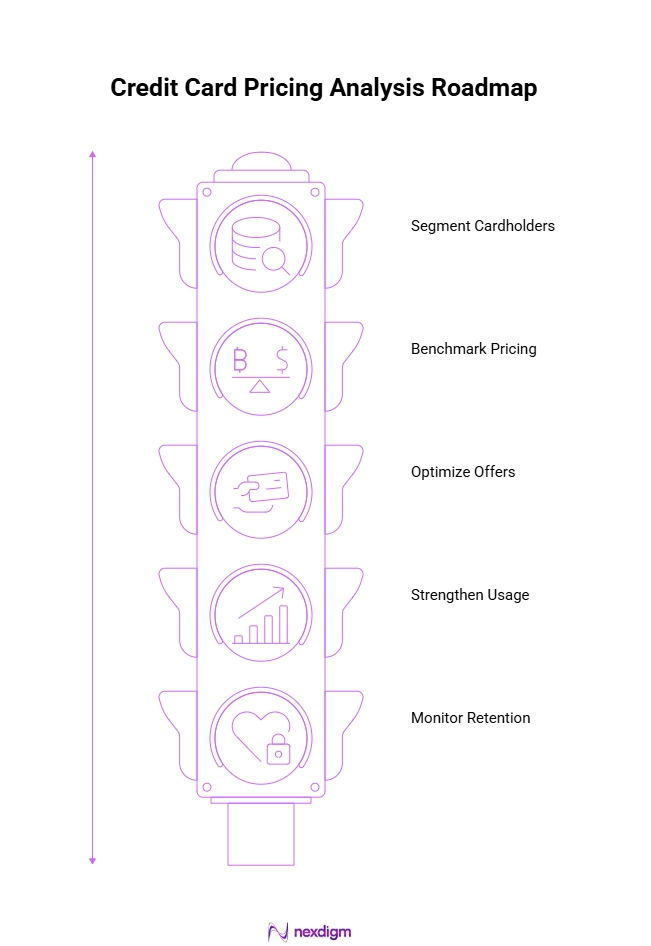
Step 1: Segment Target Cardholders
Analyze income, credit profiles, spending preferences, lifestyle needs, and customer value to identify priority segments and design relevant card propositions.
Step 2: Benchmark Pricing and Benefits
Compare annual fees, interest rates, rewards, cashback, welcome offers, and competitor features to identify market gaps and strengthen card positioning.
Step 3: Optimize Acquisition and Activation Offers
Develop targeted joining incentives, introductory rates, fee waivers, and early-spend rewards to improve applications, accelerate activation, and encourage initial card usage.
Step 4: Strengthen Usage and Customer Value
Align rewards, category benefits, credit limits, and promotional offers with spending behavior to increase transaction frequency, card preference, and portfolio revenue.
Step 5: Monitor Retention and Refine Pricing
Track inactivity, attrition, reward redemption, spending patterns, service costs, and profitability to refine pricing and strengthen long-term cardholder loyalty.
Nexdigm’s Case
Nexdigm helped a leading card issuer optimize pricing, rewards, and acquisition strategies. The initiative increased new card activations by 14%, improved active card usage by 11%, and enhanced portfolio profitability by 13%, strengthening long-term customer retention and sustainable growth.
To take the next step, simply visit our Request a Consultation page and share your requirements with us.
Harsh Mittal
+91-8422857704