

Crop value chain pricing strategy consulting helps agribusinesses align prices across input suppliers, farmers, aggregators, processors, distributors, retailers, and end markets. Through comprehensive Pricing Analysis Services, companies can evaluate input costs, production economics, transfer prices, channel margins, market demand, competitor positioning, logistics expenses, and customer willingness to pay.
These insights identify margin gaps, pricing inefficiencies, value-sharing opportunities, and profitability risks throughout the crop value chain. Effective pricing strategies support cost recovery, channel alignment, value-based pricing, portfolio optimization, and revenue planning, enabling agricultural businesses to strengthen stakeholder relationships, improve price realization, protect margins, and achieve sustainable end-to-end commercial growth.
Pricing Analysis Across the Crop Value Chain for Sustainable Growth
Pricing analysis aligns costs, margins, demand, and value across input suppliers, farmers, processors, distributors, and end markets, supporting equitable returns, commercial resilience, stronger competitiveness, and sustainable growth throughout. Some core benefits of it are:
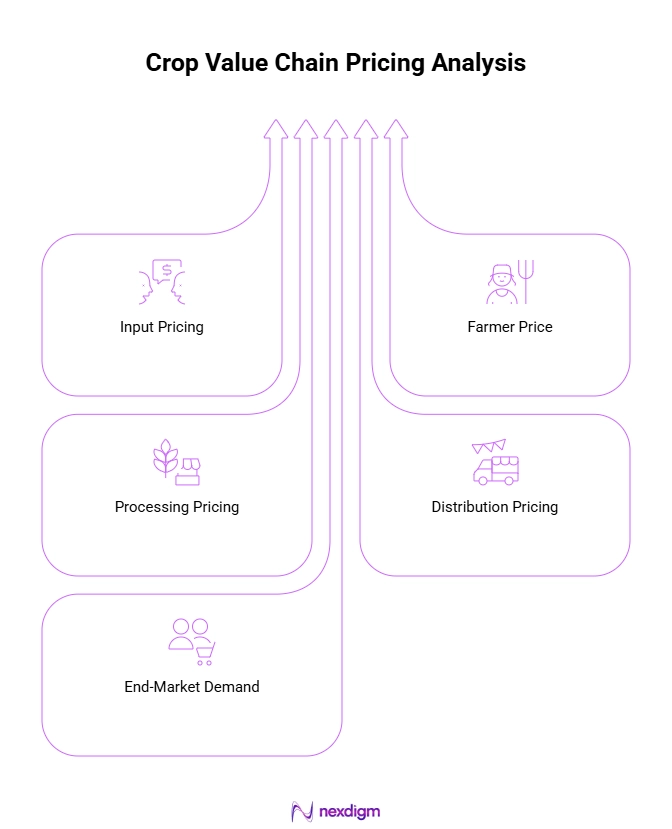
- Input Pricing and Cost Alignment: Assess seed, fertilizer, crop protection, machinery, and financing costs across suppliers. Benefits include improved affordability, transparent cost recovery, stronger demand, and sustainable supplier margins.
- Farmer Price Realization: Evaluate production costs, crop quality, market access, seasonal supply, and negotiation power. Benefits include fairer returns, improved income stability, stronger participation, and production continuity.
- Processing and Value-Addition Pricing: Analyze procurement prices, processing expenses, quality premiums, wastage, and conversion economics. Benefits include efficient value distribution, protected margins, improved capacity utilization, and stronger product differentiation.
- Distribution and Channel Margin Optimization: Review logistics, storage, wholesale margins, retailer markups, commissions, and discounts. Benefits include reduced margin leakage, consistent prices, wider market reach, and stronger channel partnerships.
- End-Market Demand and Pricing: Assess consumer preferences, competitor prices, product quality, affordability, and willingness to pay. Benefits include accurate market positioning, stronger adoption, improved revenue, and sustainable value-chain growth.
Nexdigm’s Role in Aligning Crop Prices from Inputs to End Markets
Nexdigm’s Pricing Analysis Services help agribusinesses align pricing across the entire crop value chain through crop value chain pricing strategy consulting, agricultural pricing analysis, value chain price optimization, competitive pricing intelligence, market price benchmarking, and channel pricing strategy. By evaluating input costs, farmer economics, processing margins, distribution channels, and end-market demand, Nexdigm enables organizations to improve price realization, optimize margins, strengthen stakeholder alignment, and drive sustainable commercial growth.
Nexdigm’s End-to-End Crop Value Chain Pricing Blueprint
Nexdigm’s pricing blueprint integrates value chain economics, stakeholder margins, market demand, and competitive intelligence to optimize pricing, improve profitability, strengthen collaboration, and support sustainable agricultural growth. Data Driven types followed by Nexdigm’s experts are:
Type 1: Input Cost-Based Pricing
Evaluate seed, fertilizer, crop protection, labor, logistics, and production costs to establish sustainable pricing foundations while maintaining supplier viability and farmer affordability.
Type 2: Value-Based Market Pricing
Align prices with product performance, quality, yield potential, customer value perception, and willingness to pay to maximize adoption and long-term commercial success.
Type 3: Channel Margin Optimization Pricing
Assess distributor, wholesaler, retailer, and processor margins to create balanced pricing structures that reduce margin leakage and strengthen value chain partnerships.
Type 4: Competitive Benchmark Pricing
Compare competitor prices, regional pricing strategies, product positioning, and promotional activities to identify market opportunities and enhance commercial competitiveness.
Type 5: Dynamic Demand-Driven Pricing
Continuously monitor seasonal demand, supply fluctuations, commodity trends, and customer buying behavior to refine pricing strategies and sustain profitability across the crop value chain.
Nexdigm’s Case
Nexdigm helped an agribusiness align pricing across its crop value chain. The initiative improved price realization by 13%, reduced margin leakage by 9%, and increased channel profitability by 11%, strengthening stakeholder alignment and sustainable commercial growth.
To take the next step, simply visit our Request a Consultation page and share your requirements with us.
Harsh Mittal
+91-8422857704