
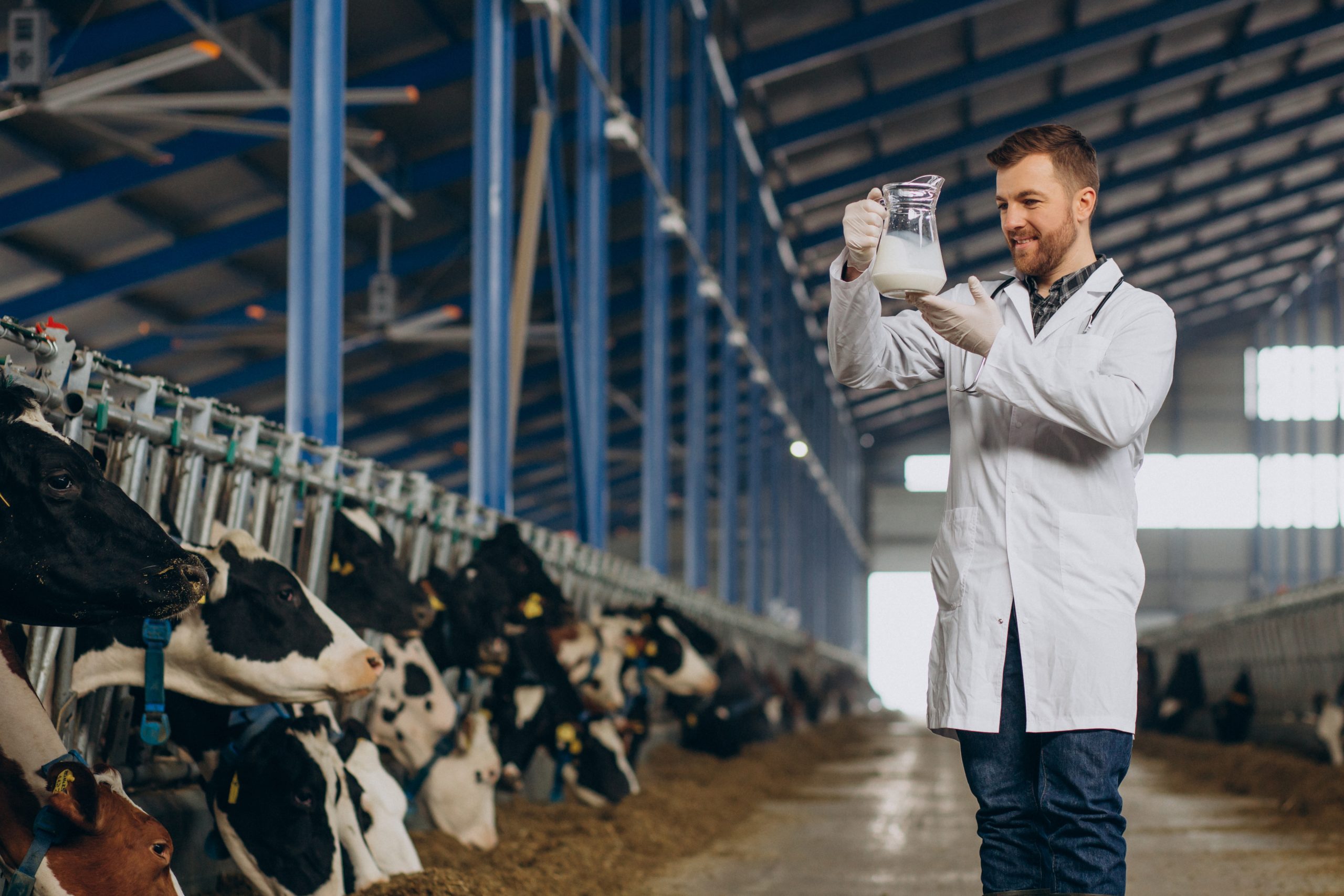
Dairy procurement depends on a supplier network that is considerably more fragmented than the final packaged product might suggest. Milk collection centres, individual farmers, dairy cooperatives, bulk milk coolers, transportation providers, feed suppliers, veterinary service providers and processing facilities all contribute to the reliability of the supply chain.
For dairy processors and businesses sourcing milk at scale, supplier risk can emerge at almost any stage. Inconsistent milk quality, adulteration, delayed collection, inadequate chilling, animal health issues and poor traceability can affect both procurement economics and product safety.
The scale of India’s dairy industry makes these challenges especially relevant. National milk production reached approximately 247.87 million tonnes in 2024–25, representing growth of 3.58% over the previous year. The sector’s extensive network of producers and collection points creates opportunities for procurement expansion, but it also makes supplier monitoring more demanding.
Dairy supplier risk research and evaluation helps organisations understand where their procurement networks are vulnerable, which suppliers require closer scrutiny and how sourcing decisions can be strengthened.
Where Supplier Risks Emerge Across Dairy Procurement
Milk quality varies across collection networks
Milk quality can differ according to animal health, feed quality, hygiene, handling practices and the time elapsed between milking and chilling. When procurement involves numerous farmers and collection centres, maintaining consistent quality becomes difficult.
Potential issues include variations in fat and solids-not-fat content, microbial contamination, antibiotic residues and adulteration. These can affect processing yields, product consistency and compliance with food safety requirements.
A supplier may meet volume requirements while delivering milk with inconsistent quality parameters. If quality assessment takes place only at the processing facility, buyers may have limited visibility into where the problem originated.
Inadequate chilling creates supply-chain exposure
Milk is highly perishable and requires appropriate handling and temperature management after collection. Delays in chilling or transportation can accelerate microbial growth and compromise product quality.
Risk can arise from insufficient bulk milk cooling capacity, equipment failures, unreliable electricity, poor maintenance or transportation delays.
These issues are particularly relevant in geographically dispersed procurement networks, where milk travels through several collection and aggregation points before reaching a processing facility.
Animal health and feed quality affect supplier reliability
Milk production depends on animal health, nutrition and farm management. Poor-quality feed, inadequate veterinary support and disease outbreaks can affect production volumes and milk quality.
Suppliers may also face fluctuations in feed costs and availability, which can influence their ability to maintain consistent production. For buyers, this creates an indirect dependency on upstream suppliers that may not be visible in the milk procurement contract.
A dairy procurement network therefore needs to consider the conditions affecting farm-level production, not just the commercial performance of milk aggregators.
Supplier concentration creates operational dependence
Processors may rely heavily on a small number of collection networks, cooperatives or large suppliers for consistent volumes. While these relationships can provide procurement stability, excessive dependence creates exposure if a major supplier experiences operational or quality problems.
Smaller suppliers may provide useful geographic diversification, but managing a large number of individual relationships increases administrative and monitoring requirements.
The procurement challenge is to balance supplier diversification with the cost of managing quality, collection and logistics across a wider network.
Traceability gaps complicate risk investigations
When quality issues occur, organisations need to identify the affected collection point, supplier, batch and delivery period. Incomplete records can make this process difficult.
If procurement data, laboratory results, transportation records and supplier identities are maintained separately, buyers may struggle to trace the source of a problem quickly.
Weak traceability can increase investigation costs, complicate product recalls and undermine confidence in supplier quality controls.
Which Dairy Supplier Risks Deserve Priority?
Not every supplier presents the same level of exposure. A supplier providing a small volume of non-critical packaging material should not be evaluated using the same risk criteria as a major milk aggregator or chilling facility.
Organisations should prioritise risks according to their potential impact on product safety, supply continuity and financial performance.
Key areas include:
- Milk quality consistency and adulteration controls.
- Animal health, feed sourcing and veterinary oversight.
- Collection centre hygiene and chilling infrastructure.
- Transportation conditions and delivery reliability.
- Supplier concentration and geographic dependence.
- Batch traceability, laboratory testing and corrective-action procedures.
Buyers should also distinguish between risks that can be addressed through supplier improvement and those requiring alternative sourcing or tighter procurement controls.
How Organisations Can Strengthen Dairy Supplier Risk Management
A structured evaluation should begin with mapping the supplier network from farm level to processing facility. This helps organisations understand how milk moves through collection centres, aggregators, chilling facilities and transportation providers.
The next step is to evaluate suppliers against consistent criteria covering quality, food safety, infrastructure, capacity and operational reliability. Procurement teams should connect supplier information with laboratory results, delivery records and quality-related claims wherever available.
External market research can add another layer of visibility by identifying alternative suppliers, regional collection networks and differences in infrastructure or market concentration.
Nexdigm supports organisations through supplier intelligence, market assessment, procurement research and risk evaluation. Its research can help buyers assess dairy supplier markets, identify dependency risks and develop more informed sourcing strategies.
Dairy Supplier Risk Evaluation Framework
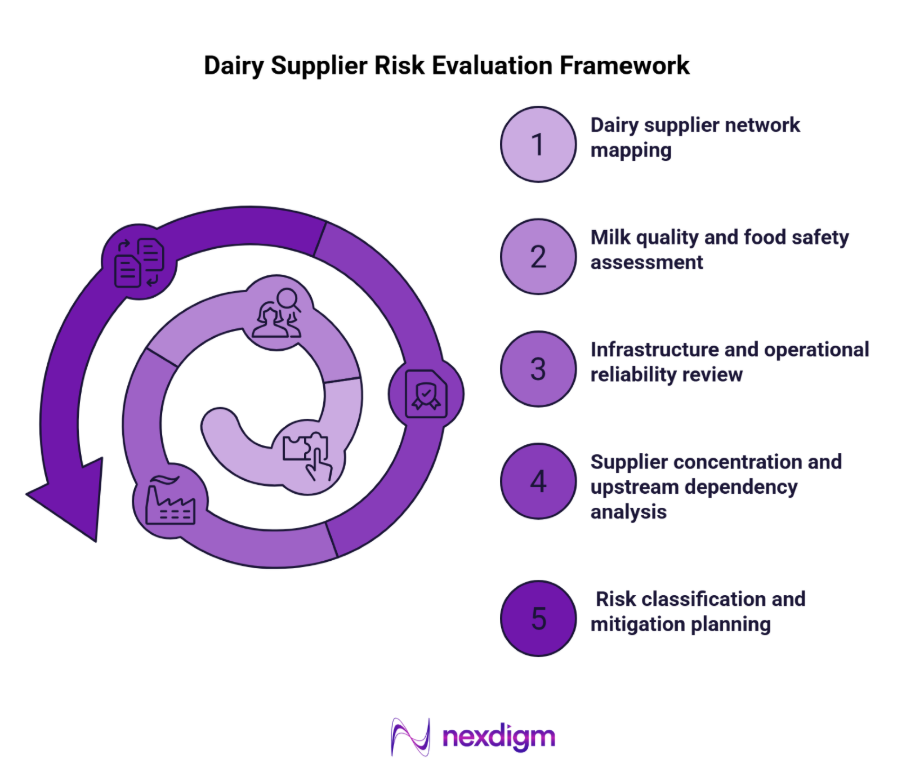
- Dairy supplier network mapping
Map farmers, cooperatives, collection centres, aggregators, chilling facilities, transportation providers and processors. Identify key dependencies and understand how procurement volumes are distributed across the network. - Milk quality and food safety assessment
Evaluate quality testing, adulteration controls, hygiene practices, antibiotic residue monitoring and compliance with relevant food safety requirements. Examine how suppliers respond to quality deviations. - Infrastructure and operational reliability review
Assess chilling capacity, equipment maintenance, electricity availability, transportation conditions and contingency arrangements. Identify facilities where operational weaknesses could interrupt supply or compromise quality. - Supplier concentration and upstream dependency analysis
Measure procurement dependence on major suppliers, collection networks and geographic clusters. Examine exposure to animal health issues, feed availability, seasonal production fluctuations and regional disruptions. - Risk classification and mitigation planning
Classify suppliers according to quality, operational, compliance and continuity risks. Define corrective actions, monitoring frequency, alternative sourcing options and escalation procedures for critical suppliers.
Nexdigm’s Case Study: Identifying Dairy Supplier Dependencies
Nexdigm assessed 24 dairy suppliers across 5 procurement regions and 4 supplier categories. The study identified 5 high-dependency relationships and developed a risk mitigation plan covering quality monitoring, chilling infrastructure and alternative sourcing.
To take the next step, simply visit our Request a Consultation page and share your requirements with us.
Harsh Mittal
+91-8422857704