

Delivery vehicle procurement has become a strategic decision for logistics companies balancing fleet capacity, operating costs, delivery timelines, and sustainability objectives. According to the International Energy Agency (IEA), electric truck sales doubled in 2025, reaching 9% of global truck sales, highlighting the expanding range of vehicle technologies available to fleet operators. Cost pressures remain equally important.
The American Transportation Research Institute reported that the average operating cost for US motor carriers was US$2.26 per mile in 2024, while truck and trailer purchase or lease payments increased by 8.3%. These developments make vehicle selection increasingly complex. Delivery vehicle procurement research can help logistics companies compare available options and align sourcing decisions with operational and financial requirements.
Why Delivery Vehicle Selection Requires Careful Evaluation
Logistics fleets operate across different routes, delivery volumes, cargo types, and service commitments. A vehicle suitable for urban deliveries may not meet the capacity or performance requirements of long-distance transportation. Procurement decisions must therefore consider payload, fuel efficiency, maintenance requirements, vehicle availability, financing arrangements, and after-sales support. Evaluating these factors together helps companies avoid unsuitable purchases and improve fleet utilization.
Factors That Shape Vehicle Procurement Decisions
Before selecting vehicles, logistics companies should assess three fundamental considerations:
- Capacity and Vehicle Suitability: Match payload, cargo dimensions, vehicle configuration, and route conditions with delivery volumes and operational requirements.
- Total Cost of Ownership: Compare acquisition or leasing costs, fuel or energy consumption, maintenance, insurance, financing, and expected resale value.
- Operating and Service Requirements: Evaluate vehicle reliability, service network coverage, spare-parts availability, warranties, and regulatory compliance across operating locations.
Considering these factors together helps companies select vehicles that balance operational performance with long-term commercial value.
Connecting Fleet Investments With Procurement Intelligence
Vehicle procurement decisions shape more than fleet size; they influence delivery capacity, operating economics, and long-term competitiveness. Nexdigm brings a market-oriented perspective to these decisions by helping logistics businesses understand vehicle supply markets, compare manufacturer offerings, and evaluate changing industry dynamics. This provides a stronger basis for aligning fleet investments with business growth and evolving transportation requirements.
How Nexdigm Supports Delivery Vehicle Procurement Research
Nexdigm can support logistics companies through delivery vehicle procurement research, helping them understand vehicle options and supplier markets before making sourcing decisions. Our research service can examine:
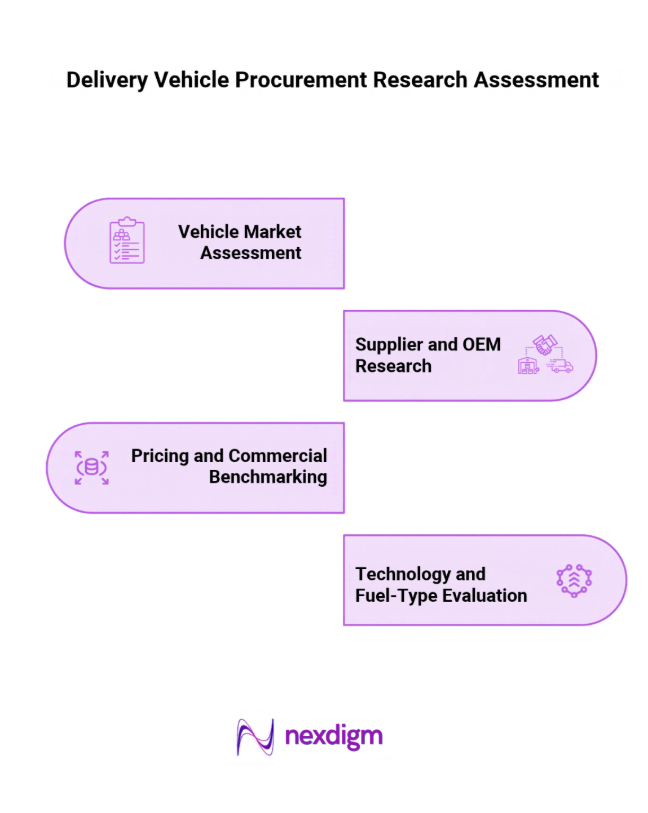
- Vehicle Market Assessment: Analyze available vehicle categories, manufacturers, models, specifications, and market developments to identify relevant sourcing options.
- Supplier and OEM Research: Evaluate manufacturers and dealerships based on product portfolios, market presence, service capabilities, and supply availability.
- Pricing and Commercial Benchmarking: Compare vehicle prices, leasing arrangements, warranty terms, financing options, and other commercial considerations across suppliers.
- Technology and Fuel-Type Evaluation: Examine diesel, CNG, hybrid, and electric vehicle options against route requirements, infrastructure availability, and operating considerations.
This research can give procurement teams a clearer understanding of available vehicles and the commercial factors influencing their selection.
Evaluating the Shift Towards Alternative-Fuel Delivery Vehicles with Nexdigm
The transition towards electric, CNG, and hybrid commercial vehicles is creating new considerations for logistics procurement teams. Nexdigm can help businesses examine technology adoption trends, manufacturer capabilities, vehicle availability, and supporting infrastructure across markets. This research can provide a clearer view of emerging sourcing alternatives and help logistics companies assess how fleet technology choices align with their operational priorities and future investment plans.
Nexdigm’s Support Towards Informed Fleet Investment Decisions
Nexdigm can help logistics businesses translate vehicle market research into practical investment considerations. Our research support can focus on:
- Vehicle Segment Benchmarking: Compare light, medium, and heavy commercial vehicles based on capacity, specifications, and suitability for different delivery operations.
- Market Price Intelligence: Track vehicle pricing across manufacturers, models, and markets to identify cost variations and competitive purchasing opportunities.
- Financing and Leasing Research: Examine available financing structures, leasing models, and commercial terms to support acquisition decisions.
- Supplier Market Mapping: Identify relevant manufacturers, authorised dealers, and regional suppliers to understand sourcing options and market coverage.
These insights can help procurement teams evaluate investment alternatives systematically and align fleet decisions with long-term operational and financial objectives.
Nexdigm’s Case
A logistics company planning to expand its delivery fleet wanted to identify suitable vehicles across different delivery segments while managing acquisition and operating costs. With Nexdigm’s research support, the assessment identified 18% potential cost optimization through vehicle and supplier comparisons, 15% scope for improving vehicle-category alignment, and 12% potential efficiency gains through better evaluation of maintenance and operating requirements. These findings helped the company refine its vehicle sourcing priorities and long-term operating needs.
To take the next step, simply visit our Request a Consultation page and share your requirements with us.
Harsh Mittal
+91-8422857704