

Digital banking platforms are becoming central to how financial institutions deliver payments, account services, lending, and customer engagement. The global digital banking platform market was estimated at $15.79 billion in 2026 and is projected to reach $31.08 billion by 2031, representing a 14.52% CAGR. Digital usage is also expanding rapidly: mobile banking apps recorded more than 500 million quarterly downloads in Q1 2026, with sessions increasing 10% year over year.
In India, the scale is particularly significant. UPI processed 24,161.69 crore transactions in FY2025–26, with transaction volume growing 30% year over year, while more than 700 banks were live on the platform. These trends are raising expectations for digital banking platforms to deliver seamless experiences while supporting integration, scalability, security, and resilient operations.
As platform capabilities and customer expectations evolve, comparing suppliers on individual features is no longer sufficient. Digital banking platform supplier benchmarking can help institutions evaluate providers against consistent measures of experience, integration, scalability, security, and enterprise fit.
Digital Banking Growth Is Raising Supplier Expectations
As digital channels become central to everyday banking, platform suppliers are increasingly expected to support more than customer-facing functionality. Institutions need providers that can integrate with complex technology environments, handle growing transaction volumes, maintain strong security, and adapt to changing customer and regulatory requirements. This makes supplier evaluation a broader exercise involving both current platform performance and long-term technology readiness.
Supplier Fit Depends on More Than Platform Features
A digital banking platform may offer extensive functionality but still create challenges if it is difficult to integrate, scale, secure, or operate. Three areas can provide a practical starting point:
- Customer Experience: Assess usability, personalization, omnichannel journeys, accessibility, and consistency across digital touchpoints.
- Technology Integration: Evaluate APIs, interoperability, data connectivity, core-system compatibility, and the ability to connect with external banking services.
- Scalability & Security: Examine transaction capacity, infrastructure flexibility, resilience, cybersecurity, authentication, and data-protection capabilities.
Together, these factors provide a more complete view of supplier suitability and help institutions assess whether a platform can support both today’s digital requirements and future banking needs.
Benchmarking Supplier Delivery Beyond Platform Capabilities
A strong digital banking platform also depends on how effectively the supplier can implement, support, and continuously improve it. Nexdigm can assess implementation experience, delivery resources, support structures, SLA performance, geographic coverage, partner ecosystems, and innovation capabilities. This provides institutions with a broader view of supplier performance, helping distinguish providers with strong technology propositions from those capable of delivering and sustaining them effectively in a banking environment.
How Nexdigm’s Experts Benchmark Digital Banking Suppliers
Nexdigm’s experts can structure digital banking platform supplier benchmarking around consistent criteria and institution-specific priorities rather than relying on generic supplier rankings. The process can involve:
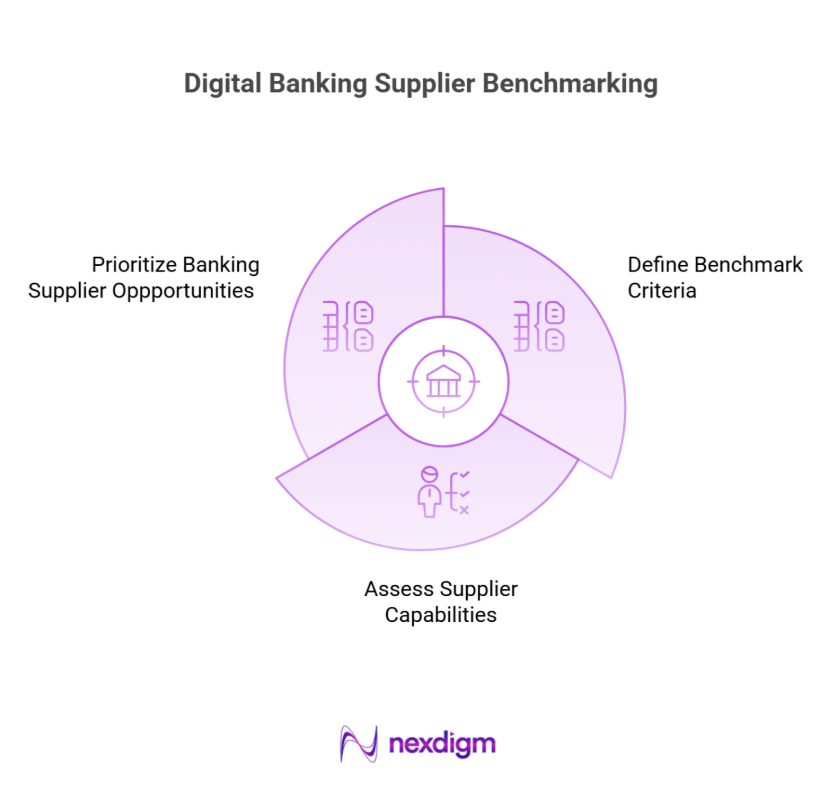
- Define Benchmark Criteria: Establish relevant measures for experience, integration, scalability, security, service performance, and commercial positioning based on the bank’s requirements.
- Assess Supplier Capabilities: Review platform functionality, implementation experience, technology architecture, security practices, delivery capabilities, and relevant market evidence.
- Compare & Prioritize: Benchmark suppliers against common reference points, identify capability differences and performance gaps, and prioritize providers that demonstrate stronger alignment with the institution’s digital strategy.
This approach helps turn supplier benchmarking into a structured decision-support exercise, giving banks a clearer basis for shortlisting providers, deeper due diligence, negotiations, or strategic technology decisions.
Nexdigm’s Benchmarking Supporting Stronger Supplier Decisions
The value of benchmarking extends beyond identifying which supplier scores higher. Nexdigm can translate comparative findings into practical decision inputs by highlighting supplier strengths, capability gaps, implementation considerations, and areas of commercial or operational concern. These insights can support decisions on shortlisting, RFP participation, contract negotiations, supplier development, platform selection, or further due diligence, helping stakeholders act on the benchmarking results with greater clarity.
How Businesses Apply Nexdigm’s Benchmarking Insights
Benchmarking insights can support several decisions across technology, procurement, and business teams. Financial institutions can use the findings to:
- Shortlist Suppliers: Use benchmark scores and capability differences to narrow a broad supplier universe to providers that best match the bank’s requirements.
- Structure RFPs: Use identified strengths and gaps to develop more relevant evaluation criteria and questions for the RFP process.
- Strengthen Negotiations: Use comparative supplier information to understand market positioning and create a stronger basis for commercial discussions.
- Identify Capability Gaps: Highlight areas where a supplier may fall short on integration, scalability, security, experience, or service performance.
- Assess Implementation Risks: Use benchmarking findings to flag potential technology, integration, delivery, or scalability issues before committing to a platform.
With these Nexdigm’s insights, decision-makers can determine which digital capabilities or platform improvements should receive greater attention and investment.
Nexdigm’s Case
Nexdigm benchmarked 22 digital banking platform suppliers for a financial institution across experience, integration, scalability, security, and service performance. 25% progressed to detailed evaluation, while 14% demonstrated stronger integration capabilities and 12% required deeper security or scalability assessment. The benchmarking helped the institution refine its supplier shortlist and focus due diligence on providers with stronger overall fit.
To take the next step, simply visit our Request a Consultation page and share your requirements with us.
Harsh Mittal
+91-8422857704