

Digital banking technology can become expensive to source when banks evaluate applications, APIs, security tools, and infrastructure as separate purchases.
A mobile banking platform may perform well in a product demonstration, but its commercial value depends on how effectively it connects with core banking systems, payment networks, identity platforms, and customer data. A bank choosing technology without examining these dependencies risks creating integration costs, duplicated capabilities, and long-term reliance on a limited group of providers.
The sourcing decision should begin with the bank’s technology architecture and business requirements. This helps procurement teams understand which capabilities need to be acquired, where existing systems can be extended, and which supplier relationships will have the greatest effect on future technology expenditure.
The Application Is Only One Part of the Investment
Customer-facing applications are often the most visible part of digital banking procurement. Mobile banking, internet banking, digital onboarding, customer servicing, and payment interfaces directly influence how customers interact with a bank.
However, the application layer depends on several less visible components. APIs connect channels with internal banking systems and external service providers. Middleware supports data exchange, while identity and access management tools control authentication and permissions. Infrastructure providers supply the computing, storage, network, and recovery capabilities required to keep services available.
Banks should therefore examine the dependencies behind each proposed solution. A new mobile banking platform may require additional API management capacity, upgraded middleware, or changes to existing authentication systems. These requirements can materially change the total cost of the purchase.
Supplier Capability Determines Long-Term Flexibility
Technology suppliers differ in the extent of their product portfolios and their ability to support complex banking environments.
Some specialise in mobile applications or digital onboarding, while others provide broader banking platforms. API providers may focus on integration infrastructure, developer tools, and transaction management. Security vendors operate across identity management, fraud monitoring, encryption, endpoint protection, and threat detection.
The supplier comparison should establish what each company owns, what it licenses from third parties, and which implementation partners it relies on. Banks should also examine customer segments served, geographic presence, product development priorities, supported integrations, and the availability of technical support.
A supplier with a strong product may still be a poor fit if its platform requires extensive customisation or creates dependencies that make future migration difficult. Interoperability, data portability, documentation, and integration flexibility deserve attention during the initial evaluation.
Pricing Depends on Architecture and Usage
Digital banking technology rarely follows a single pricing model. Application providers may charge implementation fees, annual licences, or subscription costs. API platforms can price according to calls, users, environments, or transaction volumes. Cloud infrastructure expenditure may depend on computing consumption, storage, network usage, and redundancy requirements.
Security products introduce additional licence and support costs. Banks may also need to account for integration, upgrades, testing, maintenance, and specialist technical resources.
This makes digital banking procurement research relevant before supplier shortlisting begins. Market mapping and vendor profiling can help banks understand the range of providers available across technology categories, compare product capabilities, examine commercial structures, and identify suppliers with relevant banking experience.
The analysis should also consider how costs may change as digital usage expands. A platform that appears economical at current volumes may become expensive when transaction activity, customer numbers, or integration requirements increase.
Regulatory Requirements Influence the Sourcing Decision
Technology selection must reflect the regulatory responsibilities of the institution. RBI’s technology and information security requirements place expectations on banks around governance, cybersecurity, operational resilience, and oversight of outsourced technology arrangements.
These requirements make supplier due diligence particularly important. Banks need to understand how a proposed platform supports access controls, monitoring, incident management, business continuity, audit requirements, and data protection obligations.
Outsourcing arrangements also require attention to subcontracting, service continuity, data access, incident reporting, and exit provisions. The bank remains responsible for assessing the risks associated with the technology it adopts, even when parts of the service are provided externally.
Digital Banking Procurement Framework
A structured sourcing assessment should examine:
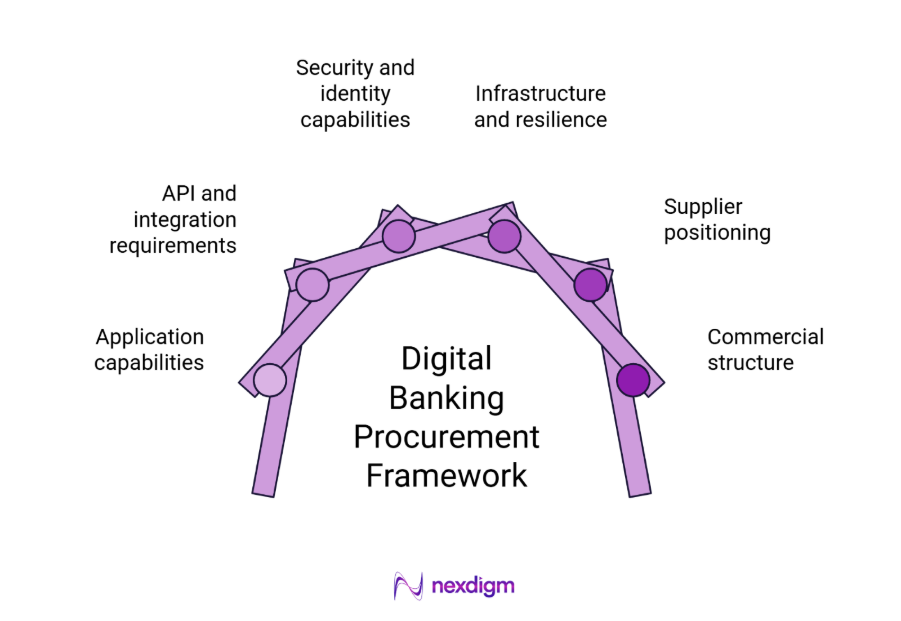
- Application capabilities: Compare mobile banking, internet banking, onboarding, and customer servicing functions against the bank’s channel requirements.
- API and integration requirements: Assess API management, middleware compatibility, documentation, integration flexibility, and the ability to connect with existing banking systems.
- Security and identity capabilities: Examine authentication, access management, fraud monitoring, encryption, and alignment with internal security requirements.
- Infrastructure and resilience: Compare hosting arrangements, scalability, availability, recovery capabilities, and infrastructure dependencies.
- Supplier positioning: Map providers by product specialisation, banking experience, geographic presence, partnerships, and technical support.
- Commercial structure: Benchmark licence fees, implementation charges, usage-based pricing, maintenance, and the cost of expanding the solution.
Nexdigm’s market intelligence and supplier research can support this assessment through vendor profiling, technology capability mapping, market research, and commercial comparison. The findings help banks understand which providers fit their requirements and where the commercial implications of different sourcing options may vary.
Case Study: When Architecture Review Changed the Supplier Shortlist
A bank assessing its digital banking environment across mobile applications, API management, and identity technology identified 16 potential suppliers. Comparing integration requirements, product coverage, and commercial models narrowed the shortlist to five providers and highlighted areas where existing systems could meet additional requirements.
To take the next step, simply visit our Request a Consultation page and share your requirements with us.
Harsh Mittal
+91-8422857704