

Digital transformation investments improve productivity across enterprise operations by modernizing processes, integrating systems, and enabling data-driven decision-making. Conducting digital transformation intelligence allows organizations to evaluate technology adoption, measure operational impact, and benchmark performance against industry peers.
By combining these insights with competitive intelligence, businesses can identify gaps, understand competitor strategies, and prioritize investments that enhance efficiency, reduce costs, and optimize workflows. Leveraging this approach ensures that digital transformation initiatives not only modernize operations but also deliver measurable productivity gains and a sustainable competitive advantage.
Most organizations view productivity as a key measure of digital transformation success, with 81 % using productivity KPIs to assess ROI from technology investments. Enterprises now allocate an average of 7.5 % of revenue toward digital transformation initiatives, prioritizing cloud, analytics, and automation. Leaders who adopt holistic measurement practices are about 20 % more likely to report medium‑to‑high value from digital transformation, particularly in workforce productivity and process efficiency.
Key Metrics for Measuring Digital Transformation Impact on Productivity
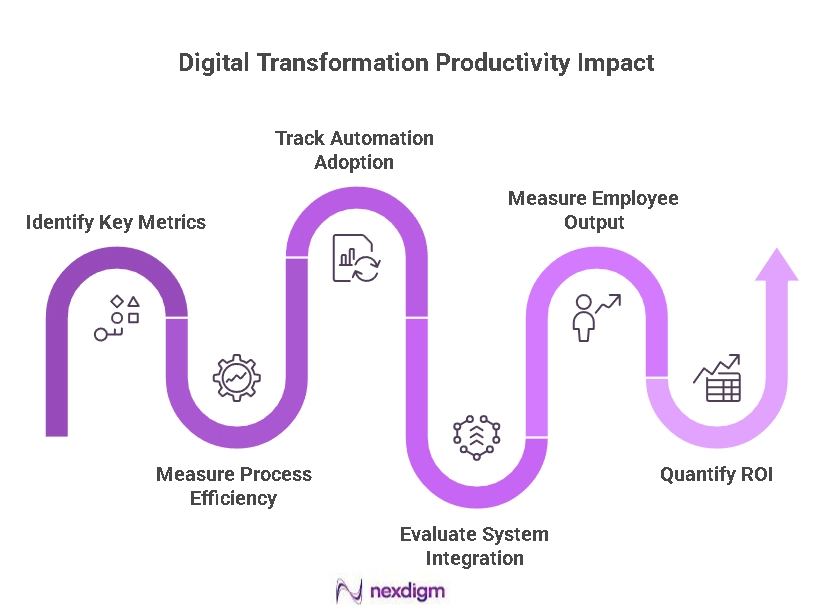
Key Metrics for Measuring Digital Transformation Impact on Productivity include process efficiency, automation adoption, system integration, workflow optimization, employee output, cycle time reduction, and ROI, enabling quantifiable evaluation of transformation effectiveness:
-
Process Efficiency Metrics
Measures workflow improvements, task completion times, and bottleneck reduction to quantify operational efficiency gains from digital transformation initiatives.
-
Automation Adoption Metrics
Tracks automated process coverage, task elimination, and system-driven workflows to assess impact on productivity and resource utilization.
-
System Integration Metrics
Evaluates interoperability, data flow, and connected systems’ performance to determine productivity benefits from cohesive digital environments.
-
Employee Output and Engagement Metrics
Measures workforce productivity, utilization rates, and engagement levels to understand human impact of digital transformation efforts.
-
ROI and Cost-Benefit Metrics
Quantifies financial gains, cost savings, and efficiency improvements resulting from technology investments and digital initiatives.
Nexdigm Competitive Intelligence for Digital Transformation Investments
Nexdigm Competitive Intelligence for Digital Transformation Investments helps organizations make informed decisions by analyzing industry peers’ technology adoption, investment strategies, and operational outcomes. By benchmarking digital initiatives against competitors, Nexdigm identifies gaps, highlights best practices, and prioritizes impactful investments. This approach ensures enterprises optimize resource allocation, enhance productivity, accelerate transformation, and maintain a strategic advantage in a rapidly evolving digital landscape.
Nexdigm Process Automation and Workflow Optimization Services to Improve Productivity
Nexdigm Process Automation and Workflow Optimization Services streamline enterprise operations by automating repetitive tasks, enhancing process efficiency, reducing errors, and accelerating workflows, thereby improving productivity and supporting measurable digital transformation outcomes.
-
Identifying Automation Opportunities
Analyzes processes to pinpoint repetitive, manual tasks suitable for automation, enhancing efficiency and reducing operational delays.
-
Workflow Redesign and Optimization
Streamlines existing workflows, eliminating bottlenecks, improving task coordination, and accelerating end-to-end process execution.
-
Implementing Automation Solutions
Deploys tailored tools and technologies to automate processes, ensuring consistency, reducing errors, and improving operational productivity.
-
Monitoring and Performance Analytics
Tracks process performance, identifies improvement areas, and measures efficiency gains to ensure ongoing optimization and productivity enhancement.
-
Continuous Process Improvement
Leverages insights and metrics to refine automation strategies, optimize workflows, and sustain productivity improvements across enterprise operations.
Nexdigm’s case:
In a recent engagement with a global manufacturing client, Nexdigm’s process automation and workflow optimization services reduced manual processing time by 50 % and cut operational errors by 37 % within nine months. Automated key supply‑chain tasks increased throughput by 28 %, while overall operational productivity improved by 22 %. These results enhanced cross‑department collaboration, accelerated cycle times, and strengthened the client’s competitive positioning.
To take the next step, simply visit our Request a Consultation page and share your requirements with us.
Harsh Mittal
+91-8422857704