

Direct-to-consumer models are reshaping automotive retail by allowing vehicle brands to engage buyers directly through digital platforms, owned showrooms, online bookings, transparent pricing, and personalized purchase journeys. This shift changes traditional dealer economics by reducing dependence on intermediaries, improving customer data access, and creating new roles for dealers in delivery, servicing, and local support.
A strong market entry strategy is essential for companies adopting this model, as success depends on regulatory clarity, customer trust, channel design, pricing control, and after-sales readiness. An effective Direct to consumer vehicle sales entry strategy helps brands enter markets with scalable, customer-focused retail models.
The global automotive retail market was valued at about USD 714.4 billion in 2025 and is projected to reach nearly USD 1.38 trillion by 2034, growing at 7.7% CAGR. Global vehicle registrations also rose 3.5% in 2025 to 77.6 million units, showing strong retail demand despite changing sales models. This industry data highlights why direct-to-consumer models are gaining attention in automotive retail.
Evaluating Regulatory Requirements for Direct-to-Consumer Vehicle Sales
Evaluating regulatory requirements involves reviewing vehicle sales laws, dealer restrictions, licensing, consumer protection rules, tax obligations, data privacy, registration processes, and after-sales compliance before launching direct-to-consumer vehicle sales.
- Vehicle Sales and Dealer Laws: Review whether local laws permit direct vehicle sales or require licensed dealer involvement in customer transactions.
- Business Licensing Requirements: Assess permits, trade licenses, registrations, and approvals needed to legally operate direct-to-consumer vehicle sales channels.
- Consumer Protection Compliance: Evaluate rules around refunds, warranties, disclosures, pricing transparency, complaints, and buyer rights in vehicle transactions.
- Tax and Registration Obligations: Review vehicle taxes, invoicing rules, road registration, transfer documentation, and reporting requirements for direct sales.
Nexdigm’s End-to-End Expansion Support for D2C Automotive Market Entry
Nexdigm’s end-to-end expansion support helps automotive companies enter D2C markets through market research, regulatory assessment, customer readiness analysis, pricing review, dealer impact evaluation, and go-to-market planning. Nexdigm also supports business setup, licensing, tax compliance, partner identification, after-sales readiness, and operational planning, enabling companies to launch direct-to-consumer vehicle sales models efficiently and sustainably.
Nexdigm’s Customer Readiness Assessment for Direct Vehicle Purchase Journeys
Nexdigm’s customer readiness assessment helps evaluate buyer comfort with direct vehicle purchases, online bookings, transparent pricing, digital payments, home delivery, financing options, and after-sales expectations:
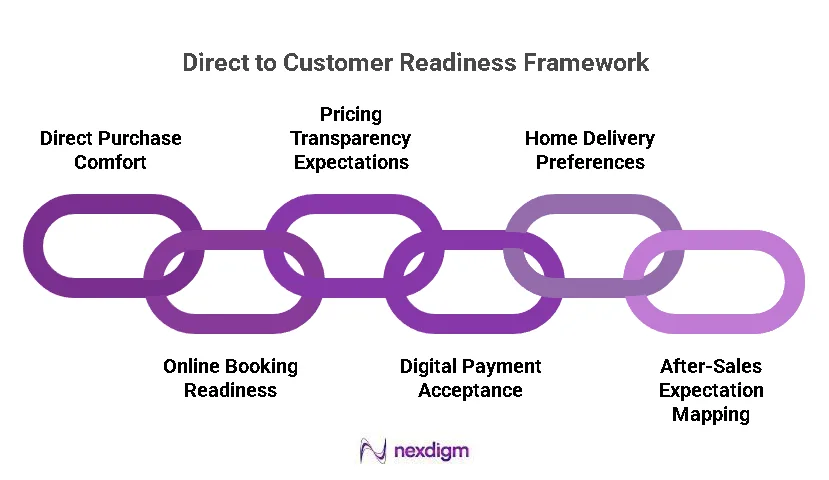
- Direct Purchase Comfort: Nexdigm assesses whether buyers are comfortable purchasing vehicles directly from brands without traditional dealer-led sales interactions.
- Online Booking Readiness: Nexdigm evaluates customer willingness to reserve vehicles through websites, apps, digital showrooms, and online booking platforms.
- Pricing Transparency Expectations: Nexdigm studies buyer preference for fixed pricing, clear discounts, ownership costs, financing terms, and transparent purchase conditions.
- Digital Payment Acceptance: Nexdigm assesses customer confidence in online payments, secure transactions, booking deposits, refunds, and digital documentation processes.
- Home Delivery Preferences: Nexdigm evaluates demand for doorstep test drives, home delivery, remote documentation, vehicle handover, and post-purchase support.
- After-Sales Expectation Mapping: Nexdigm reviews customer expectations around warranty support, service access, spare parts, complaint handling, and long-term ownership experience.
Nexdigm’s case:
Nexdigm helped an automotive company assess readiness for a direct-to-consumer vehicle sales model across six urban markets. Through customer readiness analysis, dealer impact assessment, regulatory review, pricing evaluation, and after-sales network mapping, Nexdigm identified three priority launch markets.
The assistance helped the company estimate a 20–25% faster market entry timeline, assess over 100 potential service partners, and identify buyer segments where more than 60% showed interest in digital-first purchase journeys.
To take the next step, simply visit our Request a Consultation page and share your requirements with us.
Harsh Mittal
+91-8422857704