

Launching an ecommerce business in a new market is exciting, but success depends on more than having a great product. One of the first and most important questions businesses must answer is: How should a brand reach its customers? Should the brand sell through online marketplaces? Build its own Direct-to-Consumer (D2C) platform? Or adopt an omnichannel approach that combines multiple touchpoints?
There is no specific answer. However, the right choice depends on customer behavior, market dynamics, competitive conditions, and business objectives. This is where ecommerce retail distribution model entry consulting becomes critical, helping businesses select a distribution strategy that supports both market entry and long-term growth.
Importance of Distribution Strategy
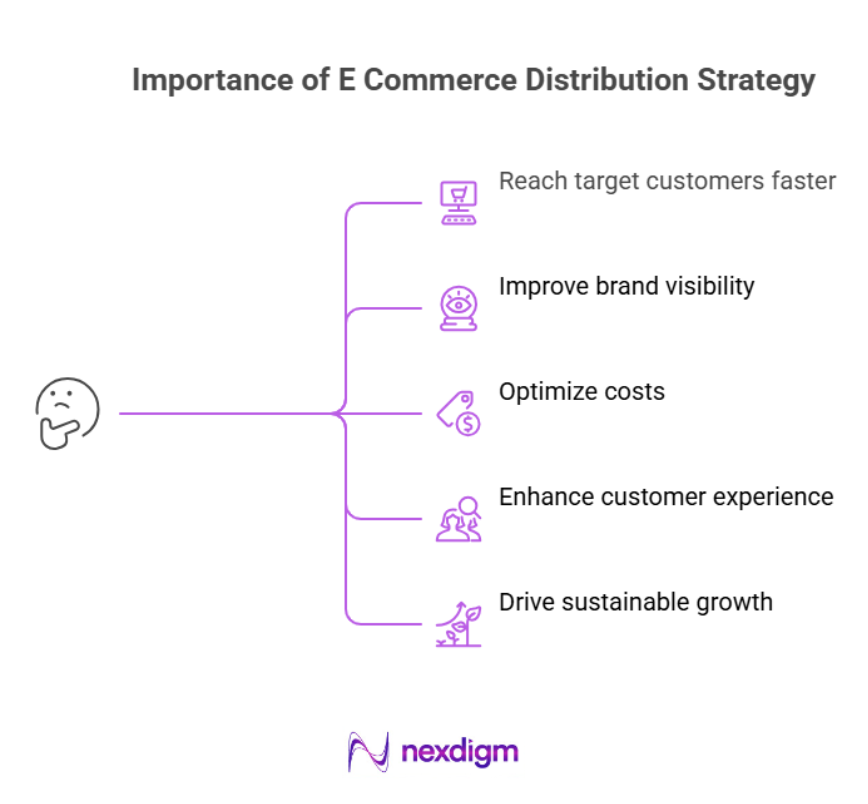
Many businesses focus heavily on product development and marketing but overlook the importance of distribution. However, even the best products can struggle if they are not available through the channels customers prefer. A strong distribution model can help businesses:
- Reach target customers faster
- Improve brand visibility
- Optimize costs
- Enhance customer experience
- Drive sustainable growth
The challenge is identifying which model best aligns with the market opportunity.
Marketplace Entry
For many businesses, marketplaces provide the fastest route to market. Platforms such as Amazon, Flipkart, Myntra, and other regional marketplaces give brands immediate access to a large customer base without requiring significant upfront infrastructure investment.
Advantages of Marketplace Entry
- Faster market access
- Lower initial investment
- Existing customer traffic
- Simplified fulfillment options
- Quick demand validation
Challenges
- Intense competition
- Limited control over customer relationships
- Price-driven purchasing behavior
- Marketplace fees impacting margins
Marketplace models are often effective for businesses looking to test demand before making larger investments.
Direct-to-Consumer (D2C)
The D2C model enables businesses to sell directly through their own ecommerce platforms. This approach provides greater control over the customer experience and allows brands to build direct relationships with consumers.
Advantages of D2C
- Complete brand control
- Higher customer ownership
- Better data collection
- Stronger loyalty opportunities
- Greater margin potential
Challenges
- Higher marketing investment
- Customer acquisition costs
- Technology and maintenance requirements
- Longer time to scale
D2C works particularly well for brands focused on building long-term customer engagement and brand differentiation.
Omnichannel Distribution
Increasingly, businesses are realizing that customers do not think in channels. They move seamlessly between online and offline touchpoints throughout their buying journey. An omnichannel strategy integrates multiple channels to create a consistent customer experience.
Advantages of Omnichannel
- Broader market reach
- Improved customer convenience
- Multiple revenue streams
- Stronger customer retention
- Better brand visibility
Challenges
- Greater operational complexity
- Inventory synchronization requirements
- Channel conflict management
- Higher implementation effort
For many businesses, omnichannel has become a preferred approach because it combines the strengths of both marketplaces and direct channels.
Which Model Fits the Market?
Choosing the right market entry model requires more than evaluating growth opportunities. Businesses must assess customer behavior, competitive dynamics, and available resources to determine the approach that best supports long-term success. A thorough of several evaluations help businesses align with market realities and their main objectives. These factors are:
- Customer Preferences: Understanding customer preferences is essential when selecting a market entry strategy. Factors such as purchasing behavior, price sensitivity, brand loyalty, and product expectations influence how customers respond to different business models.
- Competitive Landscape: Analyzing the competitive environment helps businesses understand market saturation, competitor strengths, pricing strategies, and areas of differentiation. A clear view of the competitive landscape enables organizations to identify opportunities and choose an entry model that offers sustainable advantages.
- Investment Capacity: Different entry models require varying levels of financial and operational investment. Businesses should assess their available capital, risk appetite, infrastructure requirements, and expansion goals before making a decision. Selecting a model that matches investment capacity supports efficient growth and resource utilization.
By carefully evaluating customer preferences, competitive conditions, and investment capabilities, organizations can select a model that balances growth potential, operational control, and long-term profitability.
Nexdigm’s Approach to Ecommerce Distribution Strategy
Choosing the right distribution model requires more than market intuition. It requires structured analysis and strategic planning. Through its ecommerce retail distribution model for entry consulting services, Nexdigm helps organizations evaluate market opportunities and identify the most effective route to customers. Nexdigm’s approach combines:
- Market demand assessment
- Consumer behavior analysis
- Channel evaluation
- Competitive benchmarking
- Commercial feasibility assessment
- Revenue and profitability analysis
This enables businesses to select a distribution model that aligns with both customer expectations and commercial objectives.
Why Choose Nexdigm as Your Partner?
Nexdigm brings together market research, consumer insights, commercial analysis, and strategic advisory expertise to help businesses make informed distribution decisions. By evaluating customer behavior, channel dynamics, and business objectives, Nexdigm develops practical recommendations that support successful market entry and sustainable growth. Its data-driven approach helps organizations select the right ecommerce distribution model while minimizing risks and maximizing market opportunities.
Nexdigm’s Case
In a recent engagement, Nexdigm supported a retail client in selecting the right ecommerce distribution model across marketplace, D2C, and omnichannel channels. Real-time assessment improved channel selection by 30%, increased digital revenue potential by 28%, optimized customer acquisition strategy by 25%, and accelerated market entry planning. This approach enabled the client to identify the ideal channel mix, enhance customer reach, and build a scalable digital growth strategy.
To take the next step, simply visit our Request a Consultation page and share your requirements with us.
Harsh Mittal
+91-8422857704