

A school can have internet access and still be unprepared to adopt a digital learning platform. Teachers may lack training, devices may be shared, budgets may be committed to other priorities, and administrators may have little time to manage implementation. In higher education, the obstacles can be different: outdated systems, fragmented departmental purchasing or resistance to changing established teaching practices.
Adoption depends on more than whether technology is available. It requires the infrastructure, people, funding and institutional support to use it consistently.
Digital Education Infrastructure and Technology Readiness
India’s school infrastructure has improved. According to the Ministry of Education’s UDISE+ 2024–25 data, the share of schools reporting internet access increased from 53.9% in 2023–24 to 63.5% in 2024–25. The latest 2025–26 figures reported by the government put the share at 67.4%.
The trend expands the potential reach of digital education products, but internet access should not be mistaken for full readiness. A school may have connectivity without enough devices, dependable bandwidth across classrooms or technical support when systems fail. Products designed around uninterrupted video streaming may therefore be poorly suited to some environments.
Readiness also varies within institutions. A central IT team may be comfortable managing software while teachers struggle to incorporate it into lesson plans. A university may have a learning management system but lack the processes to connect course activity with assessment and student-support decisions.
For providers, this means infrastructure assessment should precede product rollout. Offline access, low-bandwidth performance, mobile compatibility and simple administration can determine whether a platform is practical for its target market.
Teacher Acceptance, Training, and Institutional Budgets
Educators are not simply another user group to onboard after a contract is signed. Their acceptance often determines whether a product becomes part of routine teaching or remains an underused purchase.
A platform that adds data entry, duplicates existing tasks or makes classroom interaction harder can face resistance even when its features are technically strong. Training must therefore address real teaching workflows, not just explain how to navigate the software.
Budget constraints shape adoption as well. The total cost can include licensing, devices, connectivity, integration, training, maintenance and staff time. A low subscription price may conceal substantial implementation costs. Public institutions may face procurement schedules and approval requirements, while private schools and universities may need to justify the investment against other priorities.
An Education technology adoption market analysis should distinguish interest from readiness to purchase. Survey respondents may express enthusiasm for digital tools without having budget authority, implementation capacity, or immediate need. Buyer interviews should establish who approves spending, how procurement works, and what evidence is required before adoption.
Education Technology Adoption Readiness Framework
The Digital Education Adoption Readiness Framework assesses whether an institution can implement and sustain a technology solution.
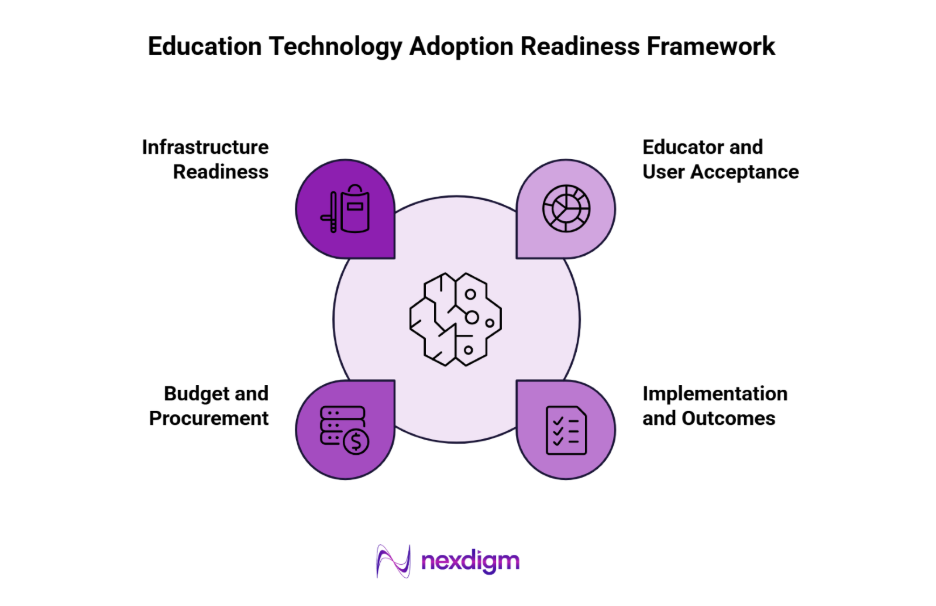
- Infrastructure Readiness: Check connectivity, devices, power reliability, system compatibility, and technical support.
- Educator and User Acceptance: Assess training needs, existing workflows, accessibility and willingness to use the product.
- Budget and Procurement: Establish funding availability, approval processes, implementation costs, and renewal requirements.
- Implementation and Outcomes: Define onboarding responsibilities, adoption targets, support arrangements and measures of educational or administrative value.
The results should guide market segmentation. Institutions ready for immediate deployment may be suitable for direct sales. Those with connectivity or training gaps may need a supported implementation model. Where budgets or operational readiness are insufficient, market entry may require a longer preparation period.
Nexdigm Case Study: Assessing Institutional Adoption Readiness
Nexdigm evaluated digital learning readiness across 60 schools and higher education institutions. The assessment examined connectivity, device availability, educator training, budget ownership, and procurement requirements.
While 37 institutions expressed interest in adoption, 22 had the infrastructure and internal support needed for near-term deployment. The findings helped the client separate immediate sales prospects from institutions requiring additional preparation.
To take the next step, simply visit our Request a Consultation page and share your requirements with us.
Harsh Mittal
+91-8422857704