

India’s electric vehicle market is expanding, creating new considerations for businesses planning logistics fleet investments. According to NITI Aayog, more than 2.5 million electric vehicles were registered in FY 2025–26, representing growth of approximately 25% over the previous year. Commercial goods vehicles also recorded progress, with electric penetration across light, medium, and heavy-duty segments increasing from 0.6% in 2024 to 1.4% in 2025.
For logistics operators, this transition involves more than replacing conventional vehicles. Businesses must assess vehicle suppliers, charging infrastructure, operating costs, and route suitability before making investment decisions. An electric logistics fleet sourcing strategy helps organizations evaluate these interconnected requirements and identify solutions that fit their operational and financial priorities.
Why Electric Fleet Procurement Requires a Different Assessment
Electric fleet procurement introduces considerations that extend beyond vehicle purchase prices. Battery range, charging time, infrastructure availability, maintenance support, and electricity costs can influence operating performance. Businesses also need to consider vehicle payload, daily distance, route conditions, and fleet utilization. Evaluating these factors together helps procurement teams understand whether an electric vehicle solution is suitable for specific logistics operations.
Where Electric Fleet Deployment Can Face Sourcing Challenges
Even when electric vehicles meet basic transportation requirements, deployment can be affected by practical constraints. Limited charging access, variations in battery performance, vehicle availability, and inconsistent after-sales support can influence fleet readiness. Businesses operating across multiple locations may also face differences in electricity infrastructure and service coverage. Understanding these constraints early helps procurement teams identify sourcing gaps before fleet expansion.
Nexdigm’s Informed Electric Fleet Procurement Approach
Nexdigm’s electric logistics fleet sourcing strategy can help businesses connect supplier assessments with broader fleet sourcing priorities. By examining market developments, supplier capabilities, technology offerings, and commercial considerations, Nexdigm can support procurement teams in evaluating available options and identifying sourcing opportunities that align with operational needs and long-term electrification plans.
Nexdigm’s Role in Assessing Sourcing Challenges
Electric fleet adoption depends on more than vehicle availability. Businesses must also assess the supplier ecosystem, infrastructure requirements, and operational support needed to put vehicles into service. Nexdigm’s electric logistics fleet sourcing strategy research can help procurement teams examine challenges, focusing on:
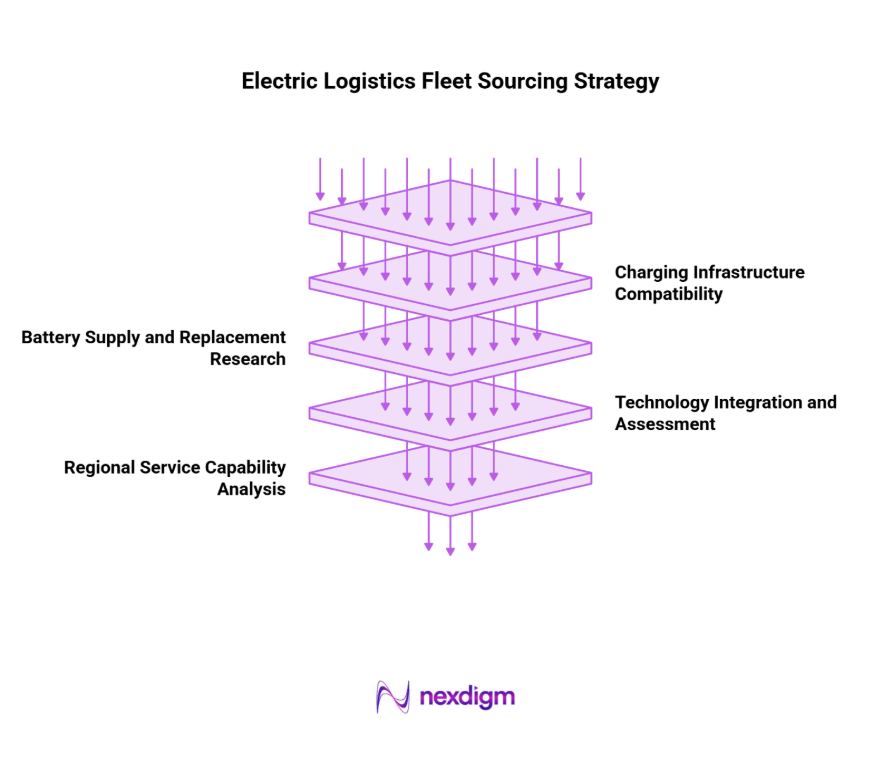
- Battery Supply and Replacement: Research battery sourcing options, replacement availability, warranty coverage, and supplier support arrangements.
- Charging Infrastructure Compatibility: Identify charging solution providers and assess compatibility, installation requirements, and infrastructure availability across operating locations.
- Regional Service Capabilities: Evaluate supplier service networks, maintenance facilities, spare parts availability, and technical support coverage.
- Technology Integration: Examine telematics, fleet monitoring solutions, and software compatibility with existing logistics systems.
Through these research areas, Nexdigm can help businesses understand supplier capabilities, identify potential sourcing gaps, and evaluate alternatives that align with their fleet deployment and expansion requirements.
How Nexdigm Helps Identify Future-Fit Electric Fleet Suppliers
Electric vehicle technology and supplier capabilities continue to evolve, making it important for businesses to consider current requirements and future developments. Nexdigm’s strategy can help organizations evaluate emerging opportunities through four areas:
- Emerging Vehicle Technology: Track developments in electric commercial vehicle models, battery performance, vehicle range, and payload capabilities to identify evolving supplier offerings.
- Battery and Charging Innovations: Research advancements in battery technology, charging systems, and infrastructure solutions that may influence future fleet requirements.
- Supplier Capability Tracking: Monitor manufacturers’ product portfolios, capacity developments, geographic presence, and expansion into new vehicle segments.
- Market and Competitive Intelligence: Examine market trends, new supplier entries, technology adoption, and competitive developments to understand changes in the electric fleet sourcing landscape.
These insights can help procurement teams identify potential suppliers, assess emerging sourcing alternatives, and adapt fleet procurement plans as market capabilities and business requirements evolve.
Nexdigm’s Case
A logistics company planning to transition part of its delivery fleet to electric vehicles wanted to evaluate suppliers across multiple regions. Nexdigm’s research assessed 25 vehicle suppliers and 12 charging infrastructure providers across 7 regions, comparing vehicle specifications, service coverage, charging compatibility, and commercial offerings. The assessment identified 8 suppliers for further evaluation and highlighted 3 potential gaps in regional service coverage.
To take the next step, simply visit our Request a Consultation page and share your requirements with us.
Harsh Mittal
+91-8422857704