

Electric mobility startups are reshaping urban transportation by offering cleaner, smarter, and more affordable mobility solutions in fast-growing cities. As demand rises for electric scooters, bikes, ride-sharing platforms, and charging infrastructure, these startups must carefully plan how to enter competitive urban markets.
A strong market entry strategy helps them understand customer needs, local regulations, infrastructure gaps, pricing models, and partnership opportunities. Electric mobility startup market entry depends on building trust, ensuring operational efficiency, and adapting services to city-specific mobility patterns. By aligning innovation with local demand, startups can scale successfully in high-growth transportation markets.
Global electric car sales exceeded 17 million in 2025, representing more than 20% of all new car sales. Sales rose further to over 20 million, around 25% of the global car market. Electric three-wheeler sales also crossed 1 million units in 2025, showing strong demand in dense urban markets, especially across India and China.
Understanding the Growth Potential of Urban Electric Mobility Markets
Urban electric mobility markets are growing due to rising congestion, pollution concerns, fuel costs, and government support, creating strong opportunities for startups offering affordable, sustainable, and technology-driven transport solutions.
- Rising Urbanization and Commuter Demand: Growing city populations increase demand for faster, cleaner, and affordable transport options, creating opportunities for electric mobility startups.
- Government Support and EV Policies: Subsidies, tax benefits, and emission rules encourage EV adoption, helping startups enter urban transport markets more easily.
- Increasing Fuel Costs and Pollution Concerns: High fuel prices and air pollution push consumers and businesses toward electric mobility as a cheaper, cleaner alternative.
- Expansion of Charging Infrastructure: Better charging networks improve user confidence and make electric scooters, bikes, and fleet vehicles more practical in cities.
- Shift Toward Shared and Last-Mile Mobility: Demand for ride-sharing, rentals, and last-mile delivery supports electric mobility startups targeting short-distance urban travel.
Nexdigm’s Market Research and Demand Assessment for High-Growth Electric Mobility Cities
Nexdigm’s market research and demand assessment helps electric mobility startups evaluate high-growth cities before expansion. This includes analyzing commuter behavior, EV adoption trends, competition, pricing potential, infrastructure readiness, and regulatory conditions. By identifying demand pockets and market gaps, Nexdigm supports startups in making informed market entry decisions and prioritizing cities with strong growth potential.
Nexdigm’s Market Entry Strategy Support for Electric Mobility Startups in Urban Transportation Markets
Nexdigm supports electric mobility startups with market entry strategy by assessing target cities, regulations, competition, demand, partnerships, and operational needs for successful expansion into urban transportation markets:
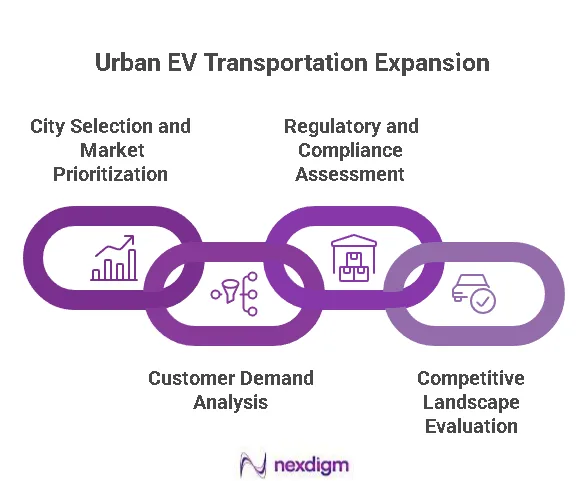
- City Selection and Market Prioritization: Nexdigm helps identify cities with strong EV demand, favorable regulations, infrastructure readiness, and scalable urban mobility opportunities.
- Customer Demand and Commuter Analysis: Nexdigm assesses commuter behavior, usage patterns, affordability, and service expectations to support targeted electric mobility offerings.
- Regulatory and Compliance Assessment: Nexdigm reviews EV policies, permits, licenses, and local compliance requirements before startups enter new urban markets.
- Competitive Landscape Evaluation: Nexdigm analyzes existing mobility players, pricing models, service gaps, and differentiation opportunities for effective market positioning.
Nexdigm’s case:
Nexdigm helped an electric mobility startup develop a market entry strategy for expansion into three high-growth urban transportation markets. Through demand assessment, competitor benchmarking, regulatory review, and partner mapping, Nexdigm identified cities with strong EV adoption potential and last-mile mobility demand. The engagement helped the company shortlist 3 priority cities from 8 options, estimate a 25–30% faster launch timeline, and identify potential fleet and charging partners to support scalable market entry.
To take the next step, simply visit our Request a Consultation page and share your requirements with us.
Harsh Mittal
+91-8422857704