

An emerging markets entry strategy is critical for companies seeking growth in economies that contribute for global growth. These markets offer rising consumer demand, expanding middle-class populations, infrastructure development, and new investment opportunities. However, they also involve complex regulations, fragmented distribution networks, cultural differences, pricing sensitivity, and operational risks.
A strong market entry strategy helps businesses assess market potential, choose the right entry mode, understand local barriers, and build a practical execution roadmap. By using an effective emerging markets entry strategy, companies can reduce uncertainty, enter faster, and position themselves for sustainable long-term growth.
The growth case for emerging markets entry strategy is supported by strong macroeconomic data. Emerging and developing economies have contributed nearly 60% of annual global growth since 2000 and now represent around 45% of global GDP. Their projected growth rate is also above 4%, compared with nearly 1.5% for advanced economies. These figures highlight why companies need a focused market entry strategy to capture demand, reduce risks, and expand sustainably.
Why Emerging Markets Entry Strategy Matters for Global Business Expansion
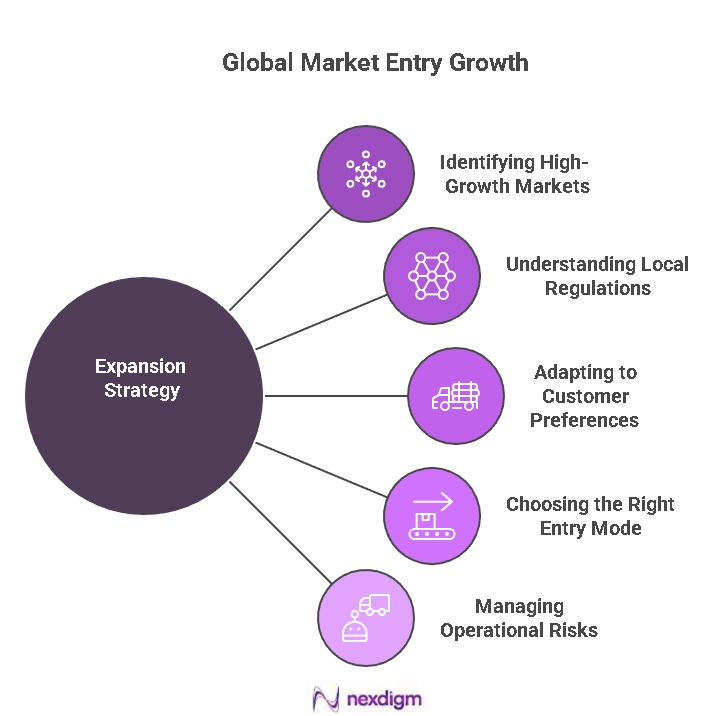
Emerging Markets Entry Strategy Matters for Global Business Expansion means companies need a clear market entry strategy to capture high-growth opportunities, manage local risks, adapt offerings, and scale sustainably in emerging economies:
-
Identifying High-Growth Markets
Companies assess demand, industry trends, income levels, and growth potential to prioritize the most attractive emerging markets.
-
Understanding Local Regulations
Businesses review investment rules, licenses, taxation, and compliance requirements to avoid delays and legal complications.
-
Adapting to Customer Preferences
Companies localize products, pricing, packaging, and messaging to match cultural expectations and buying behavior in emerging markets.
-
Choosing the Right Entry Mode
Businesses evaluate partnerships, joint ventures, acquisitions, franchising, or direct investment based on market conditions and risk appetite.
-
Managing Operational Risks
Companies assess infrastructure, logistics, supplier networks, and workforce availability to ensure smoother execution after market entry.
Nexdigm’s Country Prioritization Support for Selecting the Right Emerging Markets
Nexdigm’s Country Prioritization Support for Selecting the Right Emerging Markets helps companies compare potential markets based on growth potential, demand, competition, regulatory environment, tax implications, operational readiness, and entry barriers. By evaluating these factors together, Nexdigm helps businesses identify the most attractive and practical markets for expansion, reducing uncertainty and supporting a focused, data-driven market entry strategy.
Nexdigm’s Risk Assessment Framework for Cross-Border Expansion in Emerging Economies
Nexdigm’s Risk Assessment Framework for Cross-Border Expansion in Emerging Economies helps companies identify regulatory, tax, operational, competitive, and market risks early, enabling informed decisions, smoother execution, and sustainable international growth.
-
Regulatory Risk Assessment
Nexdigm reviews local laws, licenses, approvals, and investment rules to reduce compliance-related delays during market entry.
-
Tax and Structuring Review
Nexdigm assesses tax implications, entity options, duties, and reporting obligations to support efficient cross-border expansion planning.
-
Operational Readiness Evaluation
Nexdigm evaluates logistics, infrastructure, workforce availability, and supplier networks to identify potential execution challenges early.
-
Market and Competitive Risk Analysis
Nexdigm studies customer demand, competitor activity, pricing trends, and market gaps to strengthen expansion decision-making.
-
Partner and Vendor Risk Screening
Nexdigm helps assess distributors, vendors, and local partners to reduce dependency risks and improve market access.
Nexdigm’s case:
A UK-based educational institute evaluating India used Nexdigm’s pre-investment advisory and market research support to assess market potential, competition, regulations, and entry feasibility. The study found India to be the second-largest schooling system globally, with the international school segment growing at a 14% CAGR. Nexdigm also conducted interviews with 25+ ecosystem stakeholders, helping the client formulate its India entry strategy with clearer risk visibility.
To take the next step, simply visit our Request a Consultation page and share your requirements with us.
Harsh Mittal
+91-8422857704