

Enterprise IT modernization is moving from broad technology replacement toward prioritized transformation. CIOs and technology leaders increasingly need to determine which applications, infrastructure layers, data platforms, and workflows should be modernized first and which should remain stable.
Recent evidence highlights the scale of the opportunity. 71% of surveyed organizations are currently modernizing core infrastructure to support AI implementation, while 23% are investing 6% to 10% of annual revenue in modernizing core enterprise systems.
Yet modernization remains incomplete. IBM research found that 83% of IT executives consider application and data modernization central to business strategy, but only 27% say their organizations have modernized many of the necessary workflows.
The challenge is therefore not simply deciding whether to modernize. It is deciding what to modernize, when to modernize it, how much to invest, and which modernization path creates the greatest business value with acceptable risk.
For such situations, an Enterprise IT modernization market assessment provides a structured approach to evaluating modernization priorities, technology readiness, business criticality, investment requirements, and market opportunity.
Why Enterprises Need to Prioritize Modernization
As technology environments grow more complex, organizations must identify which legacy systems create the greatest risks and where modernization can deliver the most value. This is done by focusing on the following areas:
- Legacy Complexity: Aging applications can increase technical debt, create integration challenges, limit scalability, and slow the adoption of new technologies, reducing overall organizational agility.
- Business Criticality: Modernization priorities should be aligned with business importance, considering factors such as operational dependency, revenue contribution, customer experience impact, and regulatory requirements.
- Technology Readiness: Modernization feasibility depends on cloud compatibility, architectural flexibility, data dependencies, security requirements, and integration with evolving technology ecosystems.
- Investment Prioritization: Modernization initiatives compete for limited budgets, talent, and leadership attention, making it essential to balance expected value against costs, risks, and implementation complexity.
Successful modernization is not about replacing every legacy application. It involves prioritizing systems where transformation can create the greatest business value, improve resilience, and support long-term growth.
Why Organizations Need a Structured Modernization View
As legacy systems continue to support critical business operations, modernization decisions have become increasingly complex. Organizations must balance business priorities, technology risks, operational dependencies, and investment constraints while determining where transformation efforts will generate the greatest value. A structured modernization perspective helps stakeholders identify high-impact opportunities, prioritize initiatives, and align technology investments with long-term business objectives.
Nexdigm’s Expertise in Enterprise IT Modernization Market Assessment
As organizations modernize legacy technology environments, they need a structured approach to evaluate modernization opportunities and through an Enterprise IT Modernization Market Assessment, Nexdigm helps stakeholders identify where modernization can deliver the greatest operational, technical, and commercial value by conducting:
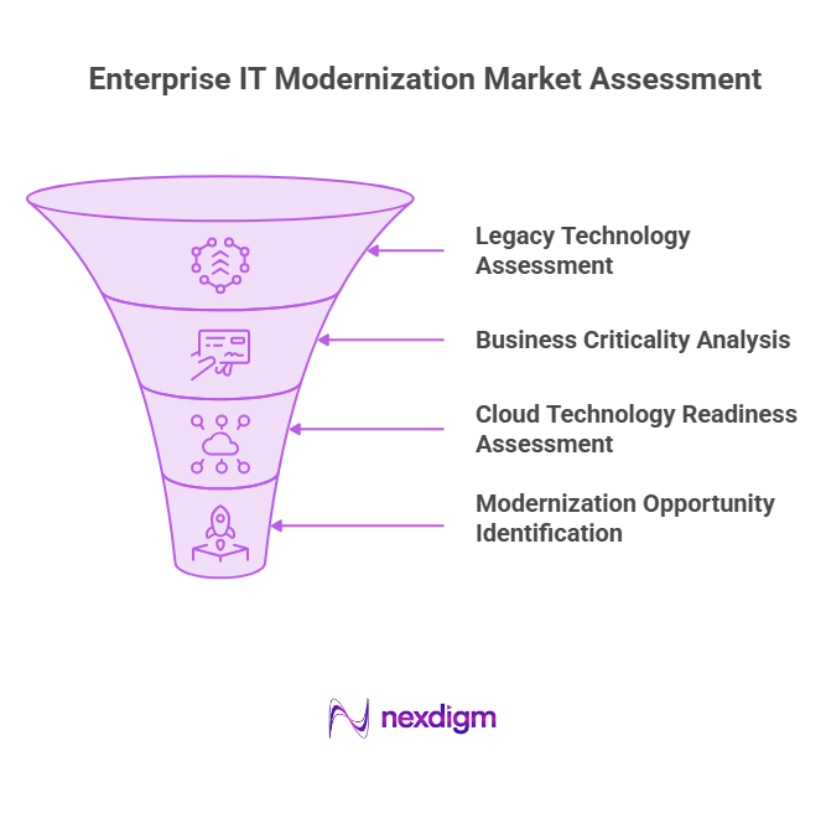
- Legacy Technology Assessment: Evaluation of aging applications, technical debt, integration complexity, support challenges, and infrastructure limitations to identify systems that may benefit most from modernization initiatives.
- Business Criticality Analysis: Assessment of operational dependency, customer impact, revenue contribution, compliance requirements, and strategic importance to prioritize modernization efforts based on business value.
- Cloud & Technology Readiness Assessment: Evaluation of cloud compatibility, architectural flexibility, data dependencies, security requirements, and migration feasibility to determine the most suitable modernization pathways.
- Modernization Opportunity Identification: Identification of opportunities to improve scalability, agility, operational efficiency, user experience, and technology performance through targeted modernization initiatives.
From the insights collected from the assessment, Nexdigm helps organizations prioritize high-impact modernization opportunities, reduce technology risks, and maximize long-term business value from transformation initiatives.
Outcomes of Nexdigm’s Modernization Market Assessment
A structured assessment provides the clarity needed to prioritize initiatives, optimize investments, and accelerate transformation outcomes. Nexdigm’s market assessment provides the following outcomes to the businesses:
- Clear Modernization Priorities: Identification of applications, platforms, and technology environments where modernization can generate the greatest business value and strategic impact.
- Improved Investment Decisions: Clear understanding of modernization costs, benefits, risks, and implementation complexity to support effective capital allocation.
- Reduced Technology Risk: Highlight of technical debt, legacy dependencies, scalability constraints, and operational vulnerabilities that could affect future business performance.
With these outcomes, an Enterprise IT Modernization Market Assessment helps organizations reduce risk, maximize technology investments, and create a stronger foundation for future growth.
How Nexdigm Creates Value Through Modernization Insights
Nexdigm helps organizations with actionable strategies by combining technology, business, and investment perspectives. Through structured analysis of application portfolios, modernization readiness, technology risks, and value creation opportunities, Nexdigm enables stakeholders to prioritize high-impact initiatives, optimize transformation investments, and align modernization roadmaps with long-term business objectives.
By converting complex technology insights into clear strategic priorities, Nexdigm helps organizations accelerate modernization outcomes, reduce transformation risks, and maximize business value.
Enterprise Benefits Offered by Nexdigm’s Modernization Insights
Organizations benefit from Nexdigm’s ability to convert complex modernization challenges into actionable business priorities. By combining technology, operational, and commercial perspectives, Nexdigm helps enterprises prioritize high-value initiatives, optimize investment decisions, reduce technology risk, improve operational agility, and build a scalable foundation for long-term growth and innovation.
Nexdigm’s Case
A global enterprise technology company engaged with Nexdigm to assess its modernization priorities across legacy applications, infrastructure, and cloud readiness. The assessment evaluated more than 100 technology workloads, identified 17 high-priority modernization opportunities, and supported a roadmap that reduced projected technology costs by 16%, while improving investment prioritization and modernization sequencing.
To take the next step, simply visit our Request a Consultation page and share your requirements with us.
Harsh Mittal
+91-8422857704