

Enterprise software buyers must balance modernization priorities, digital transformation requirements, budget limitations, implementation costs, and long-term business value when evaluating technology investments. An enterprise software demand pricing study helps organizations understand buyer demand, willingness to pay, budget sensitivity, feature priorities, and purchasing trade-offs across software categories.
Businesses can assess pricing thresholds, segment demand, competitive alternatives, contract economics, and adoption barriers. Combined with enterprise software pricing analysis, demand forecasting, software price sensitivity research, competitive pricing benchmarking and value-based pricing, organizations can strengthen monetization, buyer alignment, revenue realization, and sustainable commercial growth.
Budget-constrained enterprise buyers may show 15%–25% stronger sensitivity to contract value, implementation costs, and renewal commitments than transformation-led buyers. Pricing Analysis Services help identify these differences and design more sustainable software pricing and commercial structures.
Pricing Analysis for Enterprise Software Demand and Budget Sensitivity
Enterprise software pricing analysis helps businesses evaluate buyer demand, budget sensitivity, transformation priorities, purchasing behavior, and value perception to improve pricing decisions, adoption, revenue realization, and long-term commercial performance. Its key dimensions providing a structured view of enterprise demand and purchasing economics are:
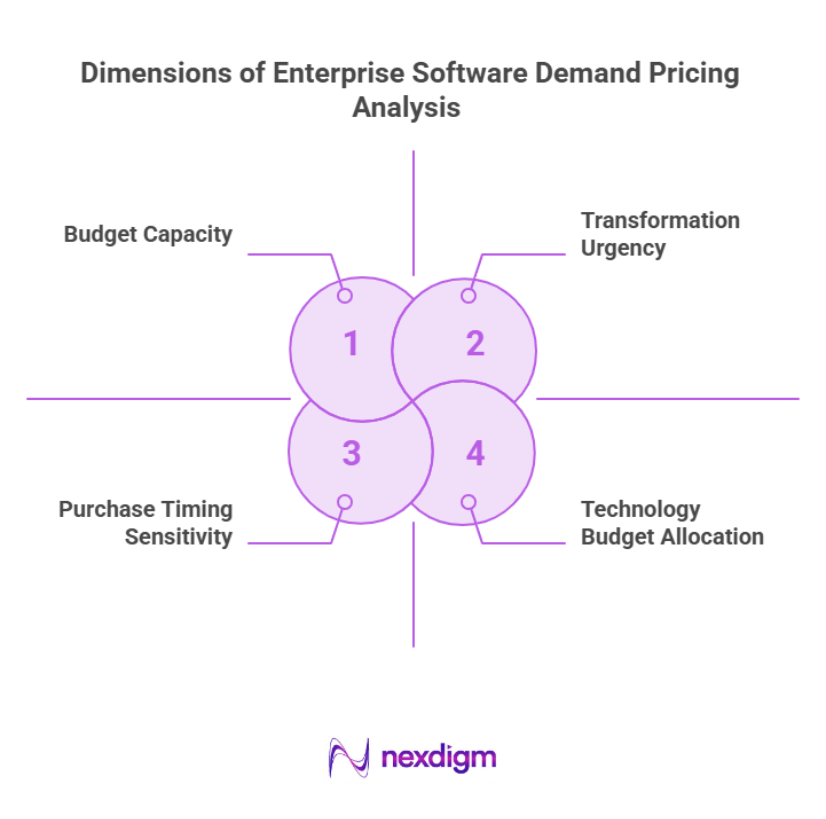
- Budget Capacity: Assesses available technology budgets, spending constraints, and allocation priorities to determine how affordability influences enterprise software purchasing and pricing acceptance.
- Transformation Urgency: Evaluates the strategic importance and timing of digital transformation initiatives to understand when buyers may accept premium pricing for faster implementation.
- Purchase Timing Sensitivity: Examines budget cycles, transformation milestones, procurement schedules, and implementation readiness to identify when buyers are more likely to approve software investments.
- Technology Budget Allocation: Examines how software spending competes with infrastructure, cloud, cybersecurity, and transformation investments to determine the budget share available for new software purchases.
Nexdigm’s Pricing Intelligence Advisory for Enterprise Software Industry
Nexdigm provides pricing intelligence advisory to help enterprise software businesses understand buyer demand, budget sensitivity, competitive dynamics, and transformation-driven purchasing priorities. Through pricing analysis services, enterprise software pricing analysis, demand pricing research, willingness-to-pay analysis, competitive pricing benchmarking, price sensitivity analysis, and value-based pricing, Nexdigm supports informed pricing decisions, stronger value positioning, revenue optimization, customer alignment, and sustainable commercial growth
Nexdigm’s Enterprise Software Pricing Roadmap for Demand and Budget Alignment
Nexdigm’s enterprise software pricing roadmap combines demand intelligence, budget sensitivity, buyer economics, and transformation priorities to help businesses align pricing with affordability, value expectations, and sustainable revenue performance. Its structured steps help businesses with practical pricing decisions, they are:
- Assess Enterprise Spending Priorities: Assess software budgets, transformation programs, competing technology investments, and business priorities to determine where buyer demand remains strongest despite financial constraints.
- Evaluate Total Investment Cost: Measure licensing, implementation, integration, migration, training, and support costs to understand how total software expenditure influences affordability and enterprise purchasing decisions.
- Segment Demand by Transformation Need: Differentiate buyers by modernization urgency, operational criticality, digital maturity, and expected outcomes to identify segments with stronger demand and pricing tolerance.
- Design Budget-Compatible Commercial Plan: Structure subscriptions, phased deployments, modular packages, payment schedules, and commitments to reduce upfront budget pressure while maintaining sustainable pricing and revenue economics
- Calibrate Pricing Against Business Value: Connect price levels with productivity gains, efficiency improvements, risk reduction, and transformation outcomes to strengthen value justification and enterprise purchasing confidence.
Nexdigm’s Case
Nexdigm supported an enterprise software provider in aligning pricing with buyer budgets and transformation priorities. The engagement contributed to 14% higher deal conversion, 11% lower discount dependency, and 16% improved renewal value, strengthening revenue realization, affordability, and commercial performance.
To take the next step, simply visit our Request a Consultation page and share your requirements with us.
Harsh Mittal
+91-8422857704