

Enterprise software portfolios spanning ERP, CRM, productivity, and collaboration platforms often involve significant differences in licensing models, subscription tiers, features, and negotiated terms. Enterprise software price benchmarking provides organizations with structured visibility into prevailing license rates, discounts, contract structures, and renewal economics.
By using pricing analysis services, enterprise software pricing analysis, software license benchmarking, competitive pricing intelligence, subscription pricing analysis, and vendor pricing research, businesses can strengthen procurement negotiations and establish reliable benchmarks for future purchasing, renewal, and technology investment decisions.
Even a 10%–20% pricing variance across comparable ERP, CRM, and productivity agreements can materially influence enterprise technology budgets. Thus, pricing Analysis Services help organizations benchmark license costs, evaluate discounts, strengthen negotiations, reduce pricing inconsistencies, and improve long-term software procurement economics.
ERP, CRM, and Productivity Software Pricing Analysis for Smarter Procurement
Enterprise software pricing analysis helps procurement teams compare licensing economics, vendor terms, usage requirements, and contract value across ERP, CRM, and productivity platforms to support stronger purchasing decisions, using structured steps. These are:
- Define Functional and Usage Requirements: Assess users, workflows, modules, integrations, deployment needs, and expected adoption to establish the commercial requirements that should guide software pricing comparisons.
- Normalize Vendor Pricing Structures: Standardize subscription tiers, license metrics, bundled features, implementation charges, and support fees to enable accurate comparisons across ERP, CRM, and productivity vendors.
- Benchmark Commercial Competitiveness: Compare effective license rates, discount levels, renewal terms, and market benchmarks to identify pricing gaps and determine whether vendor proposals offer competitive value.
- Test Contract and Cost Scenarios: Model user growth, tier changes, renewal increases, volume commitments, and multi-year agreements to understand total cost implications under different procurement scenarios.
- Select the Best-Value Pricing Option: Rank vendor options by total cost, functionality, flexibility, scalability, negotiation potential, and long-term value to support evidence-based software purchasing and renewal decisions.
Nexdigm’s Pricing Analysis Assistance for Enterprise Software Investment Decisions
Nexdigm supports informed enterprise software investments through data-driven pricing analysis services that evaluate vendor pricing, licensing economics, contract value, and commercial competitiveness. Combining enterprise software price benchmarking, software pricing analysis, ERP pricing analysis, CRM pricing benchmarking, license cost analysis, vendor pricing intelligence, subscription pricing analysis, and contract benchmarking, Nexdigm helps businesses strengthen procurement decisions, negotiations, cost control, and technology investment value.
Nexdigm’s Enterprise Software Pricing Analysis Blueprint for Commercial Value
Nexdigm’s enterprise technology pricing blueprint combines benchmarking, licensing intelligence, vendor economics, contract analysis, and investment insights to help businesses improve cost control, commercial value, and technology procurement outcomes. Some of its important features are:
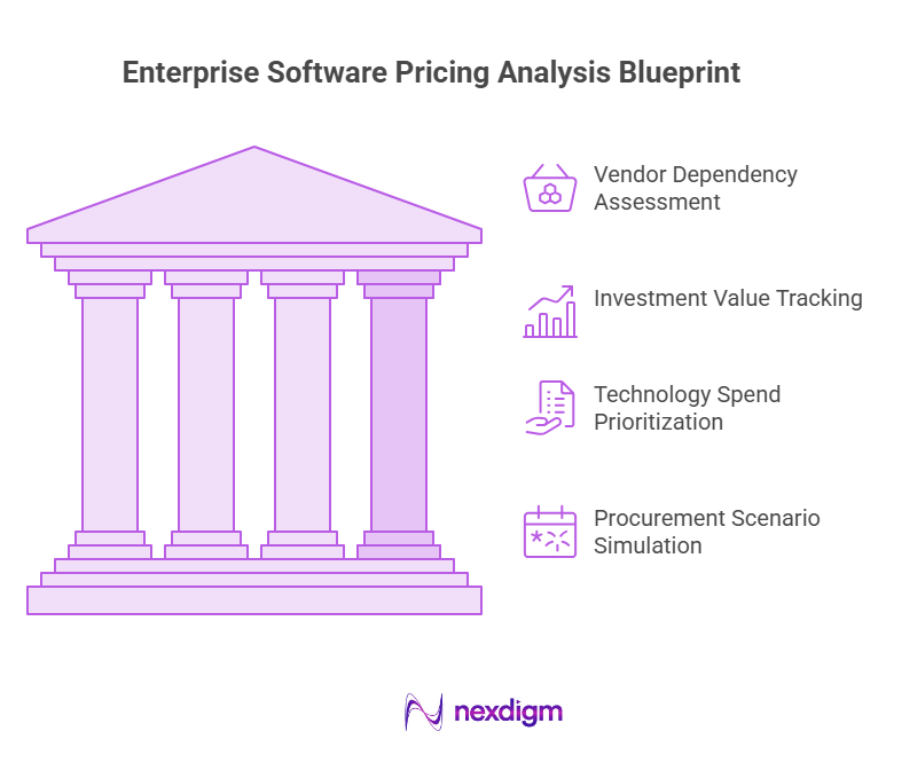
- Vendor Dependency Assessment: Measure concentration of spend, proprietary dependencies, switching barriers, and contract commitments to highlight commercial risks associated with excessive reliance on specific technology vendors.
- Procurement Scenario Simulation: Test alternative vendors, contract lengths, license volumes, bundles, and deployment choices to compare potential cost and value outcomes before major purchasing decisions.
- Technology Spend Prioritization: Rank software investments by strategic relevance, usage, cost efficiency, and business contribution to help organizations allocate budgets toward higher-value enterprise technology requirements.
- Investment Value Tracking: Track pricing, utilization, savings, contract performance, and realized business value over time to determine whether technology investments continue delivering expected commercial returns.
Nexdigm’s Case
Nexdigm supported an enterprise in benchmarking ERP, CRM, and productivity software investments across key vendors. The engagement identified opportunities for lower technology costs, 13% stronger negotiated savings, and 12% improved license utilization, enhancing procurement efficiency, commercial value, and budget predictability.
To take the next step, simply visit our Request a Consultation page and share your requirements with us.
Harsh Mittal
+91-8422857704