

Technology procurement budgets are expanding, but spending priorities and supplier requirements are changing across enterprise markets. Omdia’s 2026 Enterprise IT Insights survey found that 72.9% of organizations expect their IT budgets to grow in 2026, compared with 60.2% in 2025. A further 24.7% anticipate increases exceeding 10%.
This outlook points to greater procurement activity across software, infrastructure, services, and digital platforms, while increasing the need for disciplined supplier evaluation. Businesses must understand where vendors compete, what drives pricing, which contractual terms affect long-term costs, and where dependencies create exposure.
Enterprise technology procurement intelligence can connect these considerations, helping procurement teams build a stronger evidence base for supplier decisions and technology investments rather than fragmented vendor information and isolated quotations alone.
Why Technology Procurement Requires a Connected Market View
Technology procurement decisions rarely sit within a single category. A software agreement can create infrastructure dependencies, while cloud pricing may be influenced by usage patterns, data transfer, and support requirements. Contract renewals can also lock businesses into commercial terms that become less competitive over time. A connected view of suppliers, costs, contracts, and risk helps teams evaluate the full implications of technology purchasing decisions before commitments become difficult to change.
Questions That Should Guide Technology Procurement Intelligence
Businesses can strengthen procurement decisions by investigating three fundamental areas:
- Who Are the Relevant Market Participants? Map established vendors, niche providers, market concentration, and competitive positioning to understand supplier availability across relevant technology categories and alternatives.
- What Drives the Total Procurement Cost? Compare licensing, subscription, implementation, support, renewal, and usage-based charges to identify cost drivers beyond initial purchase prices and price adjustments.
Together, these questions help procurement teams move from isolated purchasing information towards a more comprehensive understanding of technology supplier markets.
How Nexdigm’s Experts Develop Technology Procurement Intelligence
Nexdigm can help businesses connect supplier research, market intelligence, commercial analysis, and risk-related insights to support technology procurement decisions. Our research can cover enterprise software, cloud infrastructure, cybersecurity, data center services, IT consulting, and digital platforms.
By examining vendor capabilities, competitive positioning, pricing indicators, and contractual practices, our experts can help organizations identify sourcing alternatives and understand the factors influencing technology procurement.
Nexdigm’s Procurement Intelligence Areas
Our deep industry research can help businesses examine technology procurement through three key intelligence areas. Each focus on a different aspect of supplier evaluation and can contribute to a more informed sourcing process:
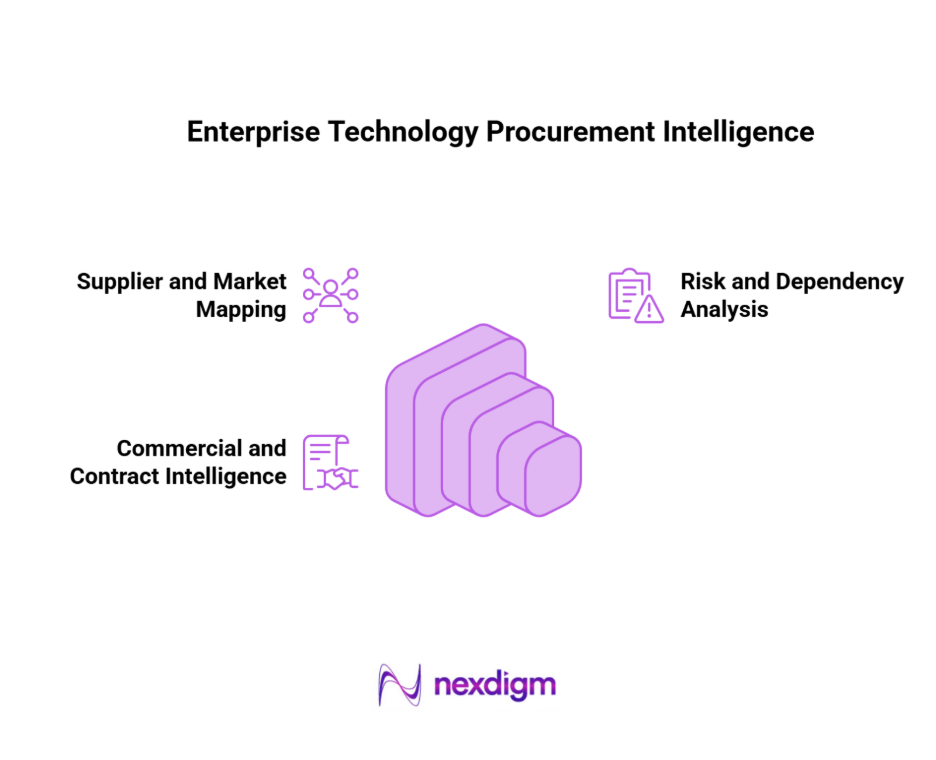
- Supplier and Market Mapping: Identify relevant providers, examine market presence, assess service portfolios, and understand competitive positioning across technology categories.
- Commercial and Contract Intelligence: Research pricing structures, licensing arrangements, renewal practices, service-level provisions, and contractual considerations affecting long-term procurement expenditure.
- Risk and Dependency Analysis: Examine supplier concentration, technology dependencies, provider relationships, and market developments that could affect sourcing continuity.
By bringing these intelligence areas together, our expertise can help businesses develop a consolidated view of their technology supplier ecosystem and identify aspects requiring further procurement attention.
Nexdigm’s Expertise in Converting Procurement Visibility into Strategic Advantage
Procurement intelligence becomes valuable when businesses can translate research findings into practical decisions. Our experts can help organizations use supplier, commercial, and risk insights to address key procurement priorities through the following benefits:
- More Informed Supplier Decisions: Compare provider capabilities and market positioning to identify suitable vendors and evaluate alternative sourcing options.
- Greater Commercial Visibility: Understand pricing differences, licensing costs, and contractual provisions to support cost evaluation and supplier negotiations.
- Improved Risk Awareness: Identify supplier dependencies, contractual exposures, and market developments that may influence procurement continuity.
- Stronger Procurement Planning: Connect market intelligence with business requirements to prioritize sourcing opportunities and guide technology investment decisions.
Through enterprise technology procurement intelligence, our industry-led expertise can help businesses move beyond fragmented supplier information towards more structured procurement decisions, stronger commercial oversight, and better alignment between technology sourcing and business objectives.
Nexdigm’s Case
A global organization wanted to identify cost inefficiencies and contractual risks across its technology supplier base. In this illustrative scenario, Nexdigm’s research found pricing inconsistencies in 35% of supplier arrangements, renewal-related concerns in 29% of contracts, and supplier dependency risks affecting 24% of providers. The findings helped prioritize commercial reviews and explore alternative sourcing options.
To take the next step, simply visit our Request a Consultation page and share your requirements with us.
Harsh Mittal
+91-8422857704