
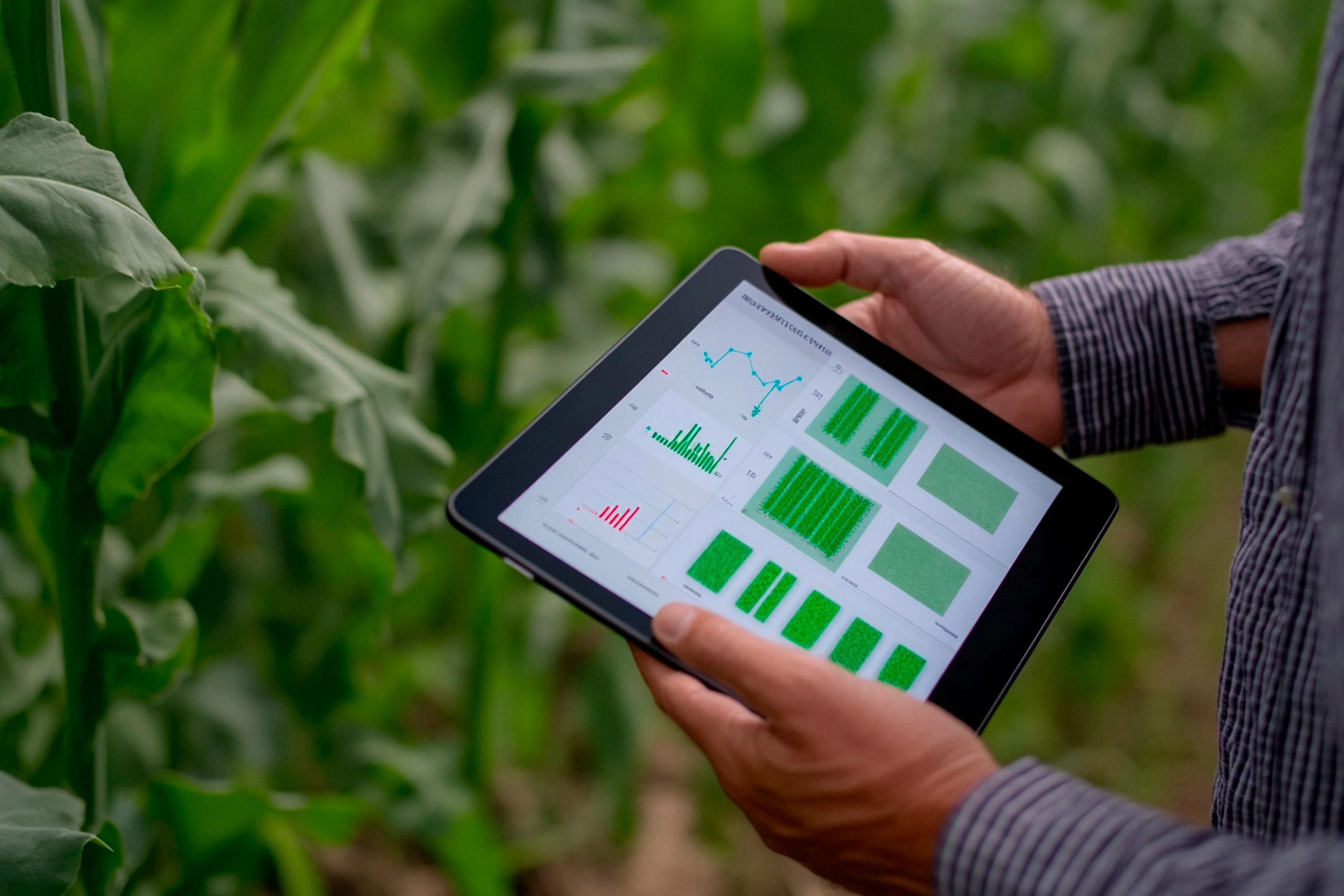
Agricultural supply chains are becoming increasingly focused on improving connectivity between farms, processing centers, markets, and consumers. Efficient logistics networks help reduce post-harvest losses, improve farmer access to markets, enhance food quality, and support the growth of organized agriculture businesses. Transport systems, aggregation networks, storage facilities, and cold-chain infrastructure are becoming critical investment areas across the agricultural ecosystem.
Recent market indicators highlight growing demand for agriculture logistics solutions. According to the Food and Agriculture Organization (FAO), approximately 13% of food produced globally is lost between harvest and retail stages, creating significant demand for improved storage, transportation, and supply-chain infrastructure.
As agricultural markets become more connected, organizations must evaluate logistics capacity, infrastructure gaps, technology adoption, and investment opportunities across the supply chain.
For agribusiness companies, logistics providers, food processors, cold-chain operators, investors, governments, and agricultural organizations, Farm to market logistics demand analysis helps evaluate transportation requirements, storage needs, aggregation models, supply-chain efficiency, and commercial opportunities.
Strengthening the Backbone of Agricultural Supply Chains
Global food demand is projected to increase by nearly 50% by 2050, driven by population growth, urbanization, and changing consumption patterns. This growing demand is placing greater emphasis on robust farm-to-market logistics systems that can efficiently move agricultural products through transport, storage, aggregation, and cold-chain networks while maintaining quality and minimizing losses.
Evaluating Logistics Demand Across the Agricultural Value Chain
Global agricultural production continues to expand, with the value of annual agricultural output exceeding USD 4 trillion, creating substantial demand for transportation, warehousing, aggregation, and cold-chain infrastructure. As supply chains become more integrated and market linkages strengthen, understanding logistics requirements is essential for improving efficiency and supporting agricultural growth.
Nexdigm’s Expertise in Farm-to-Market Logistics Demand Analysis
As agricultural supply chains become more complex and interconnected, understanding logistics demand is essential for improving efficiency, reducing losses, and enhancing market access.
Through its Farm-to-Market Logistics Demand Analysis, Nexdigm helps stakeholders evaluate infrastructure requirements and uncover high-potential investment opportunities across the agricultural value chain by:
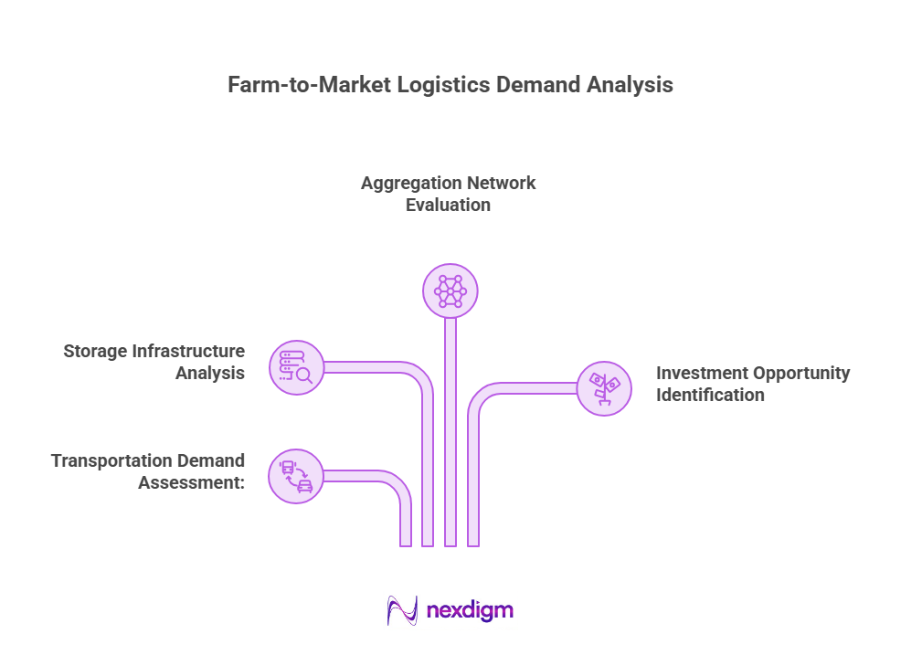
- Transportation Demand Assessment: Evaluating freight volumes, transportation routes, first-mile and last-mile connectivity requirements, helping stakeholders identify logistics bottlenecks and optimize product movement across agricultural supply chains.
- Storage Infrastructure Analysis: Assessing warehousing capacity requirements, utilization levels, and storage gaps to support efficient inventory management, minimize losses, and improve supply-chain reliability.
- Aggregation Network Evaluation: Analyzing aggregation models, collection centers, and consolidation hubs that connect producers with processors, distributors, and end markets while improving operational efficiency.
- Investment Opportunity Identification: Evaluating market demand, infrastructure gaps, commercial viability, and growth potential to prioritize investment opportunities across logistics and supply-chain ecosystems.
Nexdigm enables agribusinesses, logistics providers, investors, and policymakers to make informed decisions, strengthen farm-to-market connectivity, and develop resilient logistics networks that support long-term agricultural growth.
Strategic Applications of Nexdigm’s Farm-to-Market Logistics Demand Analysis
The insights generated through Nexdigm’s analysis can be applied across a range of strategic, operational, and investment decisions within agricultural supply chains. By aligning logistics planning with market demand and infrastructure requirements, organizations can develop targeted growth and expansion strategies:
- Infrastructure Development Planning: Support investments in transportation corridors, storage facilities, aggregation centers, and cold-chain networks based on identified demand patterns.
- Market Expansion Strategy: Evaluate new geographic markets and distribution networks by assessing logistics readiness and connectivity requirements.
- Supply Chain Optimization: Improve network design, asset utilization, and product flow efficiency across the agricultural value chain.
- Investment and Funding Decisions: Prioritize high-potential logistics projects using infrastructure demand, commercial viability, and growth forecasts.
By leveraging Nexdigm’s Farm-to-Market Logistics Demand Analysis, stakeholders can move beyond identifying infrastructure gaps to implementing targeted strategies that enhance connectivity, improve operational efficiency, and support sustainable agricultural growth.
Translating Analysis into Supply Chain Resilience with Nexdigm
At Nexdigm, Farm-to-Market Logistics Demand Analysis is designed to help organizations move beyond infrastructure assessment and develop resilient, efficient, and future-ready supply-chain networks.
By conducting opportunity analysis, Nexdigm enables stakeholders to make informed logistics and investment decisions. Some Keyways Nexdigm creates value include:
- Infrastructure Gap Identification: Evaluates transportation, storage, aggregation, and cold-chain capacity gaps to help stakeholders prioritize high-impact infrastructure investments.
- Supply Chain Risk Assessment: Identifies potential bottlenecks, connectivity challenges, and operational vulnerabilities that may affect product movement and market access.
- Demand-Driven Network Planning: Assesses current and future logistics requirements to support efficient network design, capacity planning, and resource allocation.
- Market Connectivity Enhancement: Helps strengthen linkages between farms, processing facilities, distribution centers, and end markets to improve supply-chain performance.
This structured approach helps agribusinesses, logistics providers, investors, and policymakers build resilient logistics ecosystems that improve efficiency, support market expansion, and drive sustainable agricultural growth.
Forming Future-Ready Agricultural Supply Chains with Nexdigm
Nexdigm helps organizations build resilient and future-ready agricultural supply chains through data-driven logistics demand analysis. By aligning transportation, storage, aggregation, and cold-chain investments with market requirements, Nexdigm enables stakeholders to enhance efficiency, strengthen connectivity, and support sustainable long-term growth across the agricultural value chain.
Nexdigm’s Case
A global food supply-chain company partnered with Nexdigm to evaluate logistics expansion across farm aggregation, transportation, warehousing, and cold-chain networks. The study mapped 20 high-potential logistics corridors, and improved network prioritization by 32%, supporting infrastructure investments, operational improvements, and scalable farm-to-market connectivity.
To take the next step, simply visit our Request a Consultation page and share your requirements with us.
Harsh Mittal
+91-8422857704