

Fashion retail pricing benchmarking consulting helps brands evaluate prices across premium, bridge, and mass-market segments to strengthen market positioning and customer value. Combined with Pricing Analysis, assortment pricing, customer segmentation, and value perception research, businesses can identify pricing gaps and optimize product portfolios.
This data-driven approach enables brands to align pricing with quality, demand, and consumer expectations while protecting margins. It also supports smarter promotional planning, category management, faster pricing decisions, and sustainable growth across physical stores, ecommerce platforms, and omnichannel fashion retail.
Recent industry research shows that 56% of consumers increased purchases from discounted fashion channels, highlighting strong price awareness. Fashion brands using Pricing Analysis and competitive benchmarking can strengthen positioning, optimize pricing across segments, and support sustainable revenue growth.
Cross-Segment Pricing Insights Through Pricing Analysis Strategy Services
Cross-Segment Pricing Insights help fashion retailers compare premium and mass-market segments, strengthen product positioning, align customer value, protect margins, and improve competitive retail performance consistently. Its major strategic measures are:
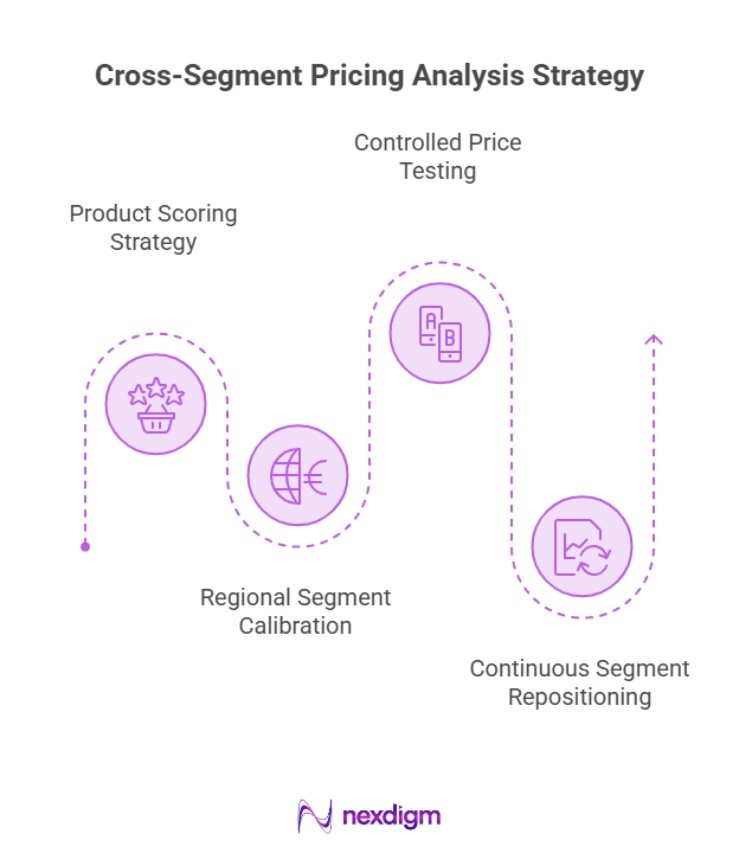
- Product Scoring Strategy: Materials, craftsmanship, design, exclusivity, and functionality are scored to determine whether prices match product value across premium and mass-market fashion segments effectively.
- Regional Segment Calibration: Prices are adjusted for local income, demand, competitor intensity, and customer preferences while maintaining consistent positioning across regions, stores, and ecommerce channels.
- Controlled Price Testing: Alternative prices are tested within selected products, markets, or customer groups to measure demand, conversion, and margin impact before broader implementation decisions.
- Continuous Segment Repositioning: Pricing is reviewed against customer response, inventory, competitor activity, and trend changes to keep products relevant across evolving premium and mass-market segments.
Nexdigm Strategic Support for Fashion Pricing Analysis Services
Nexdigm Strategic Support for Fashion Pricing Analysis Services helps brands optimize pricing through advanced Pricing Analysis Services, fashion retail pricing benchmarking consulting, competitor price analysis, price elasticity analysis, customer segmentation, and value-based pricing strategies. By leveraging market intelligence, assortment pricing, demand forecasting, pricing optimization, and data-driven insights, Nexdigm enables stronger product positioning, improved price competitiveness, enhanced margins, better customer value, and sustainable fashion retail growth.
Nexdigm’s Strategic Fashion Pricing Analysis Model for Category Growth
Nexdigm’s Strategic Fashion Pricing Model combines market intelligence, customer insights, product economics, and competitive benchmarking to strengthen price positioning, margins, demand, and sustainable retail performance across channels. Its majorly used models are:
- Seasonal Demand Pricing Model: Uses seasonal demand, trend cycles, inventory levels, and sales velocity to guide price changes, markdown timing, and category performance across fashion collections.
- Customer Lifetime Value Model: Connects pricing decisions with repeat purchases, retention, spending frequency, and long-term profitability to strengthen relationships with valuable fashion customer segments over time.
- Inventory-Led Pricing Model: Links pricing actions with stock availability, ageing inventory, replenishment plans, and sell-through rates to improve product movement and reduce costly inventory imbalances.
- Promotion Effectiveness Model: Measures campaign uplift, redemption, conversion, margins, and incremental sales to identify promotions that create profitable demand instead of shifting existing purchases.
Nexdigm’s Case
Nexdigm supported a fashion retailer with cross-segment benchmarking, assortment pricing, and demand analysis. The engagement increased full-price revenue by 19%, improved category sell-through by 16%, reduced markdown exposure by 22%, and raised average unit retail by 7% across selected collections.
To take the next step, simply visit our Request a Consultation page and share your requirements with us.
Harsh Mittal
+91-8422857704