

FMCG supply networks are under increasing pressure to maintain product quality, regulatory compliance, availability, and cost efficiency at the same time. A 2026 Consumer and Retail Supply Chain Survey found that 52% of executives identify supply-chain resilience as the biggest challenge driving short-term decisions, up sharply from 30% in 2024.
Another 2025 Global Compliance Study also found that 83% of consumer-market respondents experienced increasing regulatory complexity, while 76% of organizations use technology for risk assessment.
In FMCG specifically, KPMG India reports that 48% of distributors consider order placement through fulfilment the most impactful stage of their relationship with brands, highlighting the importance of delivery, packaging, and operational execution. Against this backdrop, FMCG supplier compliance and risk consulting retail can help businesses evaluate whether suppliers are capable of meeting required standards consistently.
Why Supplier Reliability Matters in FMCG
FMCG businesses operate with limited tolerance for supplier failures because delays, quality issues, or compliance gaps can quickly affect product availability and customer trust. Supplier reliability therefore needs to be viewed across multiple dimensions, including quality controls, regulatory adherence, production capacity, delivery performance, and continuity planning. A supplier that performs well on one dimension may still create exposure through another.
The Dimensions Behind Supplier Reliability
A meaningful supplier review should connect operational performance with the risks that can affect FMCG availability and quality.
- Compliance Readiness: Examine certifications, regulatory requirements, documentation, and process controls to determine whether suppliers meet applicable FMCG standards.
- Product Quality: Evaluate specifications, quality controls, defect rates, testing, traceability, and consistency to understand whether suppliers can maintain expected product standards.
- Capacity and Continuity: Assess production capability, lead times, dependencies, geographic exposure, and contingency arrangements to determine whether supply can remain dependable.
Together, these dimensions provide a clearer view of whether an FMCG supplier can consistently meet commercial, quality, and operational expectations.
Nexdigm’s View of FMCG Supplier Reliability
Nexdigm approaches supplier reliability by connecting compliance, quality, capacity, and continuity rather than reviewing each factor in isolation. Our experts can assess supplier performance against the requirements that matter most to the FMCG business, while considering the supplier’s role within the wider sourcing and supply network. This helps businesses distinguish between a supplier that has an isolated performance issue and one where multiple indicator point toward a deeper operational or supply risk.
Understanding the Need for FMCG Supplier Reliability Assessment
Supplier intelligence provides the context; the next step is to translate that context into a structured view of supplier reliability. Nexdigm brings together relevant supplier information with operational evidence to understand whether vendors can consistently meet FMCG requirements.
This creates a clear transition from identifying where vulnerabilities may exist to examining how suppliers perform against compliance, quality, capacity, and continuity expectations. The assessment can then provide a practical basis for prioritizing supplier actions and strengthening supply resilience.
Nexdigm’s Supplier Intelligence for FMCG Procurement
Reliable supplier decisions require more than reviewing performance records. Nexdigm brings together supplier intelligence, procurement context, market conditions, and operational considerations to help FMCG businesses:
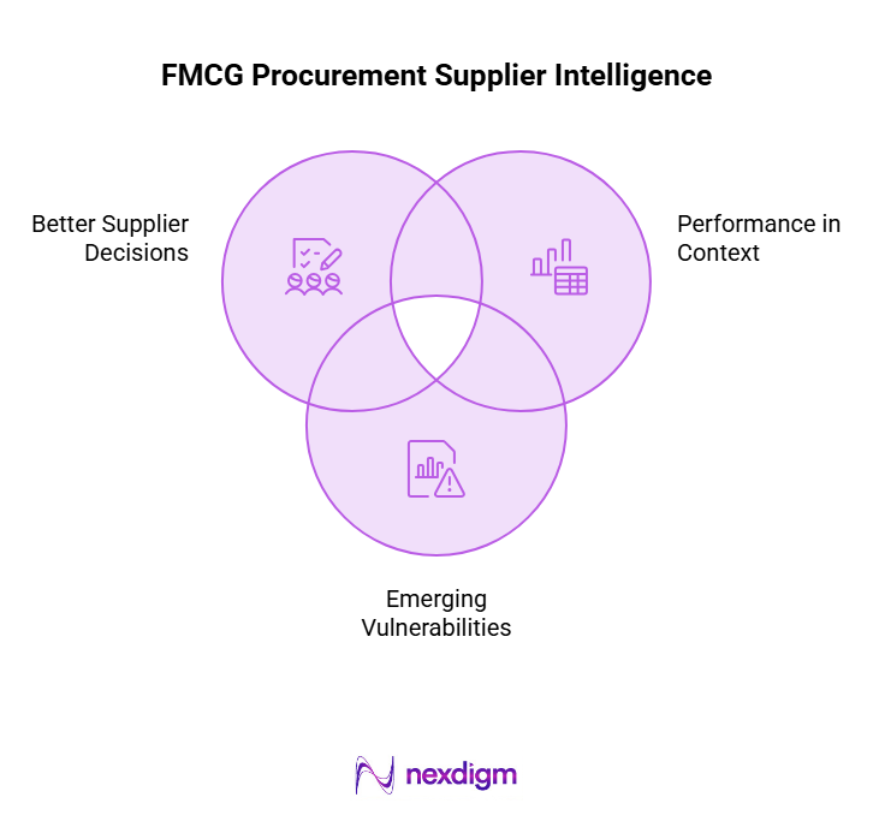
- Put Supplier Performance in Context: Nexdigm considers supplier capabilities alongside product criticality, purchasing volumes, market conditions, and business requirements to interpret performance gaps more effectively.
- Identify Emerging Vulnerabilities: Its experts can examine changing capacity, sourcing dependencies, quality trends, compliance requirements, and supplier conditions to identify risks before they become larger disruptions.
- Support Better Supplier Decisions: Findings can inform supplier development, negotiations, monitoring, diversification, contingency planning, and sourcing decisions based on the nature and significance of each issue.
This approach helps FMCG businesses move from supplier information to actionable intelligence, creating a stronger foundation for evaluating reliability and strengthening supply continuity.
Nexdigm’s Assessment Supporting Supplier Decisions
Once supplier performance has been assessed, Nexdigm helps FMCG businesses translate the findings into practical supplier decisions. The focus shifts from identifying gaps to understanding:
- Prioritizing Supplier Actions: Use assessment findings to determine which suppliers require remediation, closer monitoring, development, or broader intervention.
- Guiding Sourcing Choices: Consider supplier reliability alongside criticality, substitutability, capacity, and market conditions when evaluating diversification or alternative sourcing options.
- Strengthening Supplier Management: Use identified compliance, quality, capacity, and continuity gaps to establish clearer improvement priorities and performance expectations.
This connects the assessment to practical procurement decisions, helping FMCG businesses act on supplier insights rather than simply documenting identified risks.
Nexdigm’s Case
Nexdigm’s assessment of an FMCG supplier portfolio identified 23% of suppliers requiring enhanced performance oversight, while 14% showed capacity-related constraints and 11% presented quality or compliance concerns. The review also found 8% of suppliers with elevated continuity exposure. Based on these findings, the business prioritized supplier remediation, capacity improvement, enhanced monitoring, and alternative sourcing for higher-risk relationships.
To take the next step, simply visit our Request a Consultation page and share your requirements with us.
Harsh Mittal
+91-8422857704