

FMCG suppliers compete on more than invoice price. Their performance depends on product consistency, order fulfilment, lead times, promotional support, capacity, and the commercial terms offered to retailers or distributors. A supplier may be inexpensive at the point of purchase but create additional costs through short shipments, quality rejections, or unreliable replenishment.
Benchmarking should establish which suppliers deliver the strongest combination of commercial value and operational performance for each product category.
Compare Like with Like
FMCG benchmarking needs product-level consistency. Brand, pack size, formulation, grade, shelf life, packaging, and delivery location can all affect price. Comparing unlike products may make one vendor appear more competitive simply because its specification or service obligations differ.
For commodity-linked products, external indicators can help explain input-cost movements. The FAO Food Price Index tracks international prices for major food commodity groups, including cereals, vegetable oils, dairy, meat, and sugar. It provides market context, but it does not measure the prices of finished branded goods or replace product-level supplier comparisons.
Measure Operational Performance
Supplier performance should be assessed using purchase orders, delivery records, quality reports, claims, and invoice data. Relevant measures include on-time delivery, order completeness, rejection rates, lead-time consistency, and responsiveness when problems arise.
For FMCG supplier evaluation and benchmarking services, results should be segmented by category and operating region. A supplier may perform well for ambient products but be unsuitable for temperature-sensitive goods or stores with narrow delivery windows.
Examine the Commercial Agreement
The effective cost of an FMCG supplier includes more than the quoted price. Rebates, promotional contributions, credit periods, minimum order quantities, returns, delivery charges, and stock rotation arrangements can change the economics materially.
Benchmarking should also examine capacity and flexibility during demand peaks. Suppliers with limited production headroom may struggle during seasonal promotions, while larger minimum orders can increase inventory and expiry exposure.
FMCG Supplier Performance Benchmarking Framework
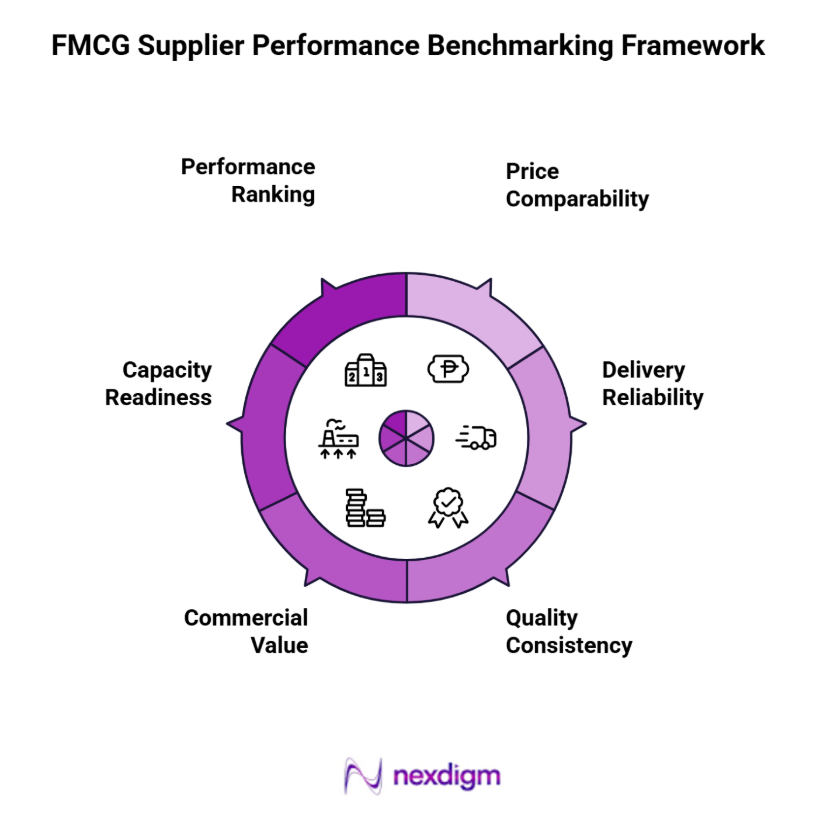
- Price Comparability: Standardise product specifications, pack sizes, delivery terms, and order quantities before comparing unit prices or effective purchase costs.
- Delivery Reliability: Measure on-time and complete deliveries, lead-time variation, shortages, and emergency replenishment requirements using consistent order-level records.
- Quality Consistency: Compare rejection rates, complaints, shelf-life compliance, documentation, and corrective-action performance to identify suppliers creating hidden operational costs.
- Commercial Value: Assess rebates, promotional support, credit terms, minimum orders, returns policies, and additional charges alongside the invoice price.
- Capacity Readiness: Review production capacity, stock availability, peak-season planning, and the supplier’s ability to accommodate forecast changes without reducing service quality.
- Performance Ranking: Weight commercial and operational measures according to product criticality, then classify suppliers for development, negotiation, expansion, or replacement.
Use Benchmarks to Improve Supplier Decisions
Benchmark results should lead to category-specific action. A competitively priced supplier with recurring delivery failures may need a corrective plan, while a reliable supplier with higher prices may offer scope for negotiation or greater allocation.
Retailers and manufacturers should review scores periodically, using consistent definitions and evidence. This prevents supplier rankings from being distorted by temporary market changes or differences in product mix.
Nexdigm’s Case Study
A regional FMCG distributor compared six suppliers across delivery, quality, pricing, and payment terms. The review identified recurring short deliveries from one vendor and inconsistent rebates across contracts. Revised allocations and commercial terms targeted a 4% reduction in addressable purchasing costs, with service levels tracked during implementation.
To take the next step, simply visit our Request a Consultation page and share your requirements with us.
Harsh Mittal
+91-8422857704