

Fast-moving consumer goods retailers need suppliers that can support frequent replenishment, consistent product quality, competitive pricing, and changing demand. A supplier that performs well during routine periods may struggle during festivals, promotional campaigns, or sudden increases in sales.
Supplier identification should therefore combine market research with commercial and operational evaluation. The aim is to build a shortlist of businesses that can meet product requirements reliably, rather than selecting vendors solely on price or brand familiarity.
Define the Product and Supply Requirements
Begin by specifying the product category, expected volumes, quality standards, packaging format, shelf-life requirements, delivery locations, and required certifications. These criteria vary significantly between packaged foods, personal care products, household goods, and other FMCG categories.
Forecasts should account for seasonality, promotional activity, distribution expansion, and differences in demand between store formats. Clear requirements make supplier discovery more targeted and reduce the risk of approaching manufacturers whose capabilities do not match the intended business model.
Build a Supplier Longlist From Multiple Sources
Potential suppliers can be identified through industry directories, trade exhibitions, manufacturer websites, distributor networks, product catalogues, public certification records, and trade data where relevant. Retailers should distinguish manufacturers from intermediaries and confirm which entities control production, inventory, and distribution.
The purpose of FMCG supplier identification consulting for retail is to turn a broad market scan into a commercially relevant shortlist. Supplier research should establish product fit, geographic coverage, capacity, existing market presence, and evidence of reliable operations before detailed negotiations begin.
Test Whether Suppliers Can Scale
A supplier may meet current requirements but lack the capacity to support expansion. Retailers should assess production schedules, lead times, minimum order quantities, warehouse capacity, quality-control processes, and the ability to handle sudden order increases.
Quality and compliance checks are especially important for regulated categories. For example, food businesses supplying the US market may be subject to applicable supplier-verification requirements under the FDA’s Foreign Supplier Verification Programs framework. Requirements should always be checked for the specific product and destination market.
A Framework for FMCG Supplier Identification
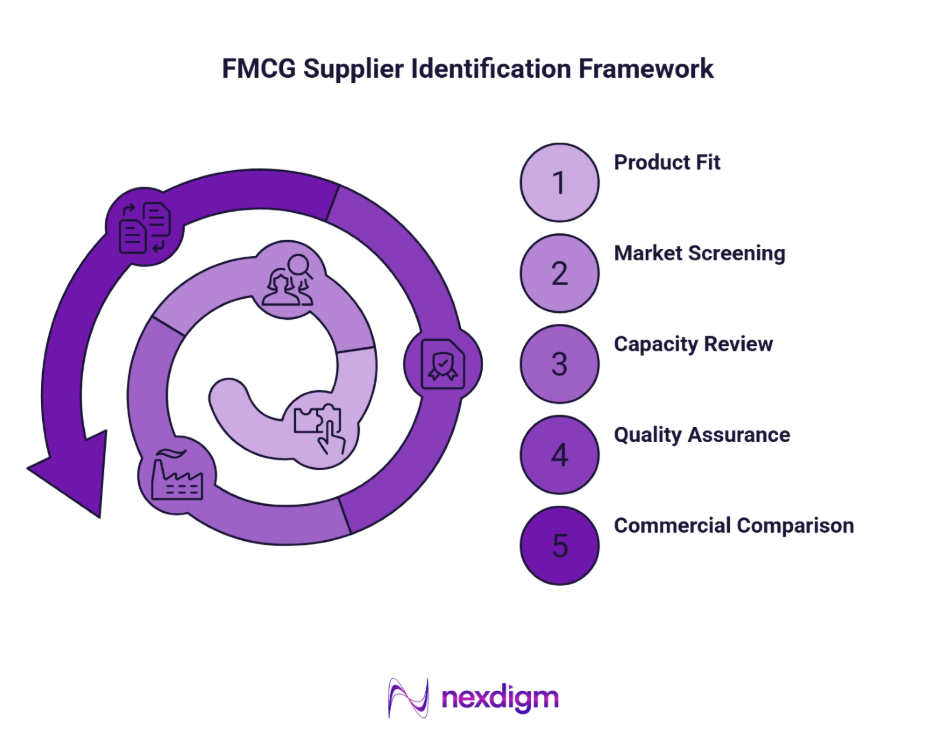
- Product Fit: Match suppliers against product specifications, quality requirements, packaging formats, shelf life, and intended customer segments before comparing commercial offers.
- Market Screening: Build a longlist using multiple credible sources, then verify supplier identity, manufacturing capabilities, product portfolio, geographic reach, and relevant operating credentials.
- Capacity Review: Assess production volumes, lead times, minimum order quantities, storage facilities, and the ability to accommodate promotional peaks or planned retail expansion.
- Quality Assurance: Review quality-control procedures, traceability, complaint handling, product testing, certifications, and category-specific regulatory obligations before approving a supplier.
- Commercial Comparison: Compare purchase prices alongside freight, payment terms, wastage, service levels, replenishment costs, and supplier flexibility to estimate the overall commercial value.
From Supplier Discovery to Supplier Approval
A shortlist should lead to structured validation, not automatic onboarding. Retailers can request samples, verify documentation, check references, negotiate service expectations, and run a limited trial before committing substantial volumes.
The final supplier portfolio should reflect different product needs and risk levels. Some categories may justify a primary supplier with a qualified backup, while others may benefit from multiple suppliers to maintain price competition and supply flexibility.
Nexdigm’s Case Study
A regional FMCG retailer screened 45 potential suppliers across three product categories and shortlisted nine for detailed assessment. Comparing capacity, quality documentation, landed cost, and delivery coverage identified four suitable candidates. A controlled sourcing pilot lowered average landed procurement cost by 6% across the selected products, subject to verification against actual purchase records.
To take the next step, simply visit our Request a Consultation page and share your requirements with us.
Harsh Mittal
+91-8422857704