

Food supply chain benchmarking is essential for optimizing performance in a market characterized by volatility and rising consumer demand. By comparing key metrics such as supplier efficiency, delivery times, and cost-effectiveness, businesses can identify areas for improvement.
Using competitive intelligence helps companies assess competitors’ strategies, uncover market trends, and adopt best practices. This data-driven approach enables food businesses to improve operational efficiency, reduce costs, and better meet consumer expectations in an increasingly competitive market.
Food supply chain inefficiencies cost businesses up to 15% of potential profits annually. With consumer demand for fresh and sustainable products rising by 20%, benchmarking and competitive intelligence can help companies optimize operations, reduce costs, and respond effectively to market shifts, ensuring long-term profitability and competitiveness.
Managing Supply Chain Volatility Using Competitive Intelligence in the Food Industry
Managing supply chain volatility in the food industry through competitive intelligence involves analyzing market trends, competitor strategies, and supplier performance to anticipate disruptions, optimize operations, and ensure consistent product availability.
-
Forecasting Demand to Minimize Supply Chain Disruptions
Competitive intelligence allows businesses to predict consumer demand shifts, helping optimize inventory and production schedules to reduce volatility.
-
Tracking Risk Factors Affecting the Food Supply Chain
Identifying geopolitical, environmental, and economic factors through competitive intelligence helps companies manage risks and build more resilient food supply chains.
-
Enhancing Communication Across the Food Supply Chain
Analyzing competitor practices reveals ways to improve communication with suppliers, distributors, and retailers, ensuring smooth operations during volatility.
-
Building Flexible Supply Chains to Adapt to Volatility
Competitive intelligence enables businesses to design more adaptable supply chains that can quickly respond to changing market conditions and disruptions.
Nexdigm’s Expertise in Managing Supply Chain Risks for the Food Industry
Nexdigm’s expertise in managing supply chain risks for the food industry involves using advanced analytics and competitive intelligence to identify and mitigate risks such as supply disruptions, price volatility, and demand fluctuations. By evaluating market trends, supplier performance, and competitor strategies, Nexdigm provides actionable insights that help food companies build more resilient supply chains, ensuring consistent product availability and reducing operational risks.
Managing Consumer Demand Fluctuations in Food Supply Chains with Nexdigm
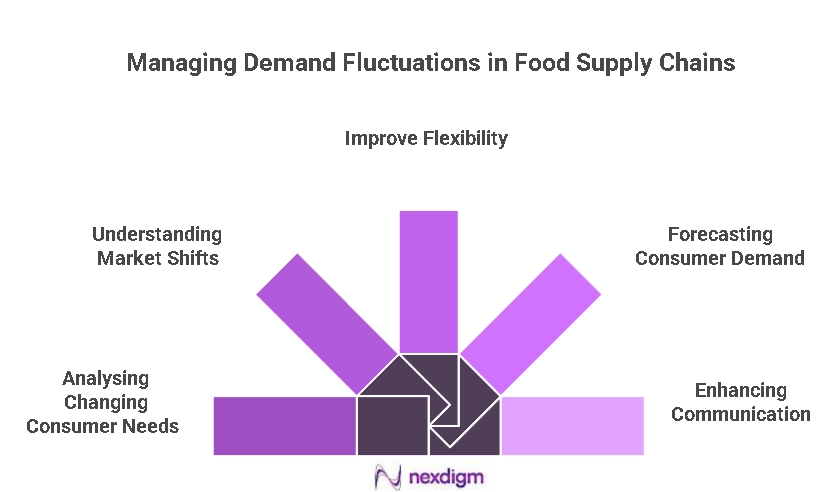
Nexdigm helps manage consumer demand fluctuations in food supply chains by leveraging data analytics, forecasting tools, and competitive intelligence. This enables businesses to optimize inventory, reduce waste, and ensure timely product availability:
-
Adapting Supply Chain Strategies to Changing Consumer Needs
Nexdigm guides businesses in adjusting their supply chain processes to respond quickly and effectively to shifts in consumer preferences.
-
Utilizing Competitive Intelligence to Understand Market Shifts
By analyzing competitors, Nexdigm helps businesses anticipate market shifts, enabling proactive adjustments to meet consumer demand fluctuations.
-
Improving Flexibility in Supply Chain Operations
Nexdigm helps businesses build agile supply chains that can easily adapt to unexpected changes in consumer demand or market conditions.
-
Forecasting Consumer Demand with Advanced Tools
Nexdigm provides advanced forecasting tools that predict demand patterns, allowing food businesses to plan production and distribution more effectively.
-
Enhancing Communication Across the Supply Chain
Nexdigm emphasizes clear communication between suppliers, distributors, and retailers, ensuring smooth coordination to handle demand fluctuations efficiently.
Nexdigm’s case:
Nexdigm helped a major food distributor improve responsiveness to consumer demand fluctuations by implementing advanced demand‑forecasting and competitive intelligence tools. By analyzing sales data across 10 product categories, the client reduced stockouts by 22% and lowered excess inventory by 15% within six months. These improvements enhanced supply chain agility and ensured timely product availability during peak demand periods.
To take the next step, simply visit our Request a Consultation page and share your requirements with us.
Harsh Mittal
+91-8422857704