
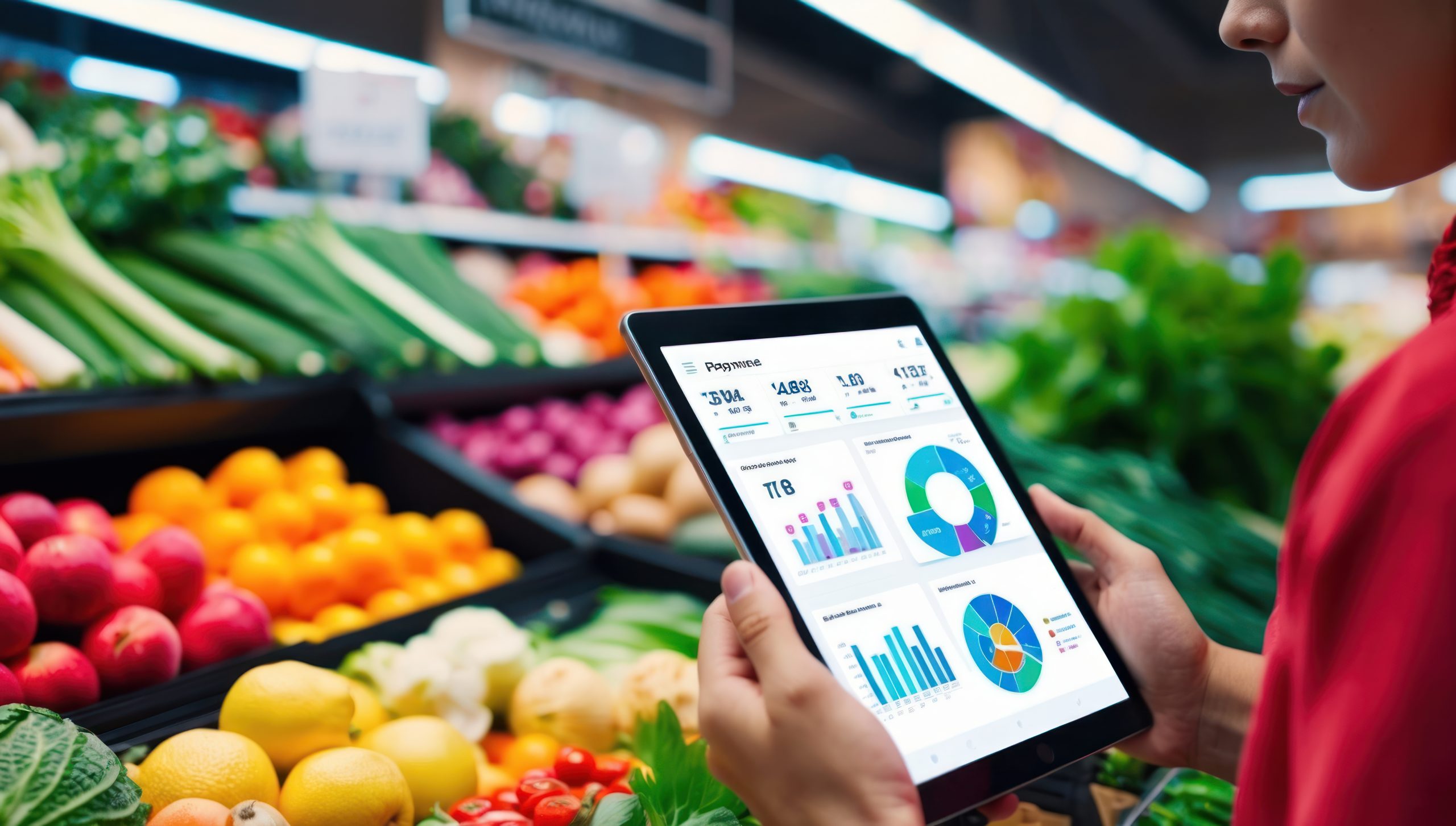
Food remains one of the most important components of international trade. UN Trade and Development notes that food products account for nearly 87% of global agricultural export value, while many developing economies depend on food imports to meet domestic requirements. Agricultural trade is therefore closely connected to food security, but also creates opportunities for producers, processors, exporters, importers, and investors.
At the same time, food trade is becoming more complex. Climate shocks, changing consumer preferences, supply disruptions, trade restrictions, and evolving regulations can quickly alter sourcing and demand patterns. In 2025, global merchandise exports reached $26.3 trillion, with exports from developing Asia and Oceania growing by 8.7%.
For food businesses, customs and trade records can provide an important starting point. They can show what products are moving, where they originate, which markets are importing them, who participates in the trade, and how values and volumes are changing. The challenge is converting these records into commercially relevant market intelligence.
What Customs Data Can Reveal About Food Markets
Food customs data can provide a direct view of actual cross-border purchasing activity. Unlike broad market forecasts, trade records can identify the products entering a country, their origins, importing companies, quantities, values, and historical movements.
For food companies, this can reveal high-demand categories, emerging destinations, supplier concentration, price differences, and changing sourcing patterns. However, a rise in imports does not automatically mean a profitable opportunity. Seasonality, commodity prices, regulations, logistics costs, and channel margins must also be considered.
Assessing the Shift from Trade Movements to Market Potential
A commercially attractive food market requires more than strong import volumes. Businesses need to understand whether demand is growing, whether buyers have multiple sourcing options, whether pricing supports margins, and whether products can meet destination-market requirements.
This makes food trade data analysis particularly valuable when combined with market intelligence. Trade data can identify the signal; market research can help explain the signal and determine whether it represents a sustainable opportunity.
How Nexdigm Connects Food Trade Data with Market Intelligence
Nexdigm combines trade intelligence, market research, competitive intelligence, pricing analysis, and primary research to assess international markets. Its Food Trade Data Analysis can examine products, SKUs, brands, companies, countries, regions, ports, and trade corridors.
For food and agriculture businesses, this can mean analyzing product-level demand, importing companies, supplier networks, pricing, trade flows, sourcing concentration, and destination-market attractiveness.
Nexdigm also complement quantitative trade information with distributor and warehouse audits, trade-channel checks, vendor procurement, disguised interviews, mystery shopping, and on-ground research. The result is a more complete picture of where commercial opportunities exist and what conditions could determine their viability.
Nexdigm’s Food Trade Data Analysis Assessment
Food trade markets are influenced by changing consumption patterns, sourcing dynamics, and seasonal demand. Food trade data analysis helps businesses identify attractive opportunities and optimize market strategies. Nexdigm can assess food trade markets across the following dimensions:
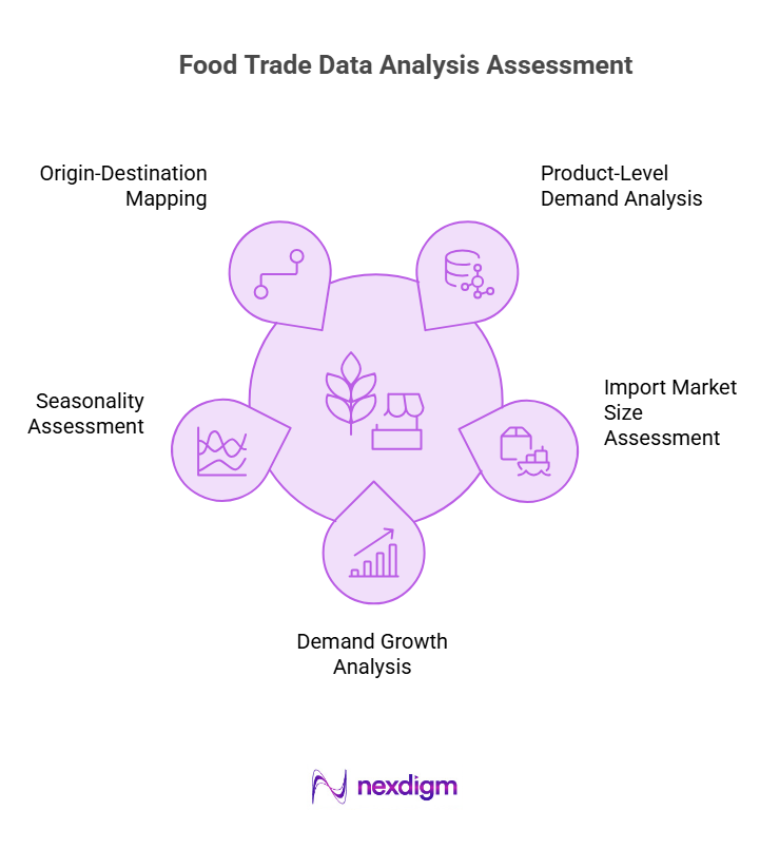
- Product-Level Demand: Analysis of specific food products, categories, and HS codes to identify markets where import demand is growing or showing sustained activity.
- Import Market Size: Nexdigm evaluates import values and volumes to understand the scale of international demand for selected food products.
- Demand Growth: Tracking historical trade growth to distinguish expanding food markets from stagnant or declining destination opportunities.
- Seasonality Assessment: Nexdigm examines periodic trade movements to identify seasonal purchasing patterns that may affect production, inventory, pricing, and export planning.
- Origin-Destination Mapping: Mapping areas where food products originate and where they are consumed to identify important trade corridors and sourcing relationships.
By analyzing demand trends, market size, seasonality, and trade corridors, Nexdigm helps businesses identify high-potential food markets, strengthen sourcing decisions, and pursue export opportunities with greater confidence and precision.
Nexdigm’s Food Trade Data Analysis Assessment for Export Market Identification
Identifying the right export opportunities requires a clear understanding of where demand exists, how it is evolving, and which markets offer the strongest commercial potential. Nexdigm’s assessment helps food businesses evaluate export opportunities through:
- High-Potential Export Market Identification: Nexdigm analyzes import demand, market size, and trade activity to identify export destinations with strong and sustained demand for specific food products.
- Export Demand Growth Assessment: Evaluation of historical import trends and growth patterns helps distinguish expanding markets from mature or declining opportunities.
- Buyer Market Attractiveness Analysis: Nexdigm assesses destination-market demand, purchasing activity, and import reliance to identify markets where exporters may have stronger commercial prospects.
- Seasonality and Export Planning Assessment: Analysis of seasonal trade movements helps businesses align production, inventory, and export strategies with market purchasing cycles.
By assessing demand, growth trends, seasonality, and trade corridors, Nexdigm helps food businesses identify, prioritize, and pursue export opportunities with greater confidence, enabling more targeted market-entry and international growth strategies.
Nexdigm’s Food Trade Data Assessment Case
Nexdigm supported a food-sector client by analysing product-level import volumes, supplier concentration, destination markets, shipment patterns, and indicative pricing across priority markets. The analysis identified three high-potential markets, 22 relevant buyer accounts, and 14 alternative suppliers, helping the client prioritize expansion and sourcing opportunities using evidence from actual trade activity.
To take the next step, simply visit our Request a Consultation page and share your requirements with us.
Harsh Mittal
+91-8422857704