
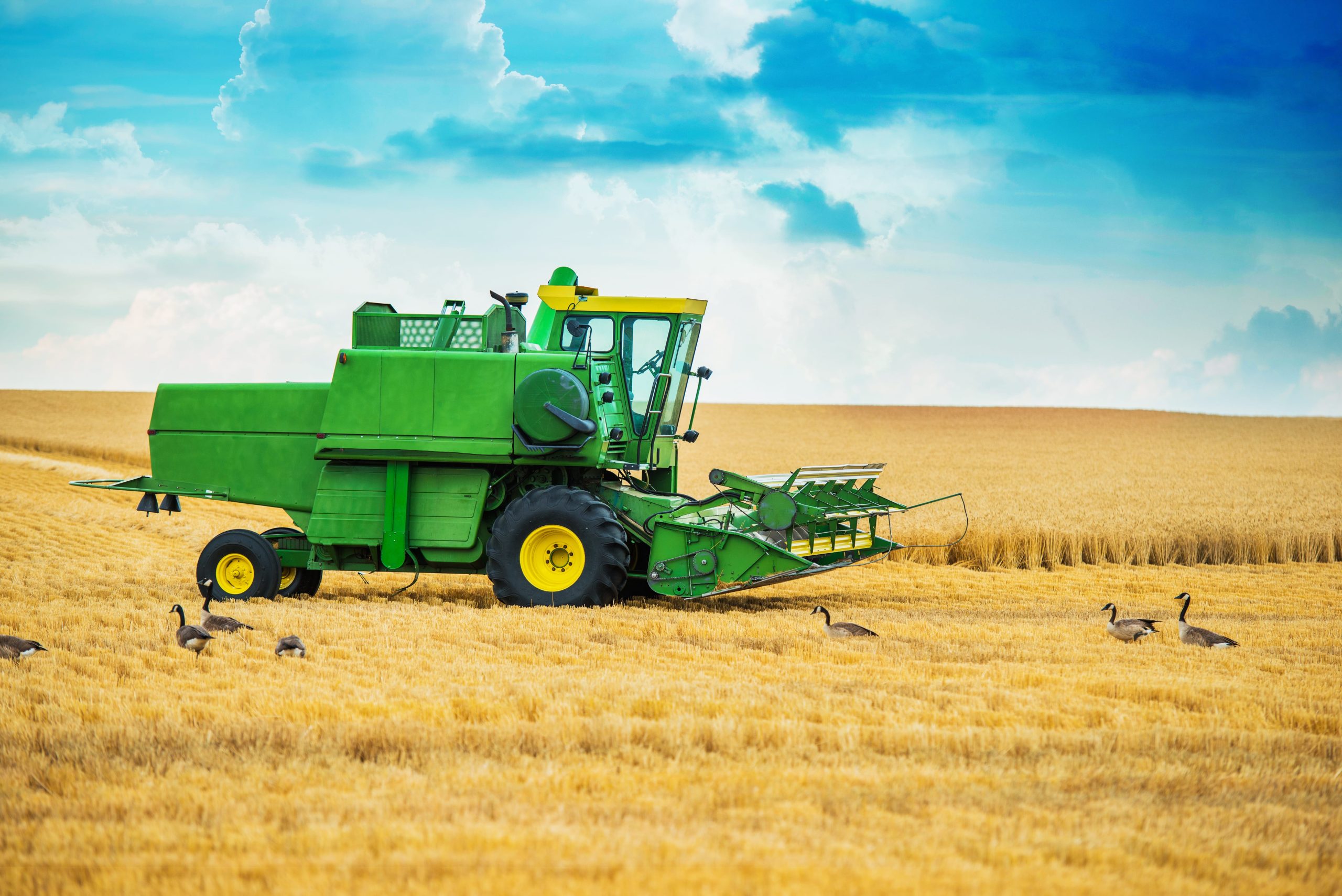
France agricultural tractor and harvester market is entering a new phase of transformation as the country balances productivity goals with sustainability mandates under the European Union’s Common Agricultural Policy (CAP). As of 2026, France remains one of Europe’s largest agricultural producers, with over 26 million hectares of utilized agricultural area, driving steady demand for mechanized farming equipment. However, rising production costs, tightening environmental regulations, and increasing adoption of precision agriculture technologies are reshaping equipment purchasing patterns. While domestic manufacturing remains strong, farmers are increasingly prioritizing fuel efficiency, automation, and digital integration. The market is no longer driven solely by horsepower expansion but by smarter, data-enabled mechanization aligned with France’s long-term climate and food security objectives.
What’s Driving the Agricultural Equipment Market in France?
Adoption of Precision and Smart Farming Technologies
French farmers are rapidly integrating GPS-guided tractors, telematics systems, and AI-enabled yield monitoring solutions to improve operational efficiency. Precision agriculture is gaining traction particularly in cereal-producing regions such as Nouvelle-Aquitaine and Grand Est. Advanced tractors equipped with variable rate technology (VRT) and automated steering systems help optimize seed, fertilizer, and pesticide usage, reducing input costs while meeting environmental compliance requirements. This technological shift is driving demand for mid- to high-horsepower tractors with integrated digital platforms.
Rising Sustainability and Emission Standards
Under EU Green Deal targets, France aims to reduce agricultural emissions and chemical usage significantly by 2030 and beyond. Stricter Stage V emission standards for non-road mobile machinery are accelerating fleet modernization. Farmers are gradually replacing older diesel-powered tractors and harvesters with fuel-efficient and low-emission models. In addition, interest in alternative fuel tractors, including biomethane-compatible and hybrid models, is emerging as part of France’s broader decarbonization strategy.
Labor Shortages and Farm Consolidation
France continues to face agricultural labor shortages, pushing farms to invest in higher-capacity harvesters and automated machinery to maintain productivity. At the same time, small farms are consolidating into larger operational units, increasing demand for high-performance combine harvesters and tractors above 150 HP. Mechanization is becoming essential not only for productivity but also for operational continuity during peak harvesting seasons.
Government-Led Initiatives and EU Support
The French government, supported by the EU’s Common Agricultural Policy (CAP) 2023–2027 framework, provides subsidies for farm modernization and sustainable equipment upgrades. Financial assistance schemes encourage investment in precision farming tools, low-emission engines, and digital farm management systems. Additionally, France’s “France 2030” investment plan allocates funding toward agri-tech innovation, robotics, and climate-resilient agricultural practices. These initiatives are accelerating the replacement cycle for aging tractors and harvesters, particularly among medium and large-scale farms.
Market Competition and Key Players
The France agricultural tractor and harvester market is moderately concentrated, with strong presence of global OEMs and domestic manufacturers. Key players include John Deere, CNH Industrial (parent company of New Holland Agriculture and Case IH), AGCO Corporation (owner of Massey Ferguson), and CLAAS. Massey Ferguson, which has a significant manufacturing presence in France, continues to strengthen its domestic footprint through technologically advanced tractor series tailored to European compliance standards. Meanwhile, CLAAS remains a dominant player in the combine harvester segment, particularly in large-scale grain farming operations. Competitive differentiation is increasingly centered around telematics integration, after-sales service networks, and financing solutions rather than price alone.
High Capital Costs and Market Constraints
Despite modernization incentives, high upfront costs of advanced tractors and combine harvesters remain a major challenge for small and mid-sized farms. Equipment prices have risen due to inflationary pressures, supply chain disruptions, and increasing electronic component integration. Additionally, fluctuating farm incomes influenced by commodity price volatility and climate-related uncertainties impact purchasing decisions. As a result, some farmers are extending equipment lifecycles or turning to the used machinery market as a cost-management strategy.
Future Outlook
The France agricultural tractor and harvester market is expected to witness stable yet technology-driven growth through 2035. Demand will increasingly shift toward smart, connected machinery integrated with farm management software and real-time data analytics. By 2035, a significant share of newly sold tractors in France is expected to feature semi-autonomous capabilities, advanced telematics, and compliance with next-generation emission norms. Sustainability will remain central to market evolution, with gradual penetration of alternative fuel-powered tractors and energy-efficient harvesting equipment. Larger farms will continue investing in high-horsepower and automation-ready models, while smaller farms may rely more on cooperative ownership and leasing structures to manage capital expenditure. France will maintain its position as one of Europe’s most technologically advanced agricultural machinery markets, balancing productivity, environmental stewardship, and digital transformation.
Consultants at Nexdigm, in their latest publication “France Agricultural Tractor & Harvester Market Outlook to 2035,” analyzed the market by Horsepower (Below 50 HP, 50–150 HP, Above 150 HP), By Equipment Type (Tractors, Combine Harvesters, Forage Harvesters), By Drive Type (2WD, 4WD), and By Application (Cereal Crops, Vineyards, Dairy & Livestock, Mixed Farming). Nexdigm believes that businesses should prioritize precision-enabled machinery, flexible financing models, and sustainability-aligned product portfolios to capitalize on long-term mechanization trends in France.
To take the next step, simply visit our Request a Consultation page and share your requirements with us.
Harsh Mittal
+91-8422857704