
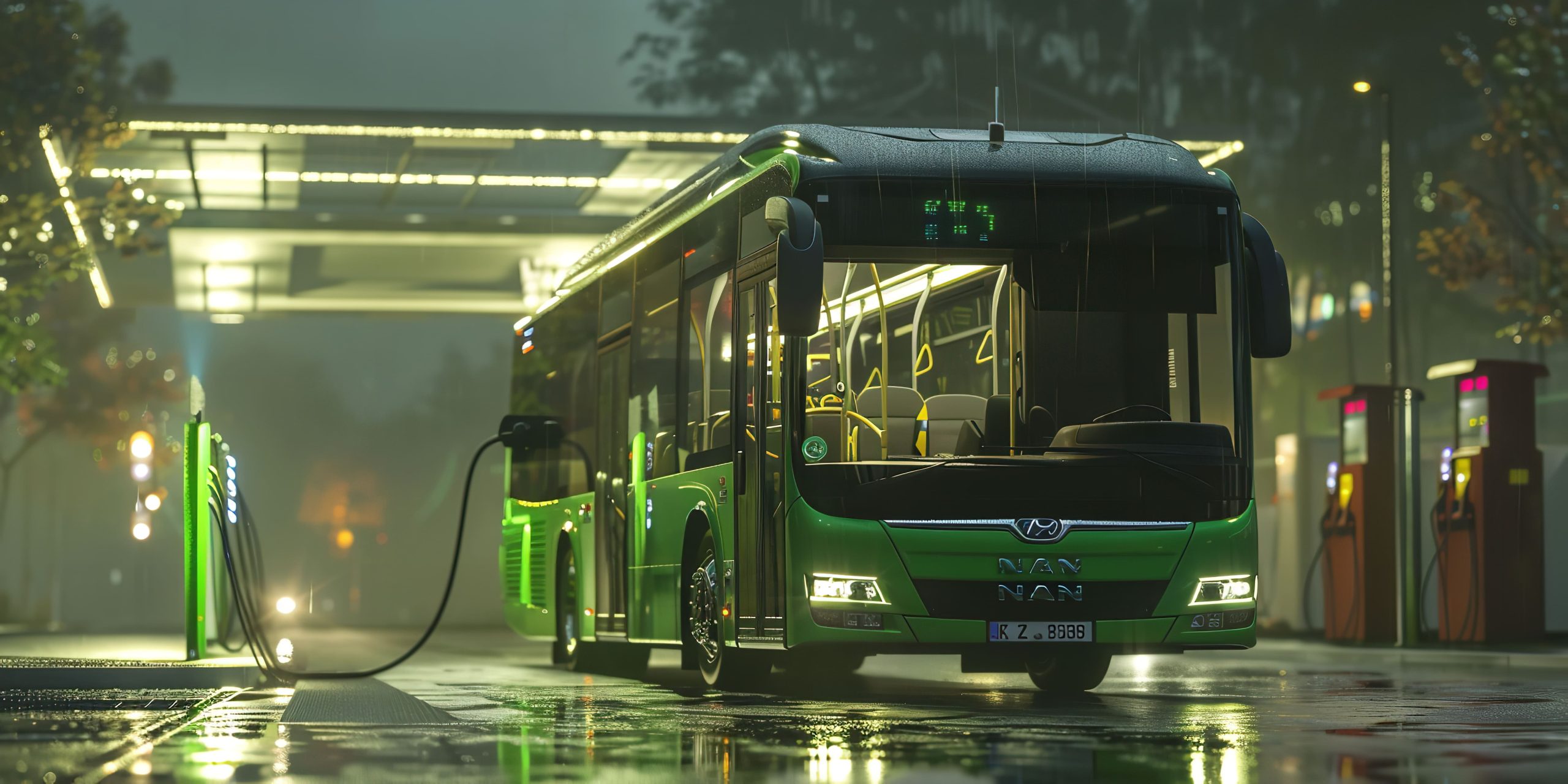
France’s public transport system is in the middle of a visible shift, and buses are one of the clearest signs of it. Across major cities, diesel fleets are gradually giving way to electric models as local authorities push for cleaner air, quieter streets, and lower transport emissions. By 2026, France has already emerged as one of the more active electric bus markets in Western Europe, helped by public procurement programs, city-level climate targets, and steady investment in charging infrastructure. What makes the French market particularly interesting is that this transition is no longer just about pilot projects. In many urban corridors, electric buses are becoming part of day-to-day operations, not just a future ambition.
What’s Driving the Electric Bus Market in France?
Urban Air Quality and Emission Pressure
A major force behind adoption is simple: French cities can no longer afford to treat transport emissions as a secondary issue. Public buses run for long hours, cover dense routes, and often pass through highly populated districts. Replacing diesel units with electric ones offers an immediate and visible environmental gain. In places like Paris, where air quality has long been under public and political scrutiny, electric buses fit neatly into broader low-emission mobility plans. They also bring a quieter ride, which matters more than people often assume, especially in central residential zones.
Mass Transit Fleet Renewal Across Major Cities
Another reason this market has picked up pace is the sheer scale of bus replacement programs now underway. France has many aging urban fleets, and for transport agencies, replacing old diesel buses with electric ones makes more sense than investing in another fossil-fuel cycle. RATP’s transition in the Paris region is one of the most closely watched examples, but similar procurement momentum can also be seen in other metropolitan areas. On the ground, once one depot is electrified and a few routes perform reliably, adoption tends to accelerate. Operators become less cautious after real-world proof replaces policy ambition.
Charging Infrastructure and Operational Learning
Electric buses do not succeed on vehicle quality alone. The bigger story often sits behind the depot gates. Charging systems, route planning software, power upgrades, and maintenance training are now becoming just as important as the buses themselves. France has made steady progress here, and that matters. A city can buy dozens of electric buses, but if charging schedules clash with route demand or battery performance dips in winter, the economics quickly become less attractive. In practice, operators are learning that electrification is as much an operational discipline as it is a procurement decision.
Government-Led Initiatives
Public policy has played a decisive role in moving the market forward. France’s clean mobility agenda, combined with local transport authority budgets and European funding support, has helped reduce the financial burden of early adoption. The Paris Bus2025 program is one of the strongest examples, where depot conversion and low-emission fleet purchases were backed by substantial public investment. That kind of support matters because electric buses still cost more upfront than diesel alternatives. Without government intervention, many municipalities would likely delay the shift, even if the long-term operating case looks sensible.
Market Competition
The France electric bus market remains moderately concentrated, with a mix of domestic and European manufacturers competing for public contracts. Key names include Iveco Bus, Heuliez, Irizar, and Bluebus. Heuliez, in particular, has built strong visibility in the French market through its urban electric bus offerings. Still, competition is not just about who can manufacture the vehicle. Buyers increasingly look at battery warranty terms, after-sales support, charger compatibility, and total lifecycle cost. That is where some suppliers stand out and others struggle. Winning a tender is one thing. Supporting a fleet for ten years is another.
High Infrastructure and Capital Requirements
The biggest challenge in this market is not demand. It is execution cost. Electric buses remain expensive to purchase, and the associated infrastructure bill can be even harder to absorb. Depot electrification, transformer upgrades, charger installation, and workforce training all require capital before operational savings show up. For large urban operators, this is manageable with public backing. For smaller cities, it can become a genuine bottleneck. A common challenge is that transport authorities want cleaner fleets, but the supporting grid and budget realities do not always move at the same pace.
Future Outlook
France’s electric bus market looks set for long-term expansion through 2035, though the road ahead will not be perfectly linear. Larger cities will likely continue leading deployment, while smaller municipalities may move more cautiously depending on funding and infrastructure readiness. Battery improvements, better route optimization, and lower lifecycle costs should make adoption more practical over time. The strongest opportunities will likely sit with suppliers that can offer not just buses, but full operational support around charging, servicing, and energy management.
Consultants at Nexdigm, in their latest publication “France Electric Bus Market Outlook to 2035”, analyzed the market by Bus Length (Below 9m, 9–12m, Above 12m), By Battery Type (LFP, NMC, Others), By End User (Urban Transit Agencies, Intercity Operators, Municipal Fleets, Airport and Shuttle Services), and By Charging Type (Depot Charging, Opportunity Charging, Pantograph Charging). Nexdigm believes businesses should focus on long-term service partnerships, depot-readiness solutions, and battery performance optimization rather than competing only on vehicle price.
To take the next step, simply visit our Request a Consultation page and share your requirements with us.
Harsh Mittal
+91-8422857704