
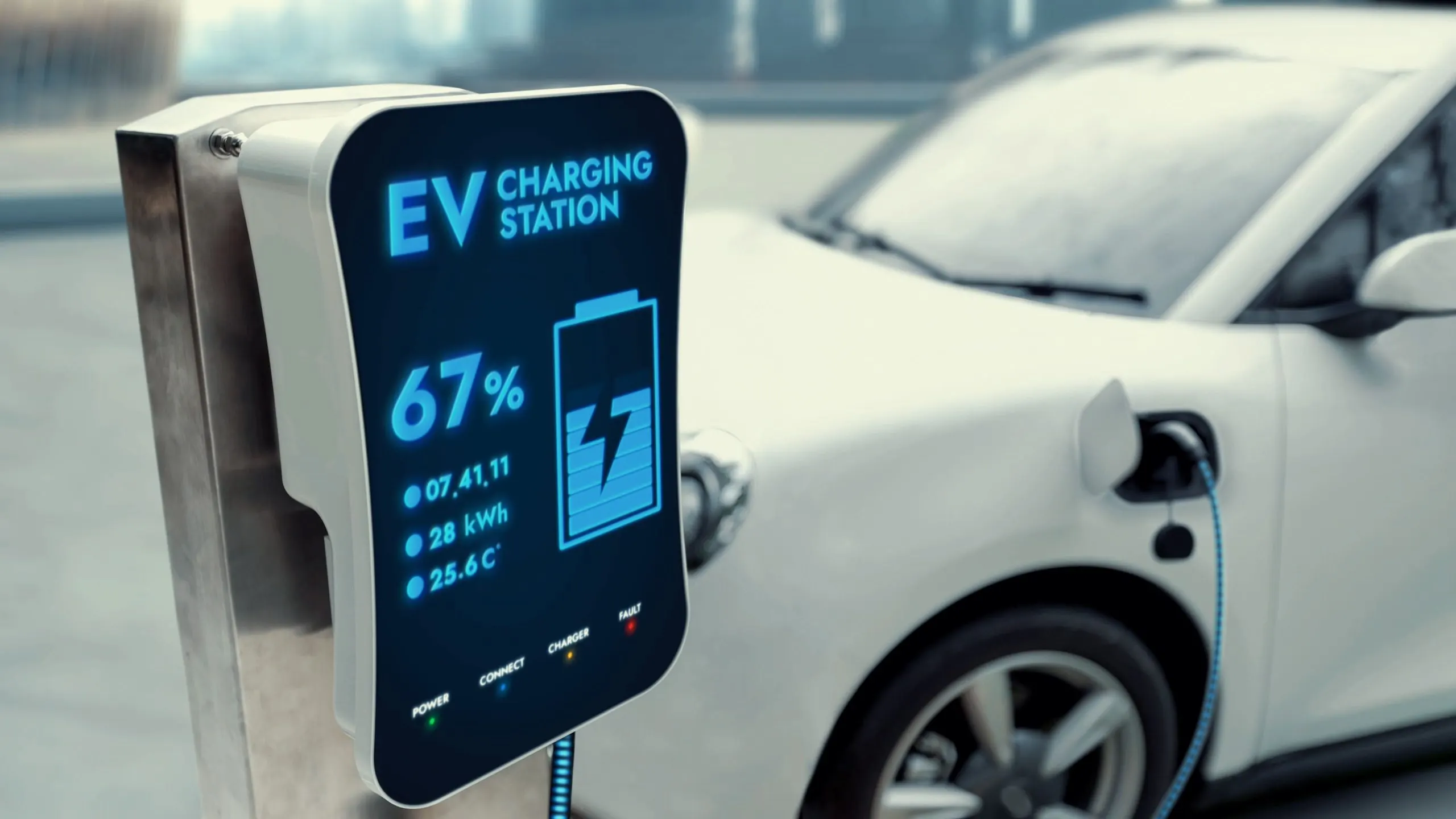
France has moved into the front rank of Europe’s electric vehicle transition, and that matters directly for the battery management system market. A Battery Management System, or BMS, is the control layer that keeps an EV battery safe, efficient, and usable over time. It monitors temperature, voltage balance, charging speed, and battery health. Without it, even a high-quality battery pack can underperform or degrade early. By 2026, France has built strong momentum through EV purchase incentives, urban low-emission policies, and public charging rollout. Local battery cell production is also taking shape, giving the country more control over supply chains. For suppliers of battery electronics, sensors, and software, that creates a serious long-term opportunity through 2035.
What’s Driving the EV Battery Management System Market in France?
Strong EV Sales Need Better Battery Intelligence
As more French consumers switch to battery electric and plug-in hybrid models, automakers face a simple reality: battery performance often decides whether buyers stay satisfied. Range accuracy, charging speed, and battery life all depend heavily on the quality of the management system. In practice, drivers notice poor calibration quickly. If a vehicle shows 20 percent charge remaining but loses power too early, trust drops fast. That is why newer BMS platforms focus on more accurate state-of-charge readings, faster diagnostics, and better temperature balancing during winter and summer conditions. France experiences both cold snaps and hot periods, so this is not a minor issue.
Battery Factories Are Creating Local Demand
France is no longer relying only on imported cells. Projects from companies such as Automotive Cells Company and Verkor are helping build domestic battery production capacity. Every battery pack assembled locally needs embedded control electronics, testing systems, and software layers. That often benefits nearby suppliers first. A battery plant typically wants shorter lead times, technical support, and easier collaboration during product changes. For BMS vendors, being close to manufacturing sites can matter as much as having the cheapest offer. This tends to favor European suppliers that can move quickly and customize designs.
Vehicles Are Becoming Software Products
The BMS used to be seen mainly as a safety component. That view is outdated. It is now part of the digital backbone of the vehicle. Carmakers want remote diagnostics, predictive maintenance alerts, and over-the-air updates that refine battery behavior after purchase. This opens room for specialist software firms, not just hardware manufacturers. It also means recurring revenue may become more common, since analytics services can continue long after the car is sold. That shift is commercially significant.
Government-Led Initiatives Supporting Market Growth
French industrial policy has given the EV sector a practical boost. Consumer subsidies helped early adoption, while incentives for domestic manufacturing encouraged battery investment. The France 2030 program has backed advanced mobility and energy technologies, including batteries and semiconductors. Low-emission zones in cities such as Paris, Lyon, and Marseille also push fleet operators toward electrified vans and passenger vehicles. That matters because commercial fleets often demand higher durability and tighter uptime standards, which usually translates into better battery monitoring systems. Public policy does not guarantee success, but it has clearly accelerated market demand.
Market Competition and Technology Landscape
The market includes large automotive suppliers, semiconductor companies, and newer battery-tech firms. Bosch, Continental, NXP Semiconductors, and LG Energy Solution all have relevant capabilities, while smaller European specialists compete through niche expertise. Wireless BMS designs are gaining attention because they reduce cabling weight and simplify battery pack assembly. Cybersecurity is another growing area. Once battery systems connect to cloud platforms and remote updates, protection becomes essential rather than optional. Many buyers now ask about software resilience earlier in procurement discussions than they did a few years ago.
Cost Pressure and Supply Constraints
A common challenge is balancing innovation with affordability. Carmakers want smarter battery systems, but vehicle pricing remains sensitive. If battery raw materials rise sharply, manufacturers often squeeze component budgets elsewhere. Semiconductor dependency also remains a concern. A shortage of microcontrollers or power management chips can delay production schedules. On the ground, this can hurt smaller suppliers more than large multinationals with stronger purchasing leverage. Talent shortages in embedded software and battery analytics add another layer of friction.
Future Outlook
The France EV Battery Management System market is expected to grow strongly through 2035, driven by rising EV penetration, domestic battery gigafactories, and the shift toward intelligent mobility platforms. By 2035, BMS solutions are expected to become more software-centric, featuring predictive battery health scoring, wireless architecture, and seamless integration with charging networks and grid services. France is also likely to emerge as an important export base for battery packs and associated electronics within Europe. As electrification expands beyond passenger vehicles into buses, vans, and energy storage systems, BMS demand will broaden significantly across sectors.
Consultants at Nexdigm, in their latest publication “France EV Battery Management System Market Outlook to 2035”, analyzed the market by Component (Hardware, Software, Communication Systems), By Vehicle Type (Passenger EVs, Commercial EVs, Two-Wheelers, Buses), By Battery Type (Lithium-ion, LFP, Solid-State Emerging), and By Application (Monitoring, Thermal Management, Safety Control, Energy Optimization). Nexdigm believes businesses should prioritize localized partnerships, AI-enabled battery analytics, and next-generation wireless BMS platforms while aligning with Europe’s battery sovereignty ambitions.
To take the next step, simply visit our Request a Consultation page and share your requirements with us.
Harsh Mittal
+91-8422857704