
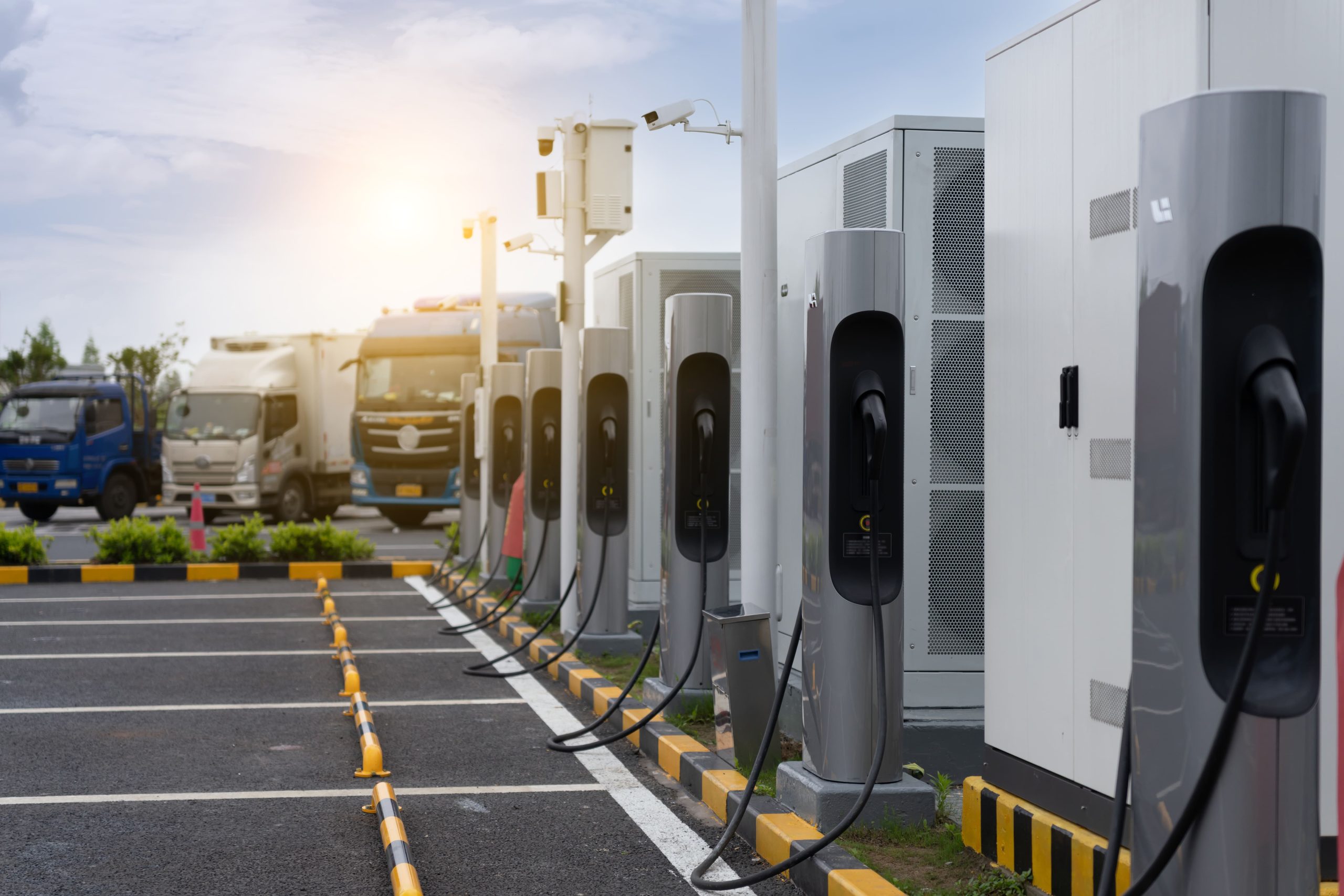
France EV charging infrastructure market has moved well beyond its early buildout phase and is now entering a more demanding stage – one where scale alone will not be enough. The country has already built one of Europe’s more visible public charging networks, but the next decade will be about quality, speed, grid readiness, and whether charging can keep pace with real-world EV usage. That matters because France is not just adding more electric cars to the road; it is also dealing with a user base that now expects convenience, not experimentation. With national targets for public chargers and stronger EV adoption across households and fleets, the market is likely to remain active through 2035. Still, the real story is less about headline installation numbers and more about where chargers are placed, how reliable they are, and whether they solve everyday charging friction.
What’s Driving the EV Charging Infrastructure Market in France?
A Larger EV Base Means Charging Can No Longer Be Patchy
The most obvious trigger is simple: France has too many electric vehicles on the road for charging deployment to remain uneven. What worked when EV ownership was concentrated among early adopters no longer works for mainstream buyers. A driver in Paris, Lyon, or Marseille may tolerate occasional inconvenience once, but not repeatedly. That is why demand is shifting from “more chargers” to “more usable chargers” – especially in dense neighborhoods, office districts, and commuter corridors. There is also a practical split in demand. Home charging still serves suburban households well, but apartment dwellers and urban users rely much more heavily on public and destination charging. In practice, this makes the French market less straightforward than it looks on paper. Charger density has to match housing realities, not just vehicle sales.
Motorway Fast Charging Has Become a Necessity, not a Bonus
Long-distance charging has turned into one of the most commercially important parts of the market. France’s motorway network carries holiday traffic, business travel, logistics movement, and cross-border transit with Belgium, Germany, Spain, and Italy. For EV drivers, that means charging stops have to be quick, predictable, and available when demand spikes. A station with four occupied chargers on a summer weekend can damage consumer trust faster than any policy gap. That is why operators are putting serious attention on high-power charging hubs near major roads and service areas. These sites are not cheap to build, but they are becoming essential infrastructure. The faster France normalizes reliable intercity EV travel, the easier it becomes for buyers to move away from internal combustion vehicles without hesitation.
Retail, Fleets, and Real Estate Are Expanding the Use Case
A less discussed but important driver is commercial property. Shopping centers, office parks, hotels, and supermarket chains increasingly see charging as a customer retention tool rather than just a sustainability add-on. A 20 to 40-minute charging session fits neatly into grocery visits, gym stops, or workplace parking. That makes charging commercially useful in a very grounded way. Fleet electrification adds another layer. Delivery vans, ride-hailing vehicles, and company cars require dependable access, often on tighter schedules than private users. This pushes demand toward semi-public and depot-linked charging, especially in urban and peri-urban zones where vehicle utilization is high.
Government-Led Initiatives
Public policy still plays a central role in France, and that is unlikely to change soon. National targets for public charging deployment, combined with broader European transport decarbonization rules, have helped create confidence for private investment. That matters because charging infrastructure is capital-intensive, location-sensitive, and often slower to monetize than many investors would like. France has also benefited from a relatively clear policy direction compared with markets where EV infrastructure planning has been more fragmented. Still, policy alone does not guarantee a smooth rollout. The tougher part is execution at the municipal and grid level, where permits, electrical upgrades, and site readiness often move more slowly than market demand.
Market Competition
The competitive landscape in France is becoming more interesting each year. Major charging operators, energy companies, and specialist fast-charging firms are all competing for high-traffic locations and long-term user loyalty. In reality, this is no longer just a hardware market. Uptime, payment simplicity, app usability, maintenance response, and pricing transparency now matter almost as much as charger count. There is also a visible divide between premium charging hubs and more basic public installations. Some operators are building branded, high-comfort charging experiences, while others are focused on scale and municipal coverage. Both models have a place, but the winners will likely be those that combine reliability with practical site economics.
Urban Charging Access Remains Uneven
A common challenge in France is that EV ownership is advancing faster than charging convenience in dense residential areas. Multi-unit housing remains a difficult segment. Residents without private parking or dedicated electrical access often depend on public curbside chargers or nearby hubs, which can be inconsistent in availability. Grid limitations complicate the picture further. Fast chargers require substantial power, and not every urban location is ready for that load. So while charger counts may keep climbing, access quality could still lag in neighborhoods where it matters most. That gap will be one of the market’s biggest tests through 2035.
Future Outlook
France EV charging infrastructure market will likely look very different by 2035. The next chapter will be shaped less by raw installation momentum and more by smarter deployment, stronger utilization, and better alignment with how people actually live and travel. Fast charging corridors should become denser and more dependable, while urban charging will need more creative formats, including curbside, shared residential, and retail-linked solutions. The market should also become more disciplined. Investors and operators will increasingly focus on charger performance, repeat usage, and site profitability rather than headline rollout numbers. That shift is healthy. France has already shown that it can build charging infrastructure at scale. The more difficult task now is making that network work consistently for everyday drivers, fleets, and city residents alike.
Consultants at Nexdigm, in their latest publication “France EV Charging Infrastructure Market Outlook to 2035”, analyze the market by Charger Type (AC Chargers, DC Fast Chargers, Ultra-Fast Chargers), By Installation Type (Residential, Commercial, Public), By Application (Passenger Vehicles, Fleets, Commercial Vehicles), and By Location (Urban, Highways, Semi-Urban and Rural). Nexdigm believes that businesses should prioritize high-utilization urban charging hubs, interoperability-led platform development, and grid-integrated fast charging deployments to capture long-term growth in France’s evolving EV ecosystem.
To take the next step, simply visit our Request a Consultation page and share your requirements with us.
Harsh Mittal
+91-8422857704