
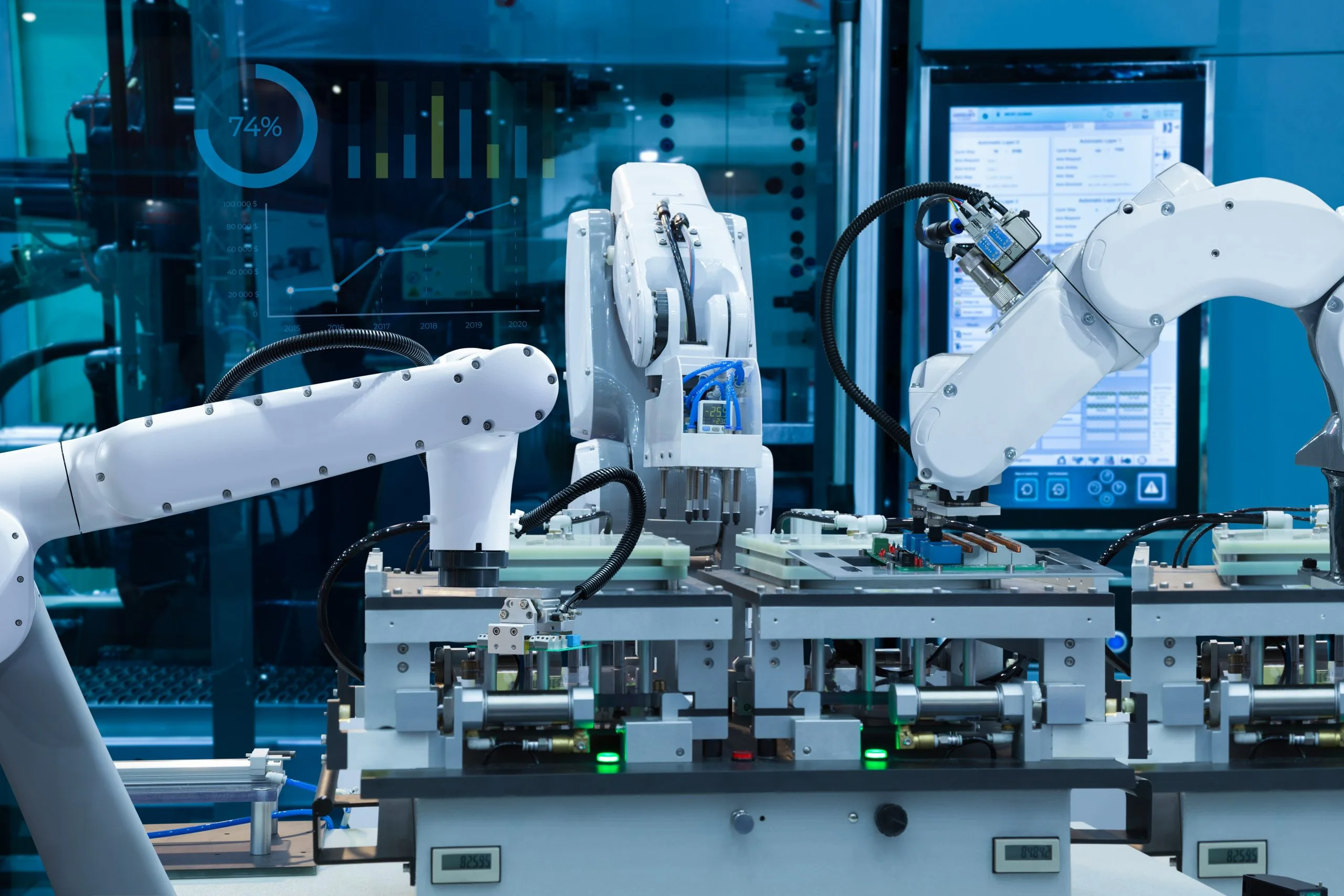
The France industrial automation market is undergoing a sustained transformation as manufacturers across sectors adopt smart technologies to enhance productivity and competitiveness. Automation solutions — including robotics, sensors, control systems, and IoT (Industrial Internet of Things) — are increasingly deployed to streamline production, improve quality, and reduce operational costs. Market forecasts indicate consistent growth through the next decade, driven by digital transformation and Industry 4.0 adoption. France’s strategic industrial base, particularly in automotive, aerospace, and food & beverage, supports this trend.
Key Market Drivers Shaping the Growth of Industrial Automation in France
Industry 4.0 and Digital Transformation
Implementation of Industry 4.0 frameworks is a primary driver of the automation market in France. Manufacturers are investing in connected systems, advanced analytics, and intelligent control architectures to enhance operational efficiency and real‑time decision making. Such investments improve agility and competitiveness, especially in high‑value sectors like aerospace and pharmaceuticals. Adoption of automation systems also facilitates predictive maintenance, minimizing downtime and extending equipment life.
Labour Constraints and Efficiency Imperatives
France faces structural labour shortages in manufacturing, prompting firms to increase automation to maintain output levels. Automation technologies, including robotics and AI‑assisted control systems, mitigate labour gaps and reduce repetitive or hazardous tasks. France’s robotics deployment remains below some European peers — with fewer than 200 robots per 10,000 manufacturing employees compared with higher densities in Germany — indicating potential for growth.
Cost Optimization and Quality Standards
Automation enables precision and repeatability that manual processes cannot match, resulting in consistent product quality and reduced defect rates. This is particularly valued in sectors such as automotive manufacturing, chemicals, and electronics, where tight tolerances and compliance with quality standards are critical. Automated workflows also lower variable operating costs over time as systems scale deployment.
Government Support and Strategic Initiatives Fueling Industrial Automation in France
French government policies aimed at industrial modernization and digital transition support automation adoption through measures like Industry 4.0 incentives, R&D funding, and tax credits for technology investments. National programmes encourage integration of IoT, AI, and robotics to bolster manufacturing competitiveness and align with EU objectives for digital and green industrial transformation.
Key Players and Market Dynamics in France’s Industrial Automation Sector
The France industrial automation sector is dominated by both global and domestic players, including Schneider Electric SE (France), Siemens AG (Germany), ABB Ltd. (Switzerland), Rockwell Automation, Inc. and Honeywell International Inc. (USA), and Mitsubishi Electric Corporation (Japan). These companies offer a wide range of automation solutions, including PLCs, DCS, SCADA systems, robotics, and advanced analytics platforms, playing a crucial role in driving innovation and providing integrated solutions across various industries.
Key Obstacles Hindering Industrial Automation Adoption in France
High Implementation Costs
The initial capital required for automation technologies — including sophisticated robots, control systems, and IoT infrastructure — can be prohibitive, especially for small and medium‑sized enterprises (SMEs). This slows adoption rates among firms with constrained budgets.
Skill Gaps and Integration Complexity
Effective deployment of advanced automation solutions requires skilled personnel capable of programming, maintaining, and analyzing automated systems. A shortage of such talent complicates integration and limits the speed of technology rollout across industrial facilities.
Future Outlook
The France industrial automation market is expected to grow steadily toward 2035, supported by robust long‑term demand for efficiency and digitalization in manufacturing. Estimates from process automation forecasts suggest the market may expand at a CAGR of around 5.8% between 2026 and 2035, potentially reaching approximately USD 10.46 billion by 2035. Continued advances in artificial intelligence, collaborative robotics, and edge computing will further enhance the value proposition of automation solutions. Increasing regulatory emphasis on sustainability and energy efficiency is also likely to boost automation adoption as firms seek to meet environmental targets alongside productivity gains.
Consultants at Nexdigm, in their latest publication “France Industrial Automation Market Outlook to 2035,” analyze the sector by System Type (Programmable Logic Controllers, Industrial Robots, Supervisory Control and Data Acquisition (SCADA), Human Machine Interface (HMI)), By Platform Type (Factory Automation, Process Automation, Discrete Automation), and By Fitment Type (On-premise Solutions, Cloud-based Solutions, Modular Systems). Nexdigm suggests that businesses should strategically embrace digital transformation and automation technologies to stay competitive in the evolving market. By adopting Industry 4.0 solutions, including AI, IoT, and robotics, companies can enhance operational efficiency, improve product quality, and reduce costs. As the industrial landscape becomes increasingly digital, businesses need to focus on scalability, integration, and sustainability to meet both market demands and regulatory standards.
To take the next step, simply visit our Request a Consultation page and share your requirements with us.
Harsh Mittal
+91-8422857704