
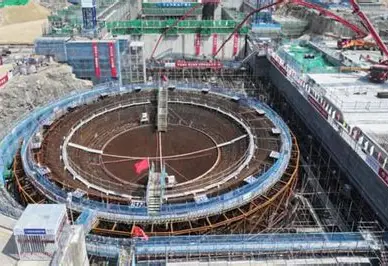
France’s Nuclear Reactor Construction Market is experiencing renewed momentum as the country strengthens its commitment to energy security, industrial electrification, and carbon-free electricity generation. France operates approximately 56 nuclear reactors with more than 61 GW of installed nuclear capacity, making it the largest nuclear power producer in Europe. Nuclear energy generates roughly 65–70% of the country’s electricity, among the highest shares globally, and produces more than 320 TWh of low-carbon electricity annually. To maintain this leadership position, France has announced plans for at least six new EPR2 reactors, with potential for additional units in the future. Rising electricity demand from hydrogen production, electric vehicle manufacturing, data centers, and industrial decarbonization initiatives is expected to further accelerate investments in nuclear reactor construction and supporting infrastructure over the coming decade.
Key Market Drivers for France’s Nuclear Reactor Construction Market
Nuclear Dominance in the Energy Mix Supports New Build Programs
France remains the most nuclear-dependent major economy in the world, with nuclear power contributing approximately 65–70% of total electricity generation. The country’s existing fleet produces more than 320 TWh of electricity annually, providing stable and low-carbon baseload power. To maintain long-term energy security and replace aging nuclear assets, France has announced plans for multiple next-generation reactor projects, supporting sustained demand for reactor construction and engineering services.
Government Commitment to New EPR Reactors Creates Significant Opportunities
France is actively pursuing the deployment of new European Pressurized Reactors (EPR2) as part of its long-term energy strategy. The government has announced plans to construct at least six new EPR2 reactors, with the possibility of additional units in the future. These projects are expected to generate billions of euros in investments while strengthening domestic nuclear manufacturing capabilities and supporting thousands of skilled jobs across the nuclear value chain.
Industrial Electrification and Hydrogen Development Increase Electricity Demand
France’s efforts to decarbonize heavy industries, transportation systems, and chemical production are increasing demand for reliable low-carbon electricity. Investments in green and low-carbon hydrogen projects, battery manufacturing facilities, electric vehicle production, and digital infrastructure are expected to significantly increase electricity consumption over the coming decades. Nuclear energy’s high capacity factor of more than 90% makes it a critical source of dependable power for energy-intensive industries.
Government Initiatives Supporting France’s Nuclear Reactor Construction Market
The French government continues to place nuclear energy at the center of its long-term energy security and decarbonization strategy. France operates 56 commercial nuclear reactors with more than 61 GW of installed capacity, supplying approximately 65–70% of national electricity generation. To strengthen energy independence and ensure long-term low-carbon power supply, the government has announced plans to construct at least six EPR2 reactors, with options for additional units in later phases. Furthermore, nuclear-related investments are expected to exceed EUR 100 billion over the coming decades, supporting reactor construction, fleet modernization, fuel-cycle infrastructure, and national energy-transition objectives. These initiatives are creating a favorable environment for large-scale nuclear engineering, construction, and supply chain development.
Competitive Landscape of France’s Nuclear Reactor Construction Market
France’s Nuclear Reactor Construction Market benefits from one of the world’s most advanced and integrated nuclear ecosystems, supported by decades of operational expertise and a highly developed domestic supply chain. Competition is increasingly focused on reactor construction efficiency, advanced engineering capabilities, digital plant management systems, modular construction techniques, and lifecycle cost optimization. The market is bolstered by a nuclear fleet generating more than 320 TWh of electricity annually, making France the largest nuclear electricity producer in Europe. Growing investments in reactor life-extension programs, next-generation EPR2 projects, hydrogen production infrastructure, and industrial electrification are encouraging industry participants to strengthen manufacturing capacity, engineering services, and project execution capabilities to support the country’s expanding nuclear construction pipeline.
Major Challenges Facing France’s Nuclear Reactor Construction Market
High Capital Expenditure and Construction Complexity
Nuclear reactor construction remains highly capital-intensive, requiring significant upfront investment, lengthy approval processes, and complex project management. Managing construction schedules and controlling project costs continue to be important challenges for the sector.
Aging Workforce and Supply Chain Constraints
As new nuclear projects expand, the industry faces increasing demand for skilled labor, specialized engineering expertise, and nuclear-grade manufacturing capacity. Strengthening workforce development and supply chain resilience remains essential to support future construction activity.
Future Outlook
France’s Nuclear Reactor Construction Market is expected to witness strong growth through 2035, supported by government-backed reactor expansion plans, increasing electricity demand, and long-term decarbonization objectives. With approximately 61 GW of operational nuclear capacity, plans for at least six new EPR2 reactors, and nuclear power supplying nearly 70% of the country’s electricity, substantial investment opportunities are expected across engineering, construction, and technology development. Additional growth is likely to emerge from hydrogen production, industrial electrification, and advanced reactor technologies. Companies investing in nuclear engineering expertise, modular construction methods, and localized supply chains will be well-positioned to capitalize on France’s next generation of nuclear infrastructure development.
Consultants at Nexdigm, in their latest publication “France Nuclear Reactor Construction Market Outlook to 2035,” analyse the sector By Reactor Technology Type (EPR 1650 MWe, EPR2 Optimized Design and Atmea1 Collaboration Models), By Construction Phase (Site Characterization and Earthworks and Nuclear Island Civil Engineering) and By Component Supplier Category (Heavy Forging and Casting, Digital Control System Providers and Nuclear-Grade Piping Fabricators).
Nexdigm suggests that businesses in France’s Nuclear Reactor Construction Industry prioritize advanced reactor engineering, EPR2 reactor development capabilities, modular construction methodologies, and domestic nuclear supply chain expansion strategies to capitalize on the country’s 61 GW+ nuclear capacity, planned deployment of new EPR reactors, rising industrial electrification demand, and increasing need for reliable low-carbon baseload power generation.
To take the next step, simply visit our Request a Consultation page and share your requirements with us.
Harsh Mittal
+91-8422857704