

In the volatile transportation environment, freight cost benchmarking logistics plays a crucial role in helping organizations improve pricing strategies, optimize transportation spending, and strengthen supply chain competitiveness. Integrating freight benchmarking with competitive intelligence enables organizations to gain actionable insights into market fluctuations, carrier pricing trends, trade lane dynamics, and operational risks. This approach supports better freight negotiations, improved budgeting accuracy, and more strategic pricing decisions across logistics operations.
Research indicates that transportation market volatility can increase freight costs by 30–45% due to fluctuating fuel prices, carrier shortages, and supply chain disruptions. Organizations implementing freight cost benchmarking and transportation analytics report measurable improvements in cost visibility, budgeting accuracy, and freight utilization efficiency. Additionally, companies leveraging real-time freight analytics and market intelligence achieve lower transportation expenses, improved carrier selection, and stronger responsiveness to market pricing changes across logistics networks.
Identifying Freight Pricing Gaps Through Competitive Benchmarking
Identifying freight pricing gaps through competitive benchmarking involves analyzing carrier pricing trends, transportation costs, and operational performance to optimize freight strategies, improve cost efficiency, and strengthen logistics competitiveness.
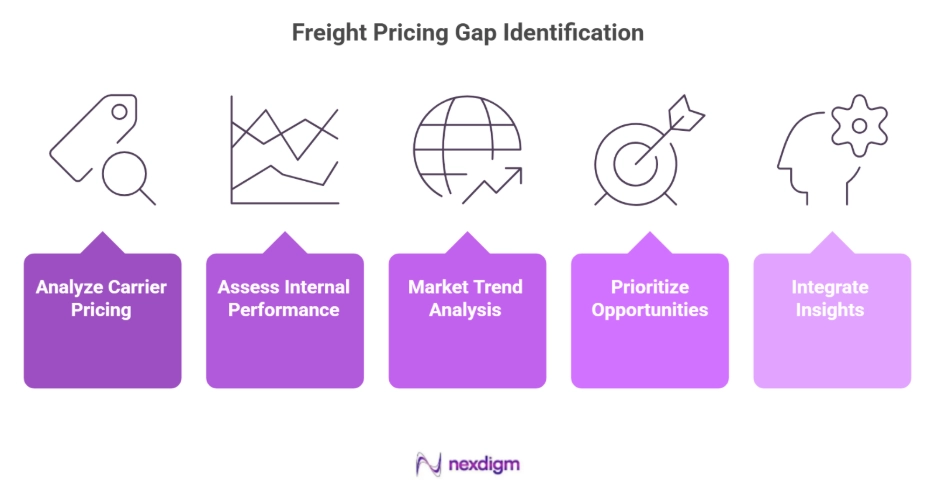
- Analyzing Carrier Pricing Structures – Evaluate freight rates, fuel surcharges, and contract pricing models across carriers to identify cost optimization opportunities.
- Assessing Internal Freight Cost Performance – Compare transportation spending, route efficiency, and logistics workflows against industry benchmarks to identify inefficiencies.
- Market Trend and Trade Lane Analysis – Monitor freight market fluctuations, regional pricing trends, and trade route dynamics to improve transportation planning.
- Prioritizing Cost Optimization Opportunities – Identify high-impact areas for freight savings and operational improvements to strengthen pricing strategies and logistics efficiency.
- Integrating Benchmarking Insights into Decision-Making – Use freight analytics and competitive intelligence to support data-driven pricing, carrier selection, and budgeting decisions.
Nexdigm Freight Cost Benchmarking and Logistics Cost Assessment
Nexdigm Freight Cost Benchmarking and Logistics Cost Assessment evaluates transportation expenses, carrier pricing models, route efficiency, and freight allocation practices across logistics operations. By leveraging competitive intelligence and transportation analytics, Nexdigm identifies pricing inefficiencies, cost drivers, and operational gaps impacting freight performance. This approach enables organizations to improve budgeting accuracy, optimize freight strategies, strengthen carrier negotiations, and enhance logistics cost management across regional and global supply chains.
Nexdigm empowerment in Freight Pricing Strategies
Nexdigm improves freight pricing strategies across logistics networks and freight cost benchmarking logistics by analyzing transportation costs, benchmarking carrier performance, evaluating market trends, and implementing data-driven logistics optimization initiatives to strengthen operational efficiency and cost control:
- Freight Spend and Cost Analysis – Evaluating transportation expenses, freight allocation, and route efficiency to identify savings opportunities and optimize logistics spending, enabling stronger financial planning and improved transportation cost management across operations.
- Carrier Rate Benchmarking – Comparing freight pricing structures and service performance across carriers to strengthen negotiation strategies and vendor selection decisions, improving procurement efficiency and enhancing long-term transportation partnership effectiveness significantly.
- Market Volatility and Risk Monitoring – Tracking fuel price fluctuations, carrier capacity constraints, and trade lane disruptions to improve pricing responsiveness and planning, minimizing operational uncertainties and strengthening transportation continuity across logistics networks globally.
- Transportation Efficiency Optimization – Improving route utilization, shipment consolidation, and freight allocation processes to reduce operational costs and improve delivery performance, supporting better asset utilization and enhancing overall logistics productivity across supply chains.
- Strategic Freight Planning and Reporting – Developing centralized dashboards and analytics platforms to monitor transportation KPIs and support proactive logistics decision-making, improving operational visibility and enabling faster responses to changing freight market conditions.
Nexdigm’s Case
Nexdigm optimized freight pricing for a multinational consumer goods company through freight cost benchmarking, carrier negotiation improvements, and route utilization enhancements, reducing transportation costs by 19%, improving budgeting accuracy by 22%, and strengthening logistics efficiency, pricing strategy, and supply chain resilience.
To take the next step, simply visit our Request a Consultation page and share your requirements with us.
Harsh Mittal
+91-8422857704