

The rise of generic drugs has transformed the pharmaceutical landscape, driving significant competition and cost reductions. As generic drugs become more widely adopted, brand-name drug manufacturers face increasing pressure to innovate and differentiate their offerings. Competitive intelligence plays a critical role in this shift, allowing companies to conduct generic drug market analysis and track pricing trends, market share, and competitor strategies.
In the United States, generic drugs now account for around 90 % of all prescriptions filled while representing only about 18 % of total prescription drug spending, illustrating their dominant volume role and cost impact. Globally, generic medicines contribute to 60–80 % of total drug volume sales, driven by patent expirations and competitive entry that lower prices by 20–90 % compared with branded drugs.
This insight helps businesses navigate the highly competitive landscape, identify new growth opportunities, and adapt to changing consumer and regulatory demands. This intensifies competition and expands access to affordable treatment.
How Competitive Intelligence Drives Generic Drug Pricing Strategies?
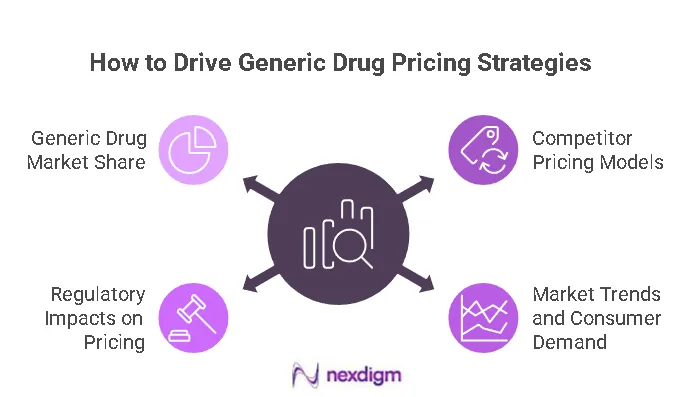
Competitive intelligence helps pharmaceutical companies monitor competitor pricing, market trends, and consumer behavior. This data-driven approach enables the development of effective pricing strategies, optimizing market share, profitability, and competitiveness in the generic drug sector:
-
Tracking Competitor Pricing Models
Competitive intelligence helps monitor competitors’ pricing strategies, enabling pharmaceutical companies to adjust their prices and remain competitive in the market.
-
Analyzing Market Trends and Consumer Demand
By assessing market shifts and consumer behavior, companies can tailor pricing strategies to meet evolving demand and maximize profitability.
-
Understanding Regulatory Impacts on Pricing
Competitive intelligence tracks regulatory changes and market dynamics, helping companies adjust pricing in response to new regulations and pricing pressures.
-
Assessing Generic Drug Market Share
Analyzing market share data allows companies to identify pricing opportunities and competitive threats, enabling smarter pricing decisions for generic drugs.
Nexdigm’s Strategic Insights for Navigating Generic Drug Pricing Challenges
Nexdigm provides strategic insights that help pharmaceutical companies navigate the complexities of generic drug pricing. By leveraging advanced competitive intelligence and market trend analysis, Nexdigm identifies key pricing opportunities, monitors competitor movements, and evaluates regulatory impacts. These insights enable companies to adjust pricing strategies dynamically, ensuring competitiveness, profitability, and compliance while adapting to market shifts. Nexdigm’s tailored solutions drive informed decision-making for sustainable growth in the generic drug market.
Nexdigm’s Role in Forecasting Generic Drug Market Trends and Price Adjustments
Nexdigm helps pharmaceutical companies forecast generic drug market trends by analyzing industry data, competitor activities, and regulatory changes. These insights guide price adjustments, enabling businesses to stay competitive and optimize profitability.
-
Identifying Price Pressure Points and Opportunities
Nexdigm’s forecasting models help identify areas where price pressure is building, enabling companies to act proactively for optimal pricing.
-
Tracking Regulatory Changes Impacting Generic Drug Prices
Nexdigm monitors regulatory developments, helping businesses anticipate price adjustments and comply with evolving healthcare laws.
-
Competitive Analysis for Pricing Strategy Adjustments
By analyzing competitor strategies, Nexdigm helps companies adjust pricing to stay competitive in the dynamic generic drug market.
-
Forecasting Demand and Supply Dynamics in Generic Drugs
Nexdigm predicts shifts in supply and demand, helping pharmaceutical companies adjust production and pricing strategies accordingly.
-
Utilizing Market Segmentation for Strategic Forecasting
Nexdigm analyzes market segments, allowing companies to tailor their pricing strategies based on regional and demographic factors.
Nexdigm’s case:
In a healthcare procurement project, Nexdigm’s direct sourcing strategy reduced raw material costs by 23% and delivered 30% faster lead times by eliminating intermediary markups and improving supplier engagement, enhancing operational efficiency and supply chain responsiveness.
To take the next step, simply visit our Request a Consultation page and share your requirements with us.
Harsh Mittal
+91-8422857704