
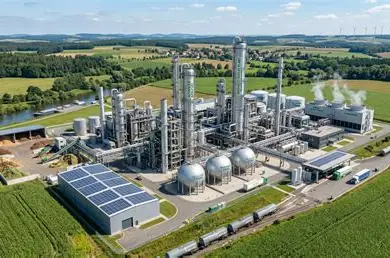
Germany’s Advanced Biofuel Market is experiencing strong growth, supported by the country’s ambitious decarbonization goals, expanding renewable fuel mandates, and leadership in Europe’s energy transition. As Europe’s largest economy, Germany consumes more than 53 billion liters of transport fuels annually and remains one of the region’s largest markets for renewable diesel, advanced bioethanol, biomethane, and Sustainable Aviation Fuel (SAF). Growing demand from aviation, road freight, shipping, and industrial sectors is accelerating investments in advanced biofuels produced from waste oils, agricultural residues, forestry by-products, and municipal waste. Additionally, Germany’s target of achieving climate neutrality by 2045 is strengthening long-term demand for low-carbon fuel alternatives across hard-to-abate sectors.
Key Market Drivers for Germany’s Advanced Biofuel Market
Renewable Fuel Mandates and GHG Reduction Targets Accelerate Adoption
Germany operates one of Europe’s most advanced greenhouse gas (GHG) reduction systems for transportation fuels. Fuel suppliers are required to progressively reduce lifecycle emissions, increasing demand for advanced biofuels with high carbon-reduction performance. Growing requirements for renewable diesel (HVO), advanced bioethanol, biomethane, and SAF are creating strong opportunities for domestic production and imports. These policies are encouraging fuel suppliers, refiners, and transport operators to accelerate low-carbon fuel adoption.
Sustainable Aviation Fuel (SAF) Development Creates Significant Growth Opportunities
Germany is one of Europe’s largest aviation markets, with major airports including Frankfurt, Munich, and Berlin Brandenburg serving tens of millions of passengers annually. The growing implementation of EU ReFuelEU Aviation regulations and airline decarbonization commitments is driving demand for Sustainable Aviation Fuel. Airlines, airports, and energy companies are investing heavily in SAF supply chains, supporting the growth of advanced biofuel production capacity.
Renewable Diesel and Industrial Decarbonization Strengthen Market Demand
Germany’s logistics, heavy transportation, manufacturing, and industrial sectors continue to seek alternatives to conventional diesel. Renewable diesel and advanced biofuels are increasingly used in heavy-duty transport fleets, rail operations, construction equipment, and industrial applications where electrification remains challenging. Rising demand for low-emission transport solutions is encouraging investment in advanced feedstock processing and renewable fuel infrastructure.
Government Initiatives Supporting Germany’s Advanced Biofuel Market
The German government actively supports advanced biofuel deployment through renewable energy legislation, transport decarbonization policies, and climate-neutrality objectives. Germany aims to achieve climate neutrality by 2045, while fuel suppliers face increasingly stringent greenhouse gas reduction obligations. In addition, government support for Sustainable Aviation Fuel (SAF), renewable diesel, advanced bio-methane, and waste-based fuels is encouraging investment across the renewable fuels value chain. Public funding programs, research initiatives, and EU-supported decarbonization frameworks continue to strengthen domestic advanced biofuel production and commercialization opportunities.
Competitive Landscape of Germany’s Advanced Biofuel Market
Germany’s Advanced Biofuel Market is highly competitive, supported by major energy companies, fuel suppliers, refiners, and technology developers. Competition is increasingly focused on feedstock security, production scalability, carbon intensity reduction, SAF development, renewable diesel capacity, and conversion technologies. Companies such as Shell, BP, TotalEnergies, Neste, Eni, and leading German energy firms are investing in advanced biofuel production and distribution infrastructure. Strategic partnerships between airlines, refiners, logistics companies, and waste-management providers are accelerating commercialization and helping scale sustainable fuel production to meet growing regulatory and market demand.
Major Challenges Facing Germany’s Advanced Biofuel Market
Feedstock Availability and Cost Pressures
Securing sustainable feedstocks such as used cooking oil, agricultural residues, municipal waste, and forestry by-products remains a key challenge. Rising competition for feedstock sources can increase production costs and impact long-term supply security.
Scaling Advanced Production Technologies
While demand continues to rise, scaling advanced biofuel technologies from demonstration and pilot projects to commercial-scale production remains capital-intensive and technically complex. Maintaining cost competitiveness with conventional fuels remains an important industry challenge.
Future Outlook
Germany’s Advanced Biofuel Market is expected to experience robust growth through 2035, supported by transport fuel demand exceeding 53 billion liters annually, growing renewable fuel mandates, and increasing investments in low-carbon energy infrastructure. Demand for Sustainable Aviation Fuel is expected to accelerate significantly as Germany strengthens compliance with European aviation decarbonization regulations. Additional opportunities are expected to emerge from renewable diesel, biomethane, marine biofuels, and waste-to-fuel projects. Continued investments in advanced conversion technologies, domestic production facilities, and circular-economy solutions will position Germany as one of Europe’s leading advanced biofuel markets.
Consultants at Nexdigm, in their latest publication “Germany Advanced Biofuel Market Outlook to 2035,” analyse the sector By Advanced Biofuel Feedstock (Wheet Straw, Forestry Residues and Energy Frasses), By Fuel Technology Pathway (Cellulosic Ethanol and Alcohol-to-Jet) and By Distribution Channel (Direct B2B Refinery Procurement, Wholesale Fuel Commodity Brokers and Public Filling Station).
Nexdigm suggests that businesses in Germany’s Advanced Biofuel Industry prioritize Sustainable Aviation Fuel (SAF), renewable diesel, advanced biomethane, and waste-to-fuel conversion technologies to capitalize on the country’s 53 billion+ liters of transport fuel demand, climate neutrality target, expanding renewable fuel mandates, and growing demand for low-carbon solutions across aviation, transport, industrial, and maritime sectors.
To take the next step, simply visit our Request a Consultation page and share your requirements with us.
Harsh Mittal
+91-8422857704