
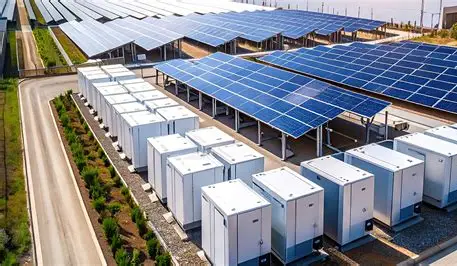
Germany’s Battery Energy Storage for Microgrids Market is witnessing rapid growth, driven by renewable energy expansion, grid decentralization, industrial electrification, and energy security requirements. Battery Energy Storage Systems (BESS) are increasingly integrated into microgrids to balance intermittent renewable generation, strengthen grid resilience, and reduce dependence on conventional power sources. As Europe’s largest economy, Germany has installed more than 230 GW of renewable energy capacity, including over 100 GW of solar PV capacity and approximately 75 GW of wind power capacity. Growing investments in distributed energy systems, smart grids, and local energy communities are creating strong demand for battery-backed microgrids across industrial, commercial, and municipal applications.
Key Market Drivers for Germany’s Battery Energy Storage for Microgrids Market
Renewable Energy Expansion Accelerates Storage Demand
Germany’s energy transition strategy continues to drive large-scale deployment of renewable energy technologies. With more than 100 GW of solar capacity and around 75 GW of wind power capacity, the country increasingly requires battery storage solutions to manage intermittency and improve grid flexibility. Solar-plus-storage microgrids are gaining popularity across industrial facilities, commercial campuses, and municipal energy projects seeking greater energy independence and stability.
Industrial Decarbonization and Energy Security Strengthen Market Growth
Germany’s manufacturing sector contributes approximately 20% of GDP, making it Europe’s largest industrial economy. Rising electricity prices and energy security concerns have encouraged manufacturers, logistics operators, data centers, and industrial parks to invest in battery-backed microgrids that provide peak-load management, backup power, renewable integration, and reduced operational costs.
Smart Grids and Distributed Energy Communities Create New Opportunities
Germany continues to expand decentralized energy infrastructure through local energy communities, smart-grid deployments, and distributed renewable generation projects. Battery storage systems enable communities and businesses to optimize self-consumption, participate in energy markets, and enhance resilience against grid disruptions. These developments are creating significant demand for advanced energy-management systems and battery storage technologies.
Government Initiatives Supporting Germany’s Battery Energy Storage for Microgrids Market
The German government continues to support battery energy storage through its Energiewende (Energy Transition) strategy and commitment to achieve climate neutrality by 2045. Investments exceeding EUR 550 billion are being directed toward renewable energy expansion, smart grids, electrification, hydrogen projects, and power infrastructure modernization. In addition, government policies supporting decentralized renewable energy, energy communities, and grid flexibility are encouraging deployment of battery storage systems across commercial, industrial, and utility-scale applications. These initiatives continue to create favorable conditions for microgrid development and energy storage adoption.
Competitive Landscape of Germany’s Battery Energy Storage for Microgrids Market
Germany’s Battery Energy Storage for Microgrids Market is highly competitive and innovation-driven. Competition is increasingly focused on battery efficiency, storage duration, lifecycle performance, energy-management software, smart-grid integration, and digital monitoring capabilities. Major participants including Siemens Energy, Fluence, Tesla Energy, BYD, Sungrow, Huawei Digital Power, Hitachi Energy, Schneider Electric, and E.ON are actively expanding battery storage and microgrid solutions. Growing deployment of solar-plus-storage systems, industrial microgrids, community energy projects, and smart energy-management platforms is accelerating technological innovation and market expansion.
Major Challenges Facing Germany’s Battery Energy Storage for Microgrids Market
High Initial Capital Investment Requirements
Despite declining battery prices, energy storage systems still require significant upfront investment, particularly for large-scale industrial and community microgrid projects. Financing structures and long-term project economics remain important considerations.
Grid Integration and Regulatory Complexity
The integration of distributed battery systems into existing power networks requires sophisticated control systems, advanced energy-management software, and compliance with evolving regulatory frameworks. Successful deployment increasingly depends on effective coordination between utilities, operators, and technology providers.
Future Outlook
Germany’s Battery Energy Storage for Microgrids Market is expected to witness strong growth through 2035, supported by renewable energy capacity exceeding 230 GW, solar power capacity above 100 GW, and energy-transition investments surpassing EUR 550 billion. Expansion of industrial microgrids, energy communities, battery-backed renewable projects, and smart-grid infrastructure will continue to strengthen demand for advanced storage solutions. Additionally, rising electrification of transportation, green hydrogen production facilities, data centers, and manufacturing operations is expected to accelerate deployment of lithium-ion batteries, AI-enabled energy-management platforms, and hybrid renewable-storage systems, creating substantial opportunities for battery suppliers, system integrators, and microgrid developers across Germany’s evolving energy ecosystem.
Consultants at Nexdigm, in their latest publication “Germany Battery Energy Storage for Microgrids Market Outlook to 2035” analyse the sector By Energy Storage Technology (Lithium Iron Phosphate (LFP), Nickel Manganese Cobalt (NMC) and Lithium Titanate (LTO)), By Grid Connection Type (Grid-Tier Microgrid and Off-Grid Remote Systems) and By Power Capacity Rating (Below 100 kW, 100kW-1MW and Above 5 MW).
Nexdigm suggests that businesses in Germany’s Battery Energy Storage for Microgrids Industry prioritize lithium-ion battery systems, AI-enabled energy management platforms, solar-plus-storage microgrids, and industrial energy-resilience solutions to capitalize on the country’s 230 GW+ renewable energy capacity, EUR 550 billion+ energy transition investments, expanding distributed energy ecosystem, and increasing demand for reliable, low-carbon, and decentralized power infrastructure across industrial, commercial, and community applications.
To take the next step, simply visit our Request a Consultation page and share your requirements with us.
Harsh Mittal
+91-8422857704