
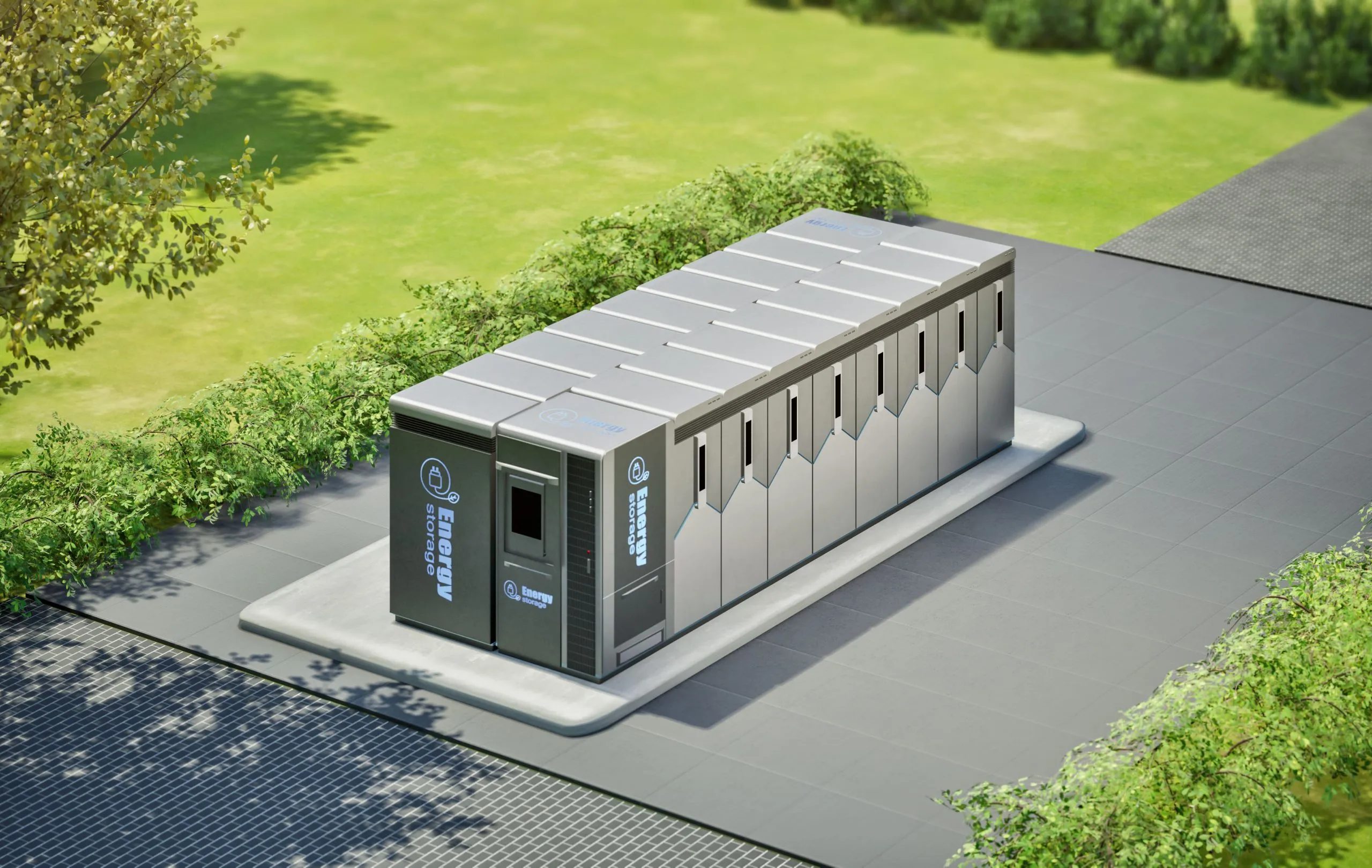
Germany’s battery energy storage system market has moved from a niche segment into a serious part of the country’s power infrastructure story. For years, Germany focused heavily on adding wind and solar capacity. That created a new reality: plenty of clean electricity at some hours, not enough at others. By 2026, storage has become one of the most practical answers to that imbalance. From home batteries paired with rooftop solar to grid-scale installations near substations, demand is broadening quickly. The shift is not only about climate targets. Power price swings, industrial energy costs, and grid bottlenecks are making storage commercially relevant. In many cases, batteries are no longer experimental assets. They are becoming operating tools for utilities, factories, and property owners trying to manage volatile electricity markets.
What’s Driving the Battery Energy Storage System Market in Germany?
Rapid Renewable Energy Expansion
Germany continues to add solar parks, rooftop PV systems, and wind farms at a steady pace. That success creates a side effect many policymakers underestimated years ago: oversupply during sunny or windy periods and tighter supply when weather conditions change. Batteries help bridge those gaps. In practice, a storage site connected to a solar project can charge during midday when prices soften, then discharge in the evening when households and businesses need more electricity. That simple time-shifting function is valuable, especially in a market where hourly prices can move sharply. Without storage, more renewable generation often means more curtailment.
Growing Need for Grid Stability and Ancillary Services
Germany’s grid faces a structural mismatch. A large share of wind generation sits in the north, while many industrial demand centers remain in the south and west. Transmission upgrades take years, often longer due to permitting delays. Batteries can be deployed much faster. They also respond in seconds, which matters for frequency balancing and reserve services. Traditional gas or coal plants handled these roles in the past. Batteries now compete strongly because speed matters as much as capacity in modern power systems. This is one reason investors have become far more interested in standalone storage assets.
Commercial and Industrial Cost Optimization
For German manufacturers, logistics centers, and retail operators, electricity remains a serious cost line item. Many businesses are looking beyond efficiency measures and considering storage for financial reasons. A battery can shave peak demand, support self-consumption from rooftop solar, and provide backup during short disruptions. A medium-sized warehouse with solar panels, for example, may store daytime generation and use it later during evening operations. The economics vary by site, but where tariffs are high, the case can be compelling. Energy managers increasingly see storage as risk management rather than just a sustainability purchase.
Government-Led Initiatives Supporting Storage Deployment
Public policy has played a meaningful role. Germany has backed residential solar-plus-storage programs in several phases, while broader energy reforms have improved market access for flexible assets. The country’s decarbonization agenda, together with EU climate policy, has also helped channel private capital into storage projects. That said, support is not always neat or predictable. Incentive structures change, and developers often complain that regulation moves slower than technology. Still, compared with many European markets, Germany offers a relatively mature framework for battery investment.
Market Competition and Industry Landscape
The market includes utilities, engineering firms, battery suppliers, and software providers. Names such as Tesla, BYD, Siemens Energy, Sonnen, and Fluence are active across different segments. Residential systems remain strong because Germany has one of Europe’s deepest rooftop solar markets. At the same time, utility-scale pipelines are growing faster than many expected two years ago. Software, financing models, and after-sales service may end up mattering as much as battery hardware itself.
Permitting Delays and Revenue Complexity
A common challenge is that building a battery project can be easier than monetizing it consistently. Developers often rely on several revenue streams at once: arbitrage, balancing markets, reserve capacity, and network services. If one weakens, returns can tighten quickly. Permitting and grid connection delays add another layer of friction. Germany is efficient in many respects, but infrastructure approvals can still move slowly. For investors, timing risk is often as important as technology risk.
Future Outlook
Germany’s storage market should see strong expansion through 2035 as renewable penetration rises further and electrification adds pressure to the grid. Utility-scale batteries are likely to account for much of the new capacity, while households will continue pairing batteries with rooftop solar. Hybrid projects combining wind, solar, and storage should become more common. There is also a less discussed opportunity in recycling and second-life batteries from electric vehicles. If managed well, that could lower costs and improve supply security.
Consultants at Nexdigm, in their latest publication “Germany Battery Energy Storage System Market Outlook to 2035”, analyzed the market by Battery Type (Lithium-ion, Sodium-ion, Flow Batteries, Others), By Application (Utility Scale, Commercial & Industrial, Residential, Grid Services), and By Ownership Model (Standalone Storage, Renewable Co-located Storage, Third-Party Owned Systems, Utility Owned Assets). Nexdigm believes that businesses should prioritize long-duration storage opportunities, digital energy optimization platforms, and strategic partnerships with utilities and industrial consumers to capture long-term growth in Germany’s evolving storage ecosystem.
To take the next step, simply visit our Request a Consultation page and share your requirements with us.
Harsh Mittal
+91-8422857704