
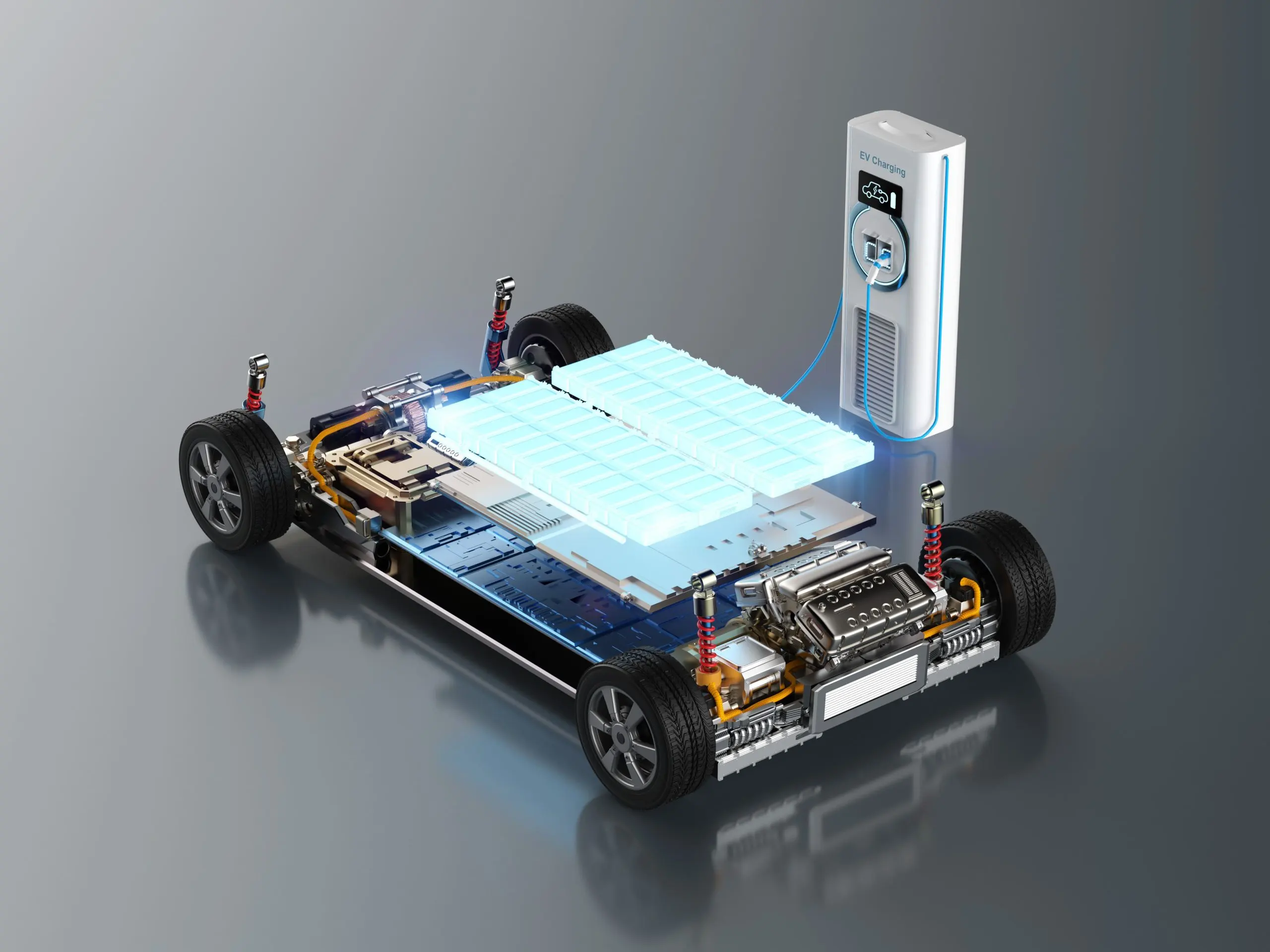
Germany’s EV battery market has moved well beyond a niche industrial topic. It now sits at the center of the country’s automotive future. Germany built its reputation on combustion-engine engineering, but the next chapter depends heavily on battery supply, cell technology, and manufacturing scale. By 2026, electric vehicle demand across Europe remains solid despite subsidy changes and periodic slowdowns in consumer sentiment. That matters because Germany supplies cars to much of the continent. The challenge is clear: Germany has world-class automakers, yet for years it relied on imported battery cells and overseas processing of key materials. That model works in stable times, but recent supply chain shocks exposed its weaknesses. As a result, battery plants, recycling facilities, and research programs are now receiving serious attention.
What’s Driving the EV Battery Market in Germany?
Electric Vehicle Production Needs Local Battery Supply
German carmakers such as Volkswagen AG, BMW Group, and Mercedes-Benz Group AG have committed billions to electric platforms. Once production volumes rise, battery sourcing becomes less of a procurement issue and more of a competitiveness issue. Shipping cells across continents adds cost, lead time, and risk. In practice, automakers want suppliers closer to assembly plants. A battery delay can halt an entire production line. That reality alone has pushed Germany to build more domestic capacity.
Gigafactory Investments and Industrial Policy
Large-scale battery plants are under development or expansion across Germany, particularly in regions with strong automotive logistics and engineering talent. Brandenburg and Lower Saxony have attracted attention because they combine transport access with industrial land and skilled labor. These projects are not simple factory builds. They require power supply agreements, water access, trained technicians, and local supplier networks. That is why progress can look slower than headlines suggest. Still, once operational, these facilities could reshape how Europe sources battery cells.
Technology Improvements and Product Mix Changes
Battery chemistry is evolving quickly. Premium vehicles still value long range and performance, but mass-market models need lower costs more than headline specs. That trade-off benefits chemistries such as LFP, while high-end brands continue exploring solid-state solutions. German manufacturers understand this split. A city EV sold at volume does not need the same battery pack as a luxury SUV. Smarter segmentation, rather than one-size-fits-all engineering, may prove more valuable than any single breakthrough.
Government-Led Initiatives
Berlin and the European Union have backed battery manufacturing through grants, research funding, and incentives tied to clean mobility. Support for charging infrastructure also helps battery demand indirectly because consumers buy EVs when charging feels practical, not theoretical. There is also a political angle. Europe wants less dependence on imported energy and imported battery technology at the same time. Germany, as the region’s industrial heavyweight, carries much of that burden. Whether public funding remains generous through slower economic cycles is another question.
Market Competition
Competition is intense and increasingly international. Major names active in Germany include CATL, Northvolt AB, LG Energy Solution, Samsung SDI, and PowerCo SE. Domestic ambition alone does not guarantee success. Asian manufacturers still hold advantages in scale, process know-how, and supplier relationships. German players, on the other hand, know the local auto industry intimately. That creates a genuine contest rather than a symbolic one.
Raw Material Dependence
Even if Germany manufactures cells locally, many essential inputs still come from abroad. Lithium, nickel, graphite, and cobalt are tied to global mining and refining networks. A common challenge is that battery independence can be overstated when raw materials remain externally sourced. Recycling will help, but it cannot fully solve supply needs in the near term because there are not yet enough end-of-life batteries available at scale. Securing long-term contracts and diversifying supply routes will remain critical.
Future Outlook
By 2035, Germany could become one of Europe’s leading battery production centers, particularly if current factory plans move from announcement stage to stable output. Expect stronger integration between automakers and cell makers, more battery recycling capacity, and wider use of lower-cost chemistries in mainstream vehicles. Premium segments may adopt solid-state packs first, though timelines often slip in this industry. The broader picture is straightforward: Germany cannot remain a top automotive nation without mastering batteries. Success will depend less on grand promises and more on execution – reliable plants, affordable energy, skilled labor, and consistent supply.
Consultants at Nexdigm, in their latest publication “Germany EV Battery Market Outlook to 2035”, analyzed the market by Battery Type (Lithium-ion, LFP, Solid-State, Others), By Vehicle Type (Passenger Cars, Commercial Vehicles, Two-Wheelers, Buses), By Application (OEM Supply, Aftermarket, Energy Storage), and By Region (Western Germany, Southern Germany, Eastern Germany, Northern Germany). Nexdigm believes companies should focus on local partnerships, recycling capacity, and secure material sourcing while keeping a close eye on cost competitiveness.
To take the next step, simply visit our Request a Consultation page and share your requirements with us.
Harsh Mittal
+91-8422857704