
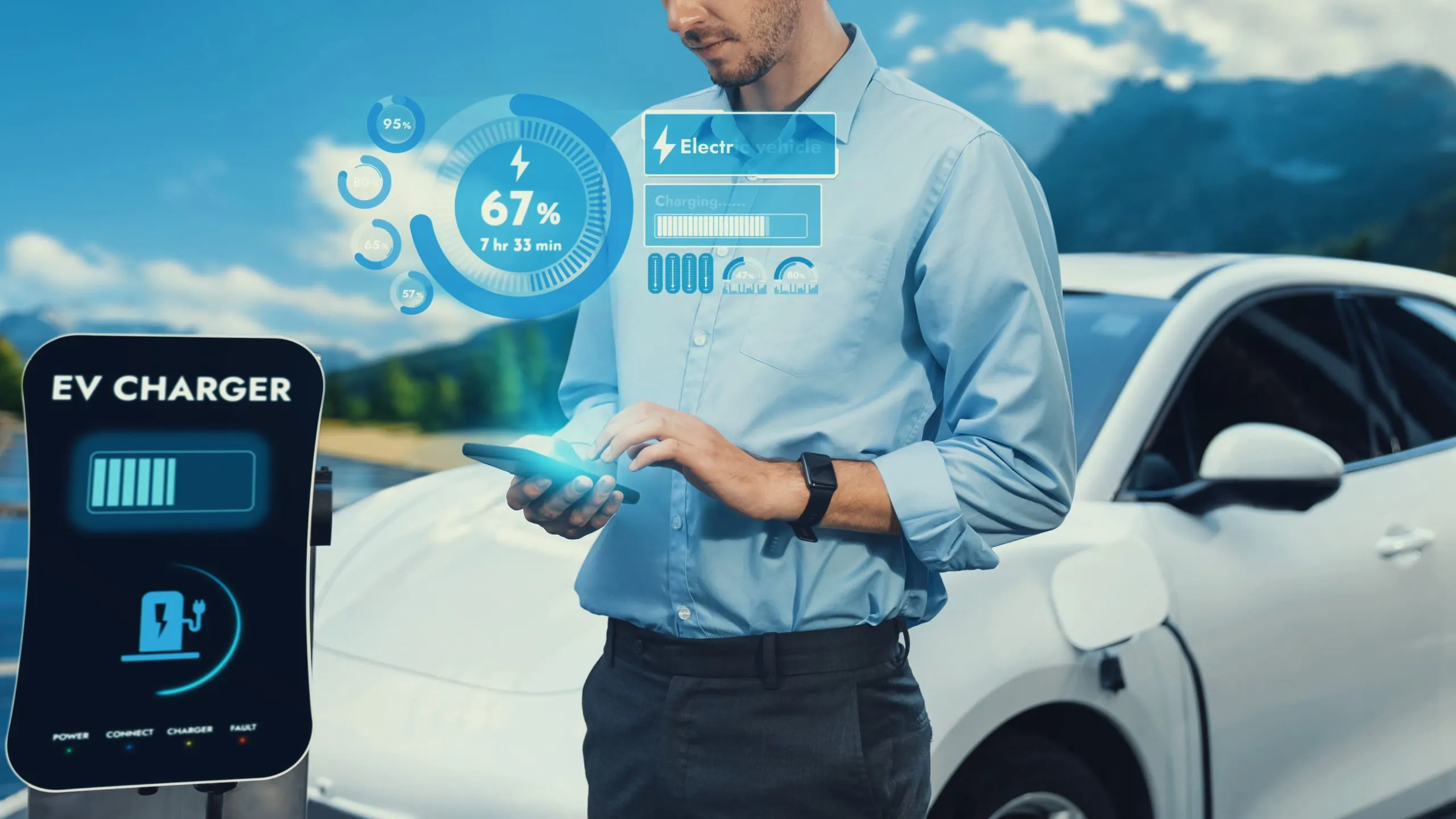
Germany’s EV battery management system market has moved from a niche electronics segment to a core part of the automotive value chain. In 2026, battery packs are no longer judged only by range or charging speed. Buyers, fleet managers, and regulators are paying close attention to durability, safety, and real-world performance over time. That places battery management systems, or BMS, at the center of decision-making. Germany remains Europe’s manufacturing heavyweight, with major automakers scaling electric platforms while suppliers deepen their presence in battery electronics and control software. A capable BMS helps extend battery life, balance cell performance, manage heat, and reduce failure risk. In practical terms, it often decides whether an EV feels reliable after five years or starts losing appeal much earlier.
What’s Driving the EV Battery Management System Market in Germany?
Rapid EV Adoption Across Passenger and Commercial Segments
German roads now carry a much broader mix of electric vehicles than they did a few years ago. Compact city cars, premium sedans, delivery vans, buses, and corporate fleets all need battery packs managed differently. A luxury SUV focused on performance does not require the same control logic as a last-mile delivery van that charges daily and operates stop-start routes. That shift matters because every new EV sold creates demand for smarter battery supervision. Fleet operators, especially, care less about marketing claims and more about battery health reports, uptime, and charging efficiency. A BMS that can flag degradation early has real commercial value.
Expansion of Domestic Battery Manufacturing Capacity
Germany has spent heavily on local battery production, cell assembly, and pack integration. The reason is straightforward: depending entirely on imported batteries creates cost, timing, and geopolitical risks. Local factories give automakers tighter control over quality and faster iteration cycles. For BMS suppliers, this opens the door to closer engineering collaboration. Instead of adapting generic systems late in the process, teams can design controls around specific chemistries, cooling layouts, and vehicle platforms from the start. In many cases, that leads to better performance than one-size-fits-all solutions.
Growing Importance of Safety, Thermal Management, and Battery Longevity
Battery fires remain rare, but they shape public perception far more than routine success stories. That is one reason German manufacturers treat thermal control seriously. Fast charging, winter weather, autobahn driving, and repeated high-load cycles all place stress on cells. Poor management shortens battery life quickly. Modern BMS software monitors temperature, voltage spread, charging behaviour, and fault signals in real time. Some systems now use predictive models to estimate remaining useful life. For used EV markets, this could become just as important as mileage.
Government-Led Initiatives Supporting Electrification
Public policy continues to play a major role. Germany has backed charging infrastructure, battery research, industrial modernization, and cleaner transport targets. EU regulations on emissions have also pushed automakers to accelerate electric model launches. Funding for battery recycling and next-generation storage technologies indirectly benefits BMS providers as well. Once batteries move into second-life uses such as stationary storage, monitoring software becomes essential again. That creates a longer revenue tail beyond the first vehicle sale.
Market Competition and Technology Landscape
Competition is active and increasingly technical. Traditional automotive suppliers such as Robert Bosch GmbH and Continental AG compete alongside chipmakers like Infineon Technologies AG and battery majors including LG Energy Solution and CATL. The battleground is no longer hardware alone. Diagnostics software, over-the-air updates, cybersecurity, and data interpretation are becoming decisive. In truth, some BMS products now look more like software platforms with electronics attached.
Supply Chain Complexity and Cost Pressures
A common challenge is that customers want lower EV prices while expecting better performance. That tension lands directly on suppliers. BMS units rely on sensors, semiconductors, communication modules, and tightly validated software. If one component faces shortages, production schedules can slip. There is also a cost-quality trade-off. Cutting too aggressively may save money upfront but can create warranty issues later. German buyers tend to notice reliability problems quickly, so manufacturers have limited room for compromise.
Future Outlook
By 2035, battery management systems in Germany will likely be far more intelligent and less visible to end users. Wireless architectures may reduce cabling weight. AI-assisted diagnostics could schedule maintenance before faults appear. Vehicle-to-grid functions may allow EVs to support power networks during peak demand, provided battery wear is managed properly. The larger opportunity may sit beyond new car sales. Used EV certification, battery repurposing, and recycling all require accurate health data. Companies that can translate battery data into trust, resale value, and lower ownership costs are likely to lead this market.
Consultants at Nexdigm, in their latest publication “Germany EV Battery Management System Market Outlook to 2035”, analyzed the market by Component (Battery Control Unit, Sensors, Communication Systems, Thermal Management), By Vehicle Type (Passenger EVs, Commercial EVs, Buses, Two-Wheelers), By Topology (Centralized, Distributed, Modular), and By End Use (Automotive OEMs, Battery Pack Integrators, Energy Storage Applications). Nexdigm believes businesses should focus on software capability, reliable semiconductor sourcing, and designs that can adapt to future battery chemistries.
To take the next step, simply visit our Request a Consultation page and share your requirements with us.
Harsh Mittal
+91-8422857704