
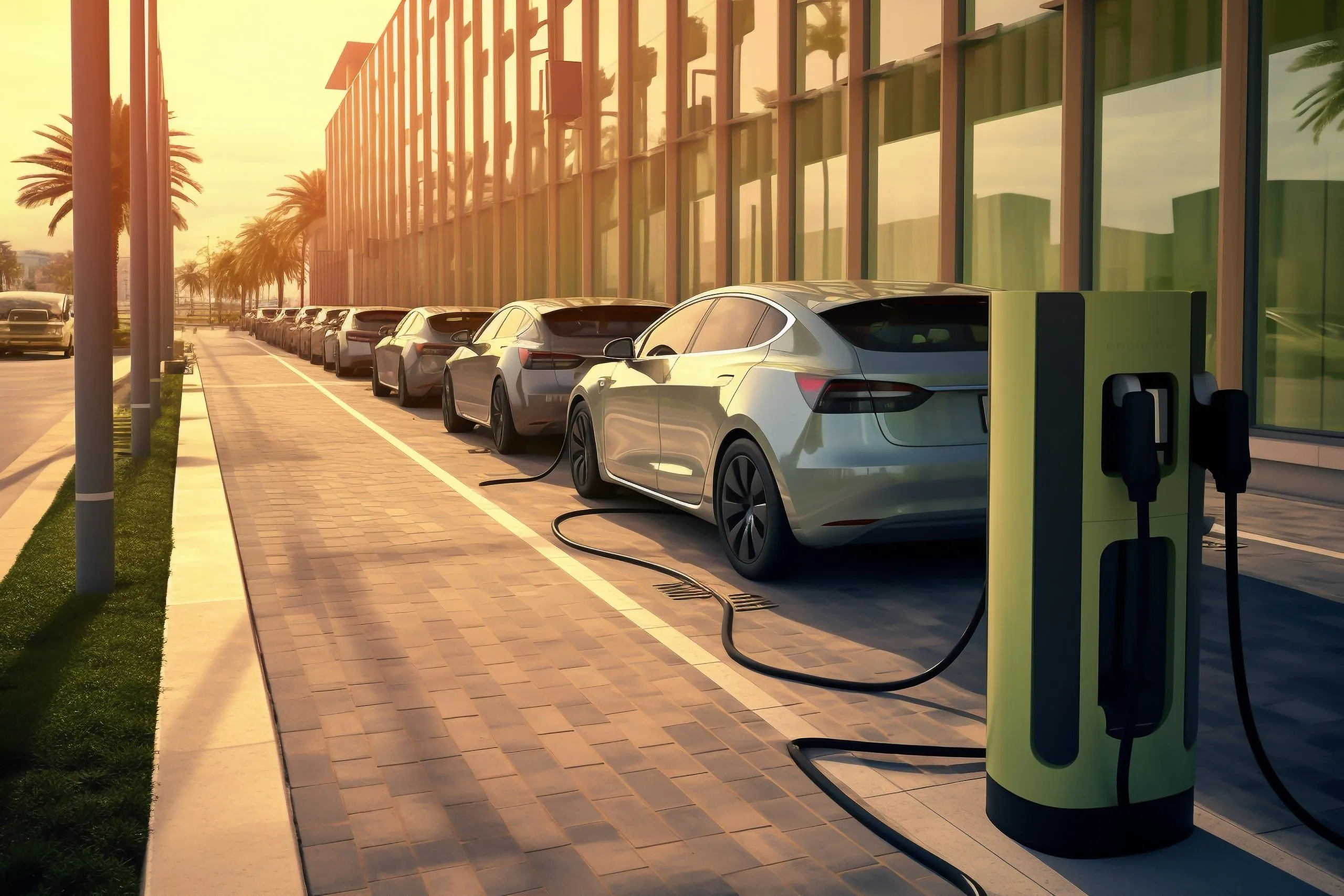
Germany has emerged as one of Europe’s most advanced electric mobility markets, supported by strong automotive manufacturing capabilities and policy-driven decarbonization goals. The country already hosts over 2 million electric vehicles and nearly 184,000 public charging points as of 2025, reflecting rapid infrastructure expansion. With EV adoption accelerating—electric vehicles accounted for close to 20% of new registrations in 2025—the demand for a dense, reliable charging network is intensifying. Looking ahead to 2035, Germany’s EV charging infrastructure market is poised for sustained high growth, driven by electrification targets, technological advancements, and increasing private-sector investments.
Key Factors Driving the Growth and Development of Germany’s EV Charging Infrastructure Market
Rapid Growth in EV Adoption
Germany’s EV fleet is expanding at a significant pace, projected to grow from over 2.5 million vehicles today to around 8.5 million by 2030. This surge is fueled by environmental concerns, rising fuel costs, and stricter EU emission regulations. Recent data also shows BEV sales across Europe rising nearly 30% year-on-year in early 2026, with Germany among the fastest-growing markets. As EV ownership rises, the demand for both public and private charging infrastructure continues to scale proportionally.
Strong Market Growth and Investment Momentum
The Germany EV charging infrastructure market is witnessing robust financial growth, projected to expand from approximately USD 1.36 billion in 2025 to nearly USD 6 billion by 2031, at a CAGR above 28%. High-growth segments include ultra-fast DC chargers (>150 kW), which are expected to grow at over 30% CAGR, driven by demand for faster charging solutions. Additionally, Europe’s broader charging network is expanding rapidly, surpassing 1 million public chargers in 2024, reinforcing regional infrastructure development.
Shift Toward Fast-Charging Infrastructure
There is a clear transition from slow AC charging to high-power DC charging, especially along highways and urban corridors. Germany already has about 45,000 fast chargers, with investments increasingly focused on ultra-fast networks. Fast-charging networks are crucial for long-distance travel and commercial fleet electrification, making them a central pillar of future infrastructure expansion.
Government Policies and Strategic Initiatives Accelerating EV Charging Infrastructure Deployment in Germany
The German government has introduced comprehensive policies such as the “Masterplan Charging Infrastructure 2030,” which outlines over 40 measures to accelerate deployment, improve grid integration, and enhance user accessibility. Targets include reaching up to 1 million public charging points by 2030, alongside incentives, subsidies, and regulatory support for private and commercial installations. These initiatives are critical in bridging infrastructure gaps and ensuring alignment with national climate goals.
Competitive Dynamics and Key Players Shaping Germany’s EV Charging Infrastructure Market
The market is moderately consolidated, with a mix of utilities, automotive OEMs, and specialized charging operators. Key players include companies like EnBW, which leads Germany’s fast-charging segment with thousands of charging points and nationwide coverage strategies. Other participants include oil & gas companies transitioning to EV infrastructure, startups, and international charging networks. Increasing competition is driving innovation in pricing models, charging speed, and network interoperability.
Key Challenges Impacting the Expansion of Germany’s EV Charging Infrastructure Market
Infrastructure Gap vs. Demand
Despite rapid expansion, infrastructure deployment is still trailing long-term targets. Germany had around 180,000–184,000 public chargers in 2025, far below the 1 million targets by 2030, indicating a significant gap.
Grid Constraints and Regional Disparities
Grid capacity limitations and uneven regional distribution of chargers remain key issues. Rural areas and smaller cities often lack adequate infrastructure, creating accessibility challenges and slowing EV adoption in certain regions.
Future Outlook
By 2035, Germany’s EV charging infrastructure market is expected to mature into a highly integrated, technology-driven ecosystem. The focus will shift toward ultra-fast charging, smart grid integration, and renewable energy-powered stations. With EV penetration expected to rise significantly and potential forecasts of millions of EVs on the road, infrastructure expansion will remain critical. Private investments, digitalization (e.g., smart charging, IoT integration), and cross-border interoperability within Europe will further strengthen the market. Overall, Germany is well-positioned to remain a leader in EV infrastructure, though sustained policy support and accelerated deployment will be essential.
Consultants at Nexdigm, in their latest publication “Germany EV Charging Infrastructure Market Outlook to 2035,” analyze the sector by System Type (Charging Stations, Wallboxes, Fast Chargers, Ultra-fast Chargers), By Platform Type (Private Charging Stations, Public Charging Stations, Commercial Charging Stations), and By Fitment Type (On-premise Solutions, Cloud-based Solutions, Hybrid Solutions). Nexdigm suggests that businesses should align their strategies with evolving EV adoption trends, invest in scalable and fast-charging infrastructure solutions, and proactively adapt to regulatory and technological developments shaping Germany’s EV charging ecosystem.
To take the next step, simply visit our Request a Consultation page and share your requirements with us.
Harsh Mittal
+91-8422857704