

Germany’s logistics sector is under pressure from cross-border e-commerce growth, digital customs rules, driver shortages, and rising expectations for fast, damage-free delivery. Shipments now move through many countries and partners, so service depends on how well warehouse teams, carriers, brokers, and last-mile crews work together. Companies are realizing that employee experience on the ground directly affects cross-border service quality and customer trust.
A focused employee engagement survey helps logistics brands hear where daily work breaks down across borders, partners, and roles. It brings out coordination gaps, safety worries, and process confusion that customers eventually feel as delays or errors. These insights help leaders fix real operational pain points, strengthen teamwork across corridors, and deliver more consistent cross-border service.
Hidden Compliance and Safety Risks
Fragmented Cross-Border Workforce Alignment
Germany’s logistics networks stretch across countries and partners, so teams often work in different ways. Without hearing from employees, day-to-day friction and skill gaps go unnoticed, making coordination harder and cross-border service less reliable.
Service Quality Variability at Border Handoffs
Shipments pass through many hands at borders. When employees cannot share obstacles they face, recurring delays and handling issues stay unresolved, preventing smoother, more consistent transfers between carriers, brokers, and warehouses.
Eroding Customer Experience in Multimodal Chains
A small mistake at one point can disrupt the entire journey. Without employee input, workload stress and tool frustrations remain unaddressed, leading to missed timelines and dissatisfied customers.
Strategic Blind Spots Across Partner Networks
German logistics brands depend on subcontractors across Europe. Without engagement insight across these teams, leaders lack a clear view of morale and alignment, making consistent service standards difficult to sustain.
Nexdigm’s Perspective on Cross-Border Logistics Engagement Survey
Germany’s cross-border logistics is becoming more demanding as e-commerce shipments grow across Europe, customs systems go digital, and warehouses and transport teams face staff shortages.
A logistics brand employee engagement survey helps brands understand what teams actually face across hubs, borders, and partners. It brings out coordination struggles, safety pressures, and process confusion that customers later feel as service problems. Nexdigm uses these insights to pinpoint weak spots and guide practical fixes that improve cross-border reliability.
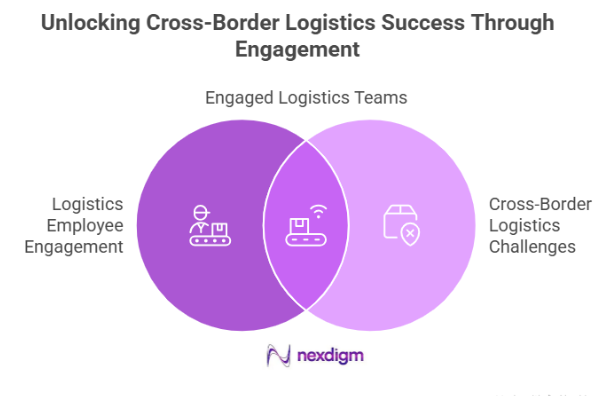
Nexdigm’s Approach for Cross-Border Logistics Engagement
The approach blends structured listening with operational context so leaders understand how frontline realities affect delivery reliability, safety, and customer satisfaction across European corridors.
- Role-Specific Surveys capture practical challenges faced by warehouse, linehaul, customs, and coordination teams in cross-border operations, revealing where processes or expectations differ across countries and partners.
- Multilingual Mobile Feedback enables drivers and shift workers to share experiences in their own language through simple mobile or kiosk formats suited to dispersed logistics environments.
- Partner and Handoff Checks examine collaboration at transfer points between carriers, brokers, and warehouses, identifying coordination gaps that often drive delays or errors.
- Workload and Tool Diagnostics surface staffing pressure, training needs, and system limitations that hinder consistent execution across hubs and borders.
- Route and Site Heatmaps visually map engagement and operational risks by corridor, facility, or partner to highlight priority improvement zones.
- Driver Link Analysis connects engagement factors with service metrics such as delay frequency, damage events, or compliance issues to show business impact.
- Leadership Dashboards translate findings into clear, corridor-level insights for country and network managers to guide decisions.
Nexdigm’s Case
A logistics operator partnered with Nexdigm after repeated border delays and customer complaints. Multilingual employee surveys and corridor analysis across drivers, warehouses, and brokers revealed unclear handoff steps at key crossings. Nexdigm aligned partners on standard processes and staffing coverage. Within six months, average border dwell time on the main corridor fell by 18%.
To take the next step, simply visit our Request a Consultation page and share your requirements with us.
Harsh Mittal
+91-8422857704