

Germany’s logistics sector remains Europe’s largest, generating about USD 202 billion in revenue and expanding near 7.2% annually on the back of e-commerce, export manufacturing, and advanced transport infrastructure. Its mature scale and steady growth have intensified competition across freight, warehousing, and integrated logistics services, pushing providers to differentiate through service quality, customization, and digital visibility rather than price alone.
As logistics offerings converge technologically, perceived service experience increasingly shapes shipper loyalty and contract retention across Germany’s dense supply chain networks. Structured product feedback surveys capture performance gaps in reliability, communication, and value-added services, enabling providers to refine offerings and position differentiated service propositions in a highly competitive European logistics hub.
Nexdigm’s Logistics Product Feedback Survey Research Offering
Nexdigm’s Logistics Product Feedback insights help businesses with customer satisfaction, enabling them to optimize logistics services and enhance operational efficiency. The offering provides:
-
Multi-Stakeholder Voice Capture
Collects structured feedback from shippers, carriers, and channel partners to map end-to-end service perception across transport, warehousing, and fulfillment touchpoints.
-
Service Attribute Benchmarking
Measures reliability, transit transparency, responsiveness, and cost-to-value perceptions against competitor logistics providers operating in Germany and EU corridors.
-
Operational Journey Diagnostics
Links survey responses to shipment stages such as booking, handling, customs, and delivery to pinpoint operational drivers of satisfaction or service failure.
-
Sector-Specific Segmentation
Separates feedback by industry verticals such as automotive, e-commerce, industrial goods, and healthcare logistics to reveal differentiated service expectations.
-
Experience–Performance Correlation
Integrates survey data with KPIs including on-time delivery, claims, and dwell time to quantify how operational performance shapes perceived service quality.
-
Digital Experience Evaluation
Assesses user perception of tracking platforms, EDI integration, and customer portals that increasingly define logistics service differentiation in Germany.
-
Actionable Differentiation Roadmaps
Converts insights into prioritized service improvement and positioning strategies aligned with Germany’s high-competition logistics environment.
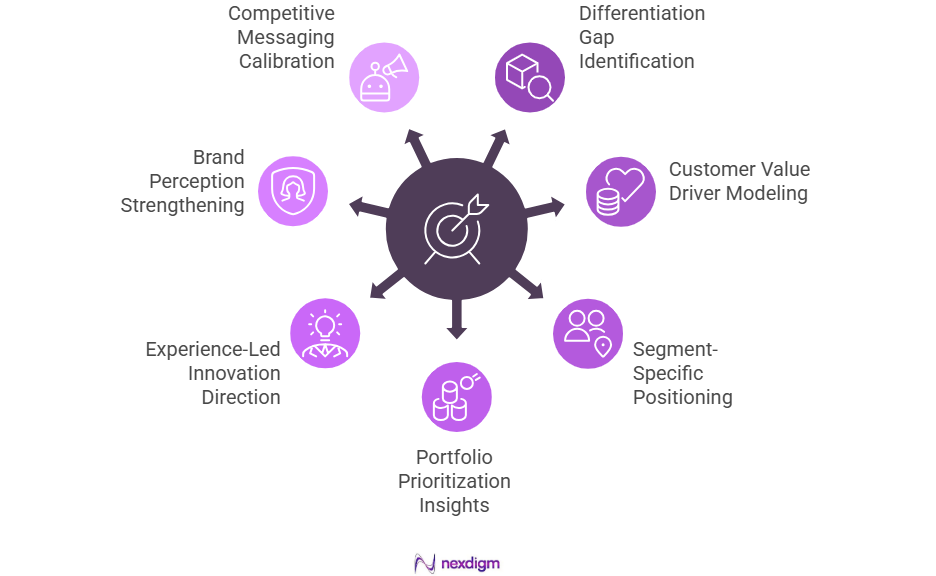
Product Feedback Survey Research for Product Differentiation Strategy
-
Differentiation Gap Identification
Reveals where service attributes overlap with competitors and where unique value can be built in reliability, flexibility, or specialized handling.
-
Customer Value Driver Modeling
Determines which logistics features most influence shipper choice and retention, guiding investment toward differentiating capabilities.
-
Segment-Specific Positioning
Enables tailored service propositions for sectors such as automotive sequencing or e-commerce fulfillment where expectations differ materially.
-
Portfolio Prioritization Insights
Shows which service elements such as express lanes or temperature control create strongest perceived differentiation and margin potential.
-
Experience-Led Innovation Direction
Guides development of new logistics offerings aligned with unmet needs identified in German shipper feedback patterns.
-
Brand Perception Strengthening
Aligns operational delivery with promised service positioning to build consistent differentiation in Germany’s mature logistics market.
-
Competitive Messaging Calibration
Supports evidence-based communication of differentiating service strengths validated by customer feedback data.
Nexdigm Case
A global logistics provider operating across Germany engaged Nexdigm to evaluate service differentiation through structured product feedback surveys covering 120 enterprise shippers and channel partners. Analysis linked satisfaction scores with operational KPIs, revealing that transit visibility and exception responsiveness explained 62 percent of perceived service value. Targeted improvements in tracking interfaces and proactive communication lifted contract renewal intent by 18 percent and reduced complaint incidence by 23 percent within two quarters, strengthening differentiated positioning in automotive and e-commerce segments.
To take the next step, simply visit our Request a Consultation page and share your requirements with us.
Harsh Mittal
+91-8422857704