
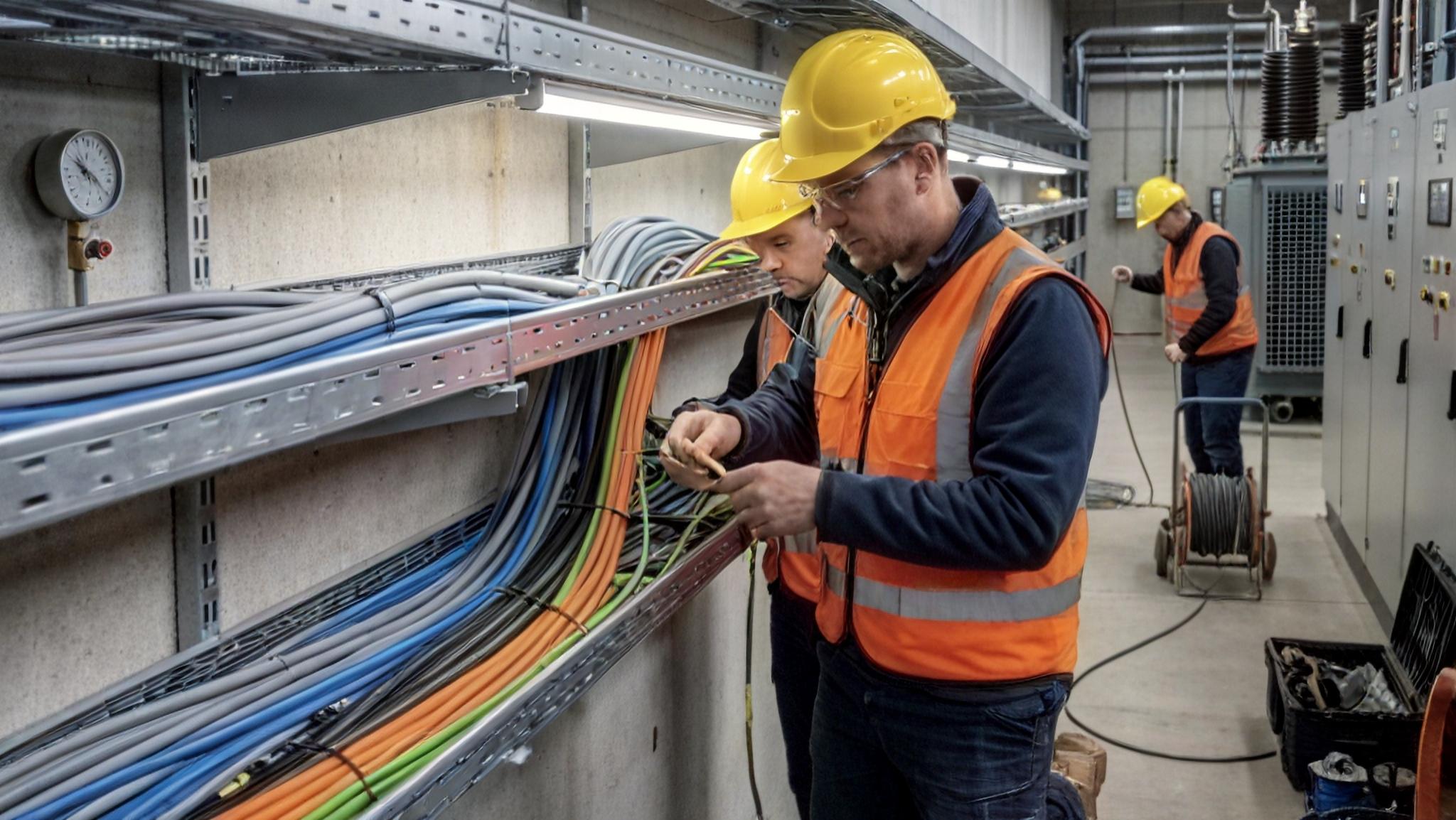
Germany’s low voltage cable market plays a crucial role in keeping homes, businesses, factories, and renewable energy projects connected. As the country continues to modernize its electrical infrastructure, demand for reliable low voltage cables is rising across construction, industrial automation, electric vehicle charging networks, and renewable energy installations. Germany remains one of Europe’s largest industrial economies, with manufacturing contributing nearly 20% of the country’s GDP. The nation also hosts more than 1 million public and private EV charging points in various stages of deployment and expansion, creating substantial demand for low voltage power and data transmission cables. These developments are transforming the cable industry from a traditional infrastructure segment into a critical enabler of Germany’s energy transition and digital future.
Market Drivers Advancing the Germany Low Voltage Cable Industry
Rising Investments in Grid Modernization and Energy Infrastructure
Germany’s energy transformation requires significant upgrades to electricity networks. Aging grids are being reinforced to accommodate decentralized renewable energy sources such as solar and wind power. Thousands of kilometers of distribution networks require modernization to improve efficiency and reliability. Low voltage cables are essential for transmitting electricity from local substations to residential, commercial, and industrial consumers. As utility companies invest heavily in smart grid technologies, demand for advanced cable systems with enhanced durability and performance continues to increase. Additionally, underground cable deployment is gaining momentum in urban regions where space constraints and visual considerations favor buried infrastructure over overhead systems.
Expanding Electric Vehicle Charging Ecosystem
The rapid growth of electric mobility is creating a strong demand for low voltage cabling solutions throughout Germany. Each EV charging station requires reliable cable networks for power distribution, control systems, and communication infrastructure. Germany remains one of Europe’s largest electric vehicle markets, supported by strong consumer adoption and expanding charging infrastructure. Shopping centers, office complexes, residential communities, and highway charging corridors increasingly require extensive cable installations. This trend is further supported by automotive manufacturers investing billions in EV production facilities, where advanced low voltage cable systems are essential for automated manufacturing processes and operational efficiency.
Industrial Automation and Smart Manufacturing Expansion
Germany’s leadership in Industry 4.0 continues to drive demand for sophisticated low voltage cable systems. Modern factories rely on interconnected machinery, robotics, sensors, and control systems that require uninterrupted electrical connectivity. Industrial facilities are increasingly adopting automation technologies to improve productivity, operational efficiency, and competitiveness. As smart manufacturing capabilities expand, demand for specialized low voltage cables capable of supporting data communication and power transmission grows correspondingly.
Government Initiatives Supporting the Germany Low Voltage Cable Industry
The German government actively supports infrastructure modernization, renewable energy integration, and industrial digitalization through various policy initiatives. Programs promoting renewable energy deployment, smart grid development, and electric mobility indirectly strengthen demand for low voltage cable solutions. The country’s commitment to climate neutrality and energy security has accelerated investments in electricity distribution networks. Government-backed funding for energy-efficient buildings and charging infrastructure deployment further contributes to market expansion, creating long-term opportunities for cable manufacturers and suppliers.
Competitive Landscape of the Germany Low Voltage Cable Industry
The Germany low voltage cable market is characterized by strong competition among global and regional manufacturers. Companies focus on product innovation, sustainability, fire-resistant cable technologies, and smart cable solutions to strengthen their market positions. Major participants include Prysmian Group, Nexans, NKT, HELUKABEL, LAPP Group, and Leoni AG. Strategic investments in production capacity, research and development, and environmentally friendly cable materials continue to shape competitive dynamics. Partnerships with utility providers, construction firms, and industrial customers remain important growth strategies.
Challenges Influencing Germany Low Voltage Cable Industry
Raw Material Price Volatility
Copper and aluminum are key components in low voltage cable manufacturing. Price fluctuations in these commodities can significantly affect production costs and profit margins. Manufacturers often face challenges in maintaining pricing stability amid changing global supply-demand conditions.
Supply Chain and Regulatory Pressures
Stringent environmental regulations, sustainability requirements, and supply chain disruptions can create operational challenges. Companies must continuously adapt to evolving compliance standards while ensuring product quality, availability, and cost competitiveness across the market.
Future Outlook
The future of Germany’s low voltage cable market appears highly promising as electrification, renewable energy integration, and digital transformation continue to accelerate. Growing investments in smart cities, energy-efficient buildings, battery storage systems, and electric vehicle charging networks are expected to generate sustained demand. The market is also likely to benefit from ongoing industrial modernization and grid resilience initiatives. As Germany advances toward a cleaner and more connected energy ecosystem, low voltage cables will remain a foundational component supporting reliable electricity distribution, automation, and next-generation infrastructure development across the country.
Consultants at Nexdigm, in their latest publication “Germany Low Voltage Cable Market to 2035” analyze the sector By Cable Conductor Material (Copper Conductors, Aluminum Conductors and Composite Conductors), By Insulation Material (Cross-Linked Polyethylene, Polyvinyl Chloride and Silicone Rubber) and By Installation Environment (Underground Direct Burial and Indoor Surface Mounting).
Nexdigm suggests that businesses in “Germany Low Voltage Cable Industry” focusses on oilfield, desalination, construction, and industrial applications, strengthen local warehousing, develop application-specific grades, improve technical support, and build resilient sourcing networks to serve expanding energy, water, and manufacturing demand.
To take the next step, simply visit our Request a Consultation page and share your requirements with us.
Harsh Mittal
+91-8422857704