
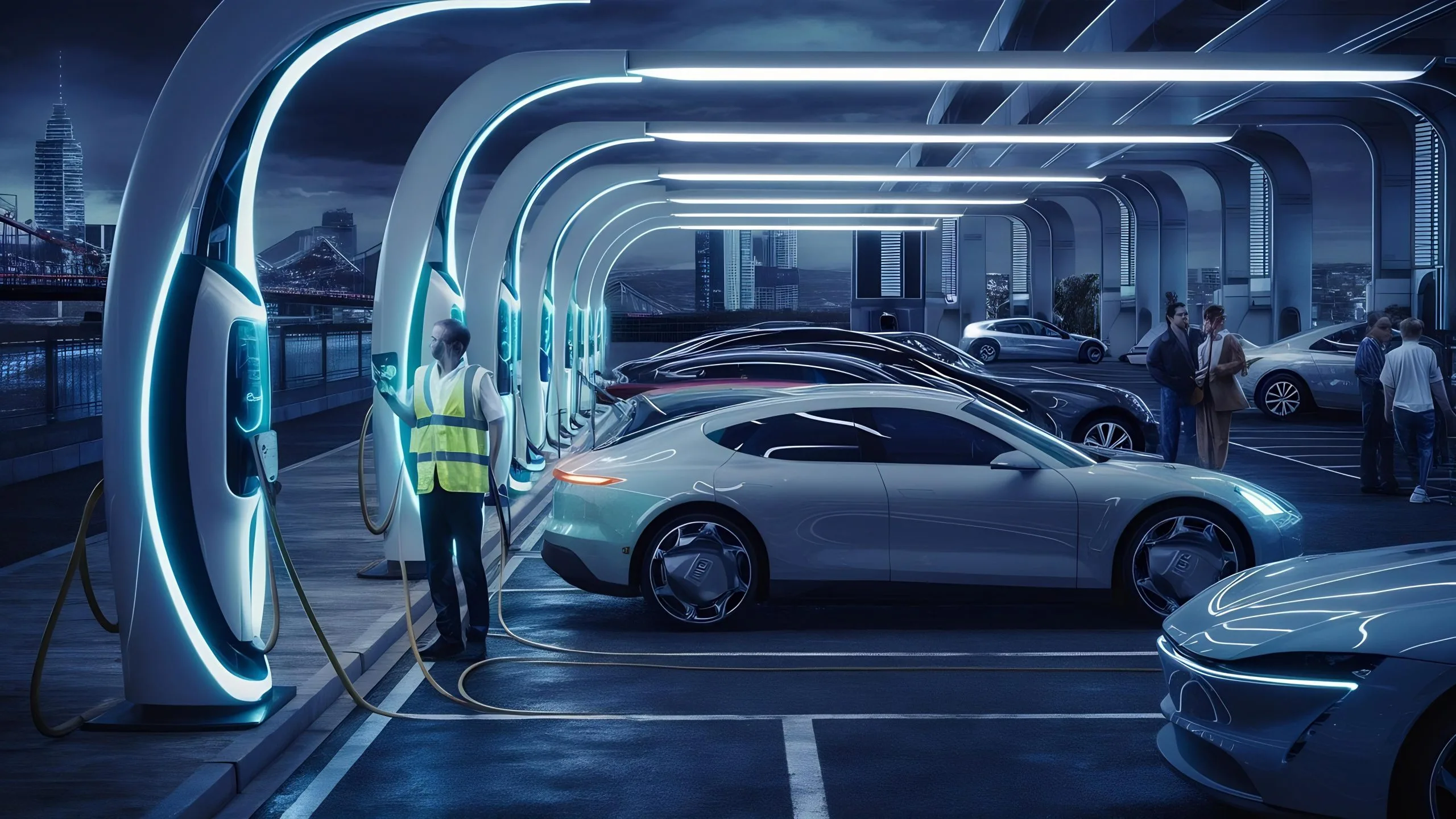
Germany’s electric vehicle (EV) market is undergoing a structural transformation, positioning itself as one of Europe’s largest and fastest-growing EV ecosystems. In 2025 alone, over 545,000 battery electric vehicles (BEVs) were sold, accounting for roughly 19–20% of total car sales. By early 2026, EV penetration had already reached around 22% of new car registrations, indicating accelerating adoption. Supported by strong industrial capabilities and evolving consumer demand, Germany is expected to remain a key driver of Europe’s transition toward electrified mobility through 2035.
Key Market Drivers Shaping Germany’s EV Adoption
Strong Demand Growth and Consumer Adoption
Germany has witnessed consistent growth in EV adoption, with sales increasing by over 40% in 2025 and maintaining double-digit growth momentum into 2026. Rising fuel prices and energy security concerns have further accelerated EV uptake across Europe, with Germany among the leading contributors to regional growth. Increasing awareness of sustainability and lower total cost of ownership are shifting consumer preferences toward electric mobility.
Expansion of Charging Infrastructure
Charging infrastructure development is a critical enabler of EV adoption. Germany’s EV charging infrastructure market is projected to grow at a CAGR of over 20% through the early 2030s, with revenues expected to reach nearly USD 5 billion by 2033. The rapid deployment of fast chargers is reducing range anxiety and improving convenience, particularly for long-distance travel.
Strong Domestic Automotive Ecosystem
Germany remains a global automotive hub, ranking as the second-largest EV producer worldwide in 2025. Established OEMs such as Volkswagen, BMW, and Mercedes-Benz are investing heavily in electrification, while new entrants—including Chinese manufacturers—are intensifying competition. This strong industrial base ensures innovation, scale, and supply chain resilience, supporting long-term market growth.
Government Policies and Strategic Initiatives Accelerating EV Adoption in Germany
The German government continues to promote EV adoption through financial incentives, regulatory frameworks, and infrastructure investments. Subsidies targeting low- and middle-income consumers, along with EU-wide emission regulations, are key demand drivers. Additionally, policies supporting renewable energy integration and charging network expansion are reinforcing the transition toward clean mobility.
Competitive Dynamics and Key Players Shaping Germany’s EV Market
The market is highly competitive, led by domestic OEMs such as Volkswagen Group, BMW, and Mercedes-Benz. However, international players—particularly Chinese brands like BYD—are gaining traction, with rising consumer interest and market share growth in 2026. Competition is increasingly centered on pricing, battery technology, and software capabilities, reshaping the traditional automotive hierarchy.
Key Challenges and Structural Barriers Impacting EV Market Expansion
High Vehicle Costs
Despite strong growth, EV affordability remains a barrier. High upfront costs continue to limit adoption among middle-income consumers, slowing the pace of mass-market penetration.
Policy Uncertainty and Subsidy Dependence
Fluctuations in government incentives have historically impacted demand. The withdrawal or restructuring of subsidies can create short-term market volatility, highlighting the sector’s dependence on policy support.
Future Outlook
Looking ahead to 2035, Germany’s EV market is expected to achieve significant penetration, potentially dominating new car sales as internal combustion engine (ICE) vehicles phase out under EU climate targets. Continued investments in battery technology, charging infrastructure, and localized manufacturing will drive cost reductions and adoption. With EV share already approaching one in four new cars in 2026, Germany is on track to become a fully electrified automotive market over the next decade, reinforcing its leadership in Europe’s clean mobility transition.
Consultants at Nexdigm, in their latest publication “Germany Electric Vehicle Market Outlook to 2035,” analyze the sector by System Type (Battery Electric Vehicles, Plug-in Hybrid Electric Vehicles, Charging Infrastructure Systems, Energy Storage Systems), By Platform Type (Passenger Vehicles, Commercial Vehicles, Two-Wheelers), and By Fitment Type (On-premise Solutions, Cloud-based Solutions, Hybrid Solutions). Nexdigm suggests that businesses should align their strategies with evolving market dynamics, including regulatory shifts, technological advancements, and changing consumer preferences, to remain competitive in the rapidly expanding EV ecosystem.
To take the next step, simply visit our Request a Consultation page and share your requirements with us.
Harsh Mittal
+91-8422857704