

Global expansion today is not just finding new customers. Businesses must continually evaluate where to export, source products, and establish supply chain networks to remain competitive. However, making these decisions based on market size or cost advantages can lead organizations to unexpected risks, regulatory challenges, and operational inefficiencies.
A trade-led decision framework provides a more strategic approach. By leveraging trade intelligence, market data, and supply chain insights, businesses can identify opportunities that align with their commercial objectives while reducing potential risks. This enables organizations to make informed decisions about where to import or export.
Why Traditional Decision-Making Is Not Enough
Earlier businesses often chose markets based on indicators such as GDP growth, labor costs, or customer demand. While these factors remain important, they do not provide complete information about market insights. Business environment is often affected by:
- Rapidly changing trade policies
- Evolving customer preferences
- Global supply chain disruptions
- Shifts in sourcing destinations
- Geopolitical developments
- Competitive market dynamics
As a result, organizations need a more comprehensive framework that uses trade intelligence into decision-making.
Using Trade Intelligence to Find the Right Market
Selecting the right market requires more than identifying demand. Businesses must evaluate whether market conditions support sustainable growth and long-term profitability, aligning with their objectives. Trade intelligence provides a structured approach to assessing the right market by analyzing multiple factors, including:
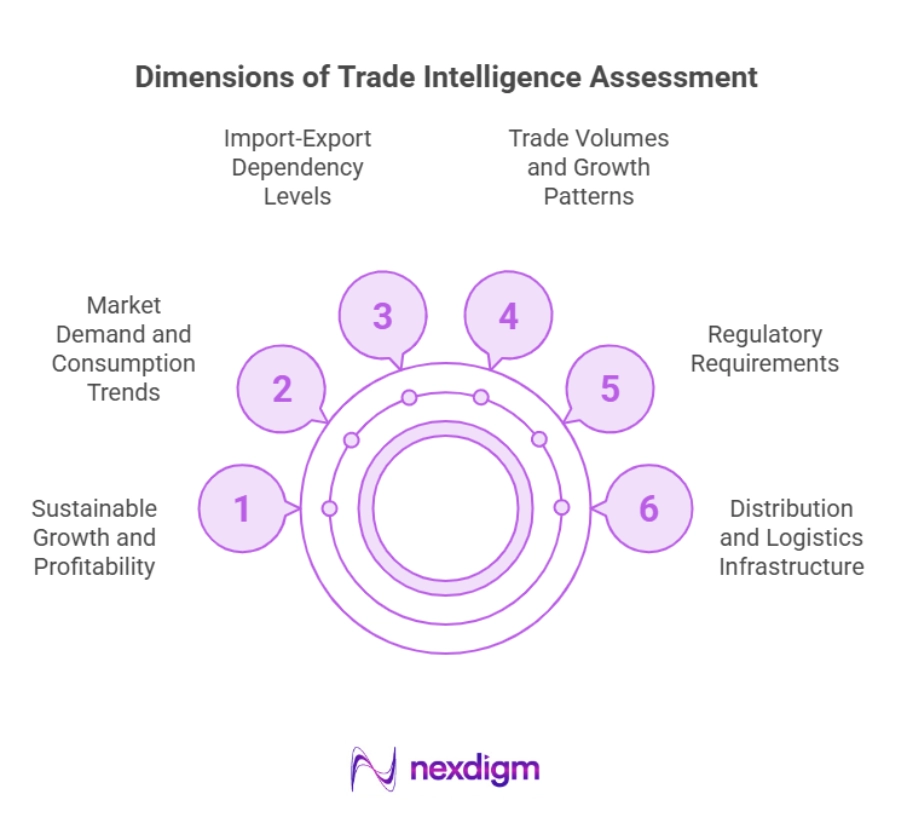
- Market demand and consumption trends: Analyzing purchasing patterns, consumption levels, and demand growth helps businesses identify markets with strong potential for sustainable sales growth.
- Import-Export dependency levels: Understanding a country’s dependence on imports or exports helps businesses assess market opportunities, competitive pressures, and supply-demand gaps.
- Trade volumes and growth patterns: Evaluating historical and current trade data helps identify expanding markets, emerging opportunities, and industries experiencing sustained growth.
- Regulatory requirements: Assessing trade regulations, customs procedures, certifications, and compliance obligations help businesses avoid delays, penalties, and market entry challenges.
- Distribution and logistics infrastructure: Evaluating transportation networks, warehousing capabilities, and supply chain efficiency helps ensure smooth product movement and reliable market access.
Analyzing such factors can help businesses identify the right market where demand is growing, and continue to rise, indicating opportunities for traders to establish a strong presence.
Trade Intelligence for Making Import and Export Decisions
Successful export and import decisions require businesses to evaluate multiple factors. Organizations must assess trade conditions, operational feasibility, and long-term growth potential to make informed decisions. Key considerations for making decisions include:
- Market demand and consumption trends
- Import-export volumes and growth patterns
- Supplier and buyer networks
- Production and supply capacity
- Trade agreements and market access
- Tariff and duty implications
- Regulatory and customs requirements
How Nexdigm Helps Businesses Make Informed Trade Decisions
Turning trade data into actionable business strategies requires specialized expertise. Nexdigm helps organizations evaluate export, import, and sourcing opportunities through a combination of trade intelligence, regulatory insights, and operational guidance. Nexdigm’s Support include:
- Competitor and trade flow analysis: Nexdigm analyzes competitor activities, shipment patterns, and trade flows to help businesses understand market dynamics, identify opportunities, and strengthen their competitive positioning.
- Supplier and sourcing intelligence: By evaluating supplier ecosystems, sourcing locations, and trends, Nexdigm helps organizations identify reliable partners and build resilient supply chains.
- Trade trend monitoring: Nexdigm tracks evolving trade patterns, industry developments, and market shifts, enabling businesses to anticipate changes and adapt their strategies proactively.
- Regulatory and compliance advisory: Nexdigm provides guidance on customs regulations, trade policies, certifications, and compliance requirements, helping businesses navigate cross-border operations with greater confidence.
- Risk assessment and mitigation planning: The team assesses economic, geopolitical, supply chain, and operational risks to help organizations develop proactive mitigation strategies and improve business resilience.
By combining trade intelligence with practical insights, Nexdigm helps organizations make informed decisions that support sustainable expansion and long-term value creation.
Nexdigm’s Case
Using Nexdigm’s real-time trade intelligence, an industrial products company assessed export demand, import dependencies, and supplier concentration across six markets. The analysis identified two priority countries, reduced sourcing costs by 14%, shortened supplier discovery by 35%, and helped the business enter its selected market four months faster.
To take the next step, simply visit our Request a Consultation page and share your requirements with us.
Harsh Mittal
+91-8422857704