

Global shipping corridors change as trade demand, infrastructure, carrier networks and geopolitical conditions evolve. A corridor may gain traffic because production is shifting toward a new origin, regional trade is expanding or established routes have become less reliable. For shipping businesses and cargo owners, the challenge is determining which changes are likely to persist and what they mean for capacity, cost and market access.
Identify Emerging Trade Corridors
A corridor should be assessed through cargo movement rather than headlines alone. Track origin-destination volumes, shipment frequency, port connectivity and the mix of products being transported. Compare several periods to determine whether activity is sustained or reflects a temporary diversion.
UNCTAD’s 2025 maritime review reported that global maritime trade growth was expected to slow to 0.5% in 2025 after growing 2.2% in 2024. Yet rerouting around disrupted corridors increased ton-mile demand by approximately 6% in 2024. This shows how shipping demand can shift geographically even when underlying trade volumes are growing more slowly.
The distinction matters for capacity planning. Longer voyages can absorb more vessel time, while a new corridor may need additional port handling, inland transport or transshipment services before it becomes a reliable alternative.
Evaluate Connectivity And Capacity
Emerging corridors need more than cargo demand. They require suitable port infrastructure, regular services, adequate handling capacity and practical connections to final markets.
UNCTAD’s liner shipping connectivity data provides a way to compare how well economies are linked to global container services. Its maritime connectivity insights also show the importance of regional hubs and strategically positioned ports. These indicators are useful starting points, but route-level analysis still needs cargo volumes, schedules and costs.
Review the following factors:
- Cargo Growth: Identify sustained increases in volume and shipment frequency.
- Service Availability: Examine sailing frequency, direct links and transshipment options.
- Port Constraints: Track waiting times, dwell periods, handling capacity and schedule disruption.
- Inland Access: Assess rail, road, border and warehouse connections beyond the port.
- Commercial Cost: Compare freight, handling, inventory and delay-related costs.
Separate Commercial Opportunity From Exposure
Effective global shipping trade analysis combines corridor-level cargo flows, port performance, connectivity and cost data to identify routes worth developing and constraints that could undermine them.
A route with rising cargo volumes may create opportunities for new services, equipment deployment or warehouse capacity. But it may also face congestion, insufficient return cargo or unreliable onward connections. These risks can make a growing corridor difficult to serve profitably.
Companies should model alternative conditions before committing resources. Consider what happens if volumes fall, freight rates rise, a transshipment hub becomes constrained or a direct service is withdrawn. Capacity investment is more defensible when it remains viable under several realistic scenarios.
The Global Shipping Corridor Assessment Framework
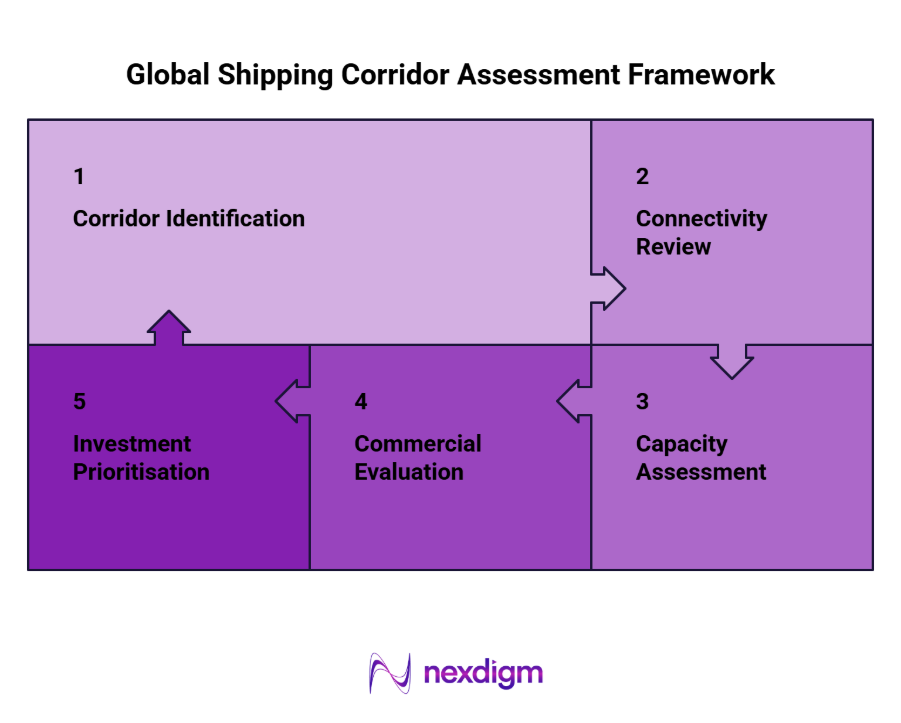
- Corridor Identification: Map cargo flows, origin-destination pairs and changes in trade volume.
- Connectivity Review: Assess ports, carrier services, transshipment options and inland links.
- Capacity Assessment: Identify vessel, terminal, warehouse and transport constraints.
- Commercial Evaluation: Compare total costs, reliability, service demand and return-cargo potential.
- Investment Prioritisation: Select corridors for capacity expansion, partnerships or closer monitoring.
Case Study: Assessing A New Shipping Corridor
A freight operator assessed three corridors after observing changes in monthly cargo movements. One route showed rising volumes but limited return cargo, while another offered more consistent service and better inland connections. The operator prioritised a controlled capacity commitment on the second corridor and monitored the first for further growth.
To take the next step, simply visit our Request a Consultation page and share your requirements with us.
Harsh Mittal
+91-8422857704