

Grain sourcing decisions are influenced by changing production estimates, international trade flows, harvest schedules, and regional supply conditions. The USDA’s November 2026 WASDE report projects global grain trade at approximately 524.3 million metric tons for 2026/27, while global grain production is forecast at 2.95 billion metric tons.
Meanwhile, the FAO Cereal Price Index declined 4.5% in October 2026, reflecting weaker wheat and maize prices. These developments highlight the importance of monitoring market fundamentals alongside supplier availability. Grain sourcing strategy research helps buyers understand regional supply opportunities, compare suppliers, assess procurement risks, and plan purchases around harvest cycles and changing market conditions.
Why Grain Sourcing Decisions Change Across Regions and Seasons
Grain availability is rarely consistent across sourcing markets. Production volumes, crop quality, weather conditions, export policies, and harvesting schedules influence when and where buyers can procure specific commodities. Seasonal supply peaks may create purchasing opportunities, while transportation constraints or export restrictions can affect delivery timelines. Understanding these regional and seasonal differences is essential to building a flexible sourcing strategy.
Variables That Shape Grain Procurement Planning
Before developing a sourcing approach, buyers need to establish the market and procurement conditions that influence their requirements:
- Regional Supply Availability: Examine production forecasts, exportable surpluses, domestic consumption, and competing demand across potential sourcing origins.
- Harvest and Purchase Timing: Align procurement schedules with harvesting periods, seasonal availability, storage capacity, and expected market movements.
- Supplier and Logistics Reliability: Consider supplier capacity, delivery consistency, transportation routes, port infrastructure, and contractual flexibility.
Together, these factors help buyers establish sourcing priorities and identify potential constraints before committing to procurement arrangements.
Nexdigm’s View on Building a More Informed Grain Sourcing Strategy
The experts of Nexdigm help agribusinesses, food processors, grain traders, and procurement teams understand the commercial landscape behind grain sourcing. Our research examines regional production patterns, supplier markets, trade movements, pricing indicators, and sourcing conditions across selected commodities. By connecting market intelligence with procurement requirements, we help businesses identify relevant sourcing markets and evaluate opportunities across different origins and supplier categories.
Mapping Regional Grain Opportunities Through Nexdigm’s Research Services
A sourcing decision often begins with understanding which markets can meet a buyer’s volume, quality, and delivery requirements. Our grain sourcing strategy research helps organizations examine potential grain origins through:
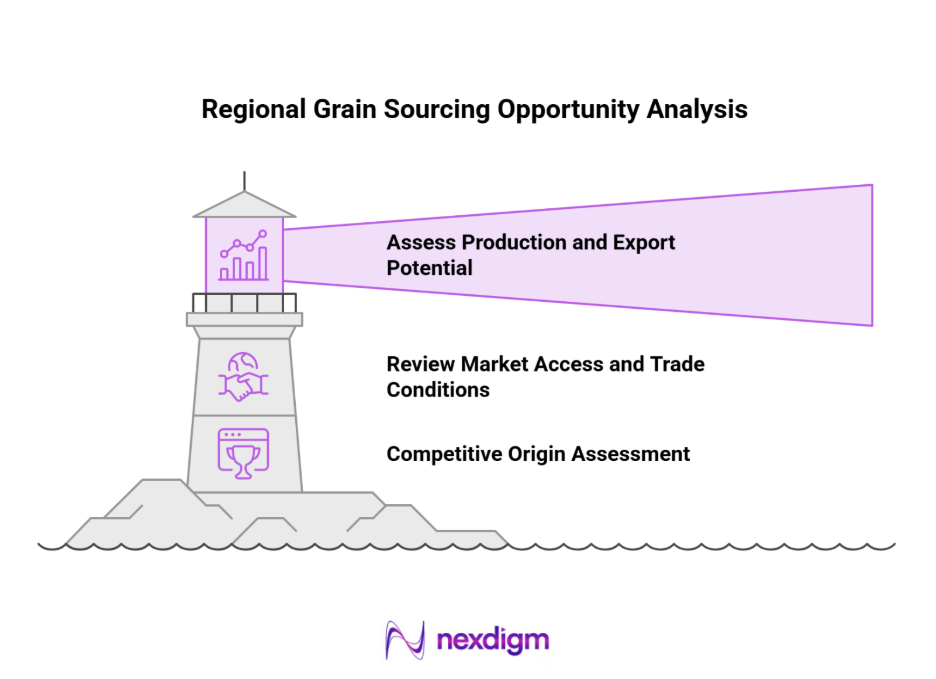
- Production and Export Potential: Assess regional output, export volumes, production forecasts, and availability of wheat, maize, rice, barley, and other grains.
- Market Access and Trade Conditions: Examine export policies, trade restrictions, tariffs, port infrastructure, and cross-border transportation considerations.
- Competitive Origin Assessment: Compare sourcing markets based on supply availability, price indicators, quality specifications, and geographical advantages.
This origin-level understanding helps buyers identify promising markets before evaluating individual suppliers.
How Nexdigm Connects Harvest Cycles with Procurement Planning
Production and harvesting calendars influence grain availability, pricing, and purchasing conditions. Our experts examine seasonal production patterns and historical supply movements to help businesses align procurement with market conditions. Our research considers four important aspects:
- Tracking Regional Harvest Calendars: Examine crop-specific harvesting periods across sourcing regions to identify when new grain supplies are likely to enter the market.
- Assessing Seasonal Availability: Evaluate production estimates, exportable surpluses, and inventory levels to understand potential supply variations across procurement periods.
- Identifying Procurement Windows: Compare harvest timing, historical price movements, and market availability to identify potentially favorable purchasing periods.
- Aligning Supply with Consumption Needs: Consider storage capacity, inventory requirements, delivery schedules, and production demand when structuring procurement timelines.
This approach helps businesses anticipate seasonal supply changes, plan purchases more effectively, and reduce dependence on limited procurement windows.
Nexdigm’s Case
A food processing company sought to improve wheat and maize procurement across international markets. Nexdigm assessed 27 suppliers across five sourcing regions, examining seasonal availability, pricing, and logistics. The analysis found that 30% had limited seasonal supply flexibility, while 22% showed significant delivery constraints. The company prioritized alternative suppliers and adjusted its sourcing priorities.
To take the next step, simply visit our Request a Consultation page and share your requirements with us.
Harsh Mittal
+91-8422857704