

Automotive decarbonization is increasingly shifting upstream from vehicle use to the materials and suppliers that support production. WBCSD’s 2026 analysis notes that as powertrains decarbonize, embedded emissions in steel, aluminium, batteries, and plastics become a growing share of vehicle lifecycle emissions. For light-duty vehicles, supply-chain emissions could rise from around 20% of lifecycle emissions today to 60–70% as electrification scales.
The data challenge is equally significant. EcoVadis’ 2026 Sustainable Procurement Barometer reports that only 48% of buyers have ESG visibility across most Tier 1 suppliers, while 30% of suppliers still report no emissions data. Its 2026 Carbon Action Report also finds that companies relying on lower-reliability supplier data may underestimate Scope 3 emissions by up to 2.7 times.
For automotive organizations, green automotive supply chain analysis can help identify where emissions are concentrated, which materials and suppliers offer the greatest reduction potential, and where procurement interventions can support measurable decarbonization.
The Decarbonization Opportunity Is Moving Upstream
As vehicle tailpipe emissions decline, the carbon intensity of production becomes more visible. Steel, aluminium, battery materials, plastics, and other energy-intensive inputs can materially influence the overall footprint of a vehicle. WBCSD identifies supply-chain decarbonization and circularity as complementary levers, with material efficiency, recycling, and lower-carbon production technologies offering significant reduction potential. For procurement teams, this means the decarbonization question is increasingly “What are we buying, where is it produced, and how carbon-intensive is that supply?”
Major Areas That Reveal Decarbonization Potential
A practical assessment can begin by looking across three connected areas:
- Material Hotspots: Identify steel, Aluminium, batteries, plastics, and other inputs where embedded emissions create significant reduction opportunities.
- Supplier Performance: Compare suppliers on emissions intensity, energy sources, material efficiency, recycling practices, and the quality of available carbon data.
- Sourcing Footprint: Examine production locations, logistics routes, processing stages, and regional energy profiles that influence the emissions associated with purchased components.
Together, these areas help organizations move from broad sustainability targets to specific supply-chain decarbonization opportunities.
Nexdigm’s Expertise in Green Automotive Supply Chains
Decarbonization becomes more actionable when emissions information is connected with procurement and supplier realities. Nexdigm can bring together automotive industry understanding, supplier intelligence, market research, cost analysis, and sustainability considerations to identify where supply-chain changes can create meaningful impact.
Through green automotive supply chain analysis, Nexdigm can help organizations evaluate material and supplier exposure, compare sourcing alternatives, identify emissions hotspots, and understand how decarbonization opportunities interact with cost, quality, availability, and supply security.
How Nexdigm’s Experts Assess Decarbonization Opportunities
Identifying emissions hotspots is only the starting point. Nexdigm can help connect those hotspots with practical sourcing and supplier decisions by evaluating where reductions are achievable without compromising commercial or operational requirements:
- Prioritize High-Impact Areas: Identify materials, suppliers, and processes where emissions reduction could deliver the greatest potential impact.
- Compare Decarbonization Pathways: Evaluate lower-carbon materials, suppliers, production methods, recycled inputs, and regional sourcing options against cost and availability.
- Translate Insights Into Action: Identify supplier engagement, sourcing changes, material strategies, and other interventions that can support measurable emissions reduction.
Through green automotive supply chain analysis, Nexdigm helps organizations move from understanding where emissions occur to determining where practical decarbonization action can begin.
Nexdigm’s Green Automotive Supply Chain Analysis
Nexdigm can use green automotive supply chain analysis to examine emissions across materials, suppliers, production processes, and sourcing regions, helping organizations identify where decarbonization can create the greatest impact. This is done through:
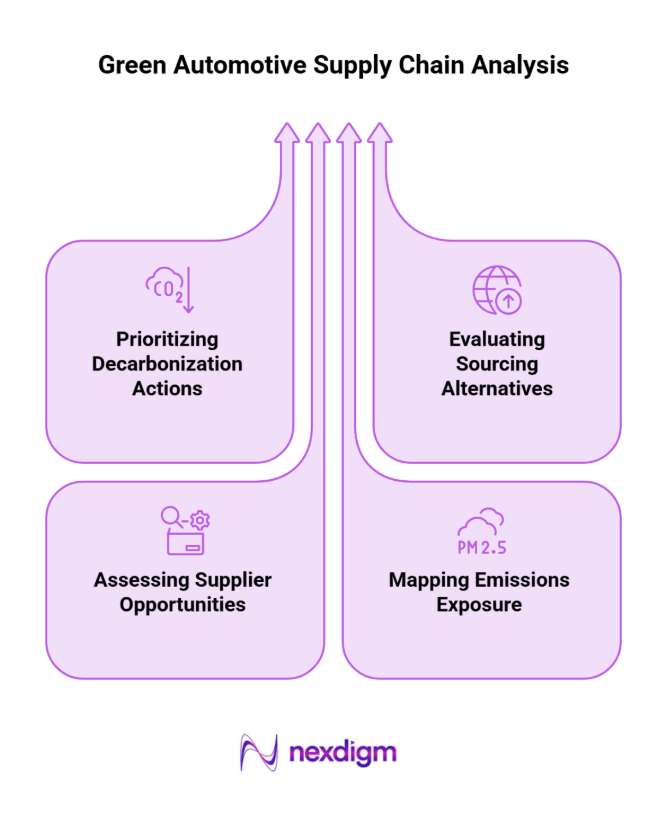
- Mapping Emissions Exposure: Identifying carbon-intensive materials, components, suppliers, manufacturing stages, and logistics activities contributing to the supply-chain footprint.
- Assessing Supplier Opportunities: Comparing suppliers based on emissions performance, energy sources, recycled content, material efficiency, and available sustainability data.
- Evaluating Sourcing Alternatives: Examining lower-carbon suppliers, materials, production locations, and circular sourcing options while considering cost, quality, capacity, and availability.
- Prioritizing Decarbonization Actions: Ranking opportunities according to emissions-reduction potential, feasibility, commercial impact, and strategic importance.
This enables organizations to move from emissions visibility to targeted sourcing and supplier actions, making decarbonization a practical part of automotive procurement strategy.
Nexdigm’s Case
An automotive manufacturer assessed 35 critical suppliers across five regions using Nexdigm’s green automotive supply chain analysis. The assessment identified 22% of supplier relationships with elevated emissions exposure and prioritized 14 opportunities across material efficiency, lower-carbon sourcing, regional alternatives, and supplier improvements. The findings helped procurement focus decarbonization efforts on areas with the greatest potential impact.
To take the next step, simply visit our Request a Consultation page and share your requirements with us.
Harsh Mittal
+91-8422857704