

Green manufacturing is moving from a sustainability objective toward a major industrial growth opportunity. The IEA estimates that the global market value of clean energy technologies reached nearly $1.2 trillion in 2025, growing at an average 20% annually over the past decade.
Investment in production assets for clean energy technologies, near-zero-emission materials, and low-emissions fuels has also reached approximately $245 billion, around three times the level five years earlier.
Meanwhile, global renewable capacity additions rose 16% to a record 800 GW in 2025, with solar accounting for more than three-quarters of new capacity. These trends are expanding demand for renewable energy equipment, energy-efficient technologies, circular production systems, low-carbon materials, and resource-efficient manufacturing.
A structured green manufacturing market assessment helps businesses identify where demand is accelerating and which opportunities offer long-term commercial potential.
Expanding Opportunities in Sustainable Manufacturing
As industries pursue decarbonization and resource efficiency goals, green manufacturing is emerging as a key area of investment and innovation. Growing adoption of clean technologies, circular production models, and low-carbon materials is creating new opportunities for manufacturers across multiple sectors while reshaping competitive dynamics and production strategies.
Key Factors Driving Green Manufacturing Demand
Several interconnected trends are influencing the growth of green manufacturing markets and shaping future investment opportunities. Such as:
- Clean Energy Adoption: Growing deployment of renewable energy technologies is increasing demand for equipment, components, and sustainable manufacturing capabilities.
- Low-Carbon Material Demand: Industries increasingly seek materials with lower environmental footprints to support decarbonization objectives and regulatory requirements.
Together, these trends are expanding commercial opportunities across green manufacturing value chains and driving demand for sustainable industrial capabilities.
Why Green Manufacturing Market Assessment Matters
As green manufacturing markets evolve rapidly, businesses need a clear understanding of where demand is emerging and which opportunities are commercially viable. A structured assessment helps organizations evaluate market potential, technology adoption, competitive dynamics, and investment activity across different segments. This enables businesses to prioritize high-growth opportunities, align investments with sustainability trends, and make informed decisions that support long-term competitive advantage.
Understanding Green Manufacturing Opportunities With Nexdigm
As sustainability priorities reshape industrial investment, identifying attractive green manufacturing opportunities requires more than tracking growth trends. Businesses need to understand where demand is emerging, which technologies are gaining traction, and how market dynamics are evolving.
Nexdigm helps organizations evaluate these opportunities through a structured Green manufacturing market assessment of demand drivers, industry developments, investment activity, and competitive landscapes. This enables businesses to identify green manufacturing segments with stronger commercial potential and make more informed decisions on market entry, expansion, and long-term growth.
Nexdigm’s Green Manufacturing Market Assessment Framework
As green manufacturing markets continue to evolve, businesses need a structured approach to evaluate demand, competitiveness, and long-term opportunities. Nexdigm’s Green manufacturing market assessment framework focuses on the following areas:
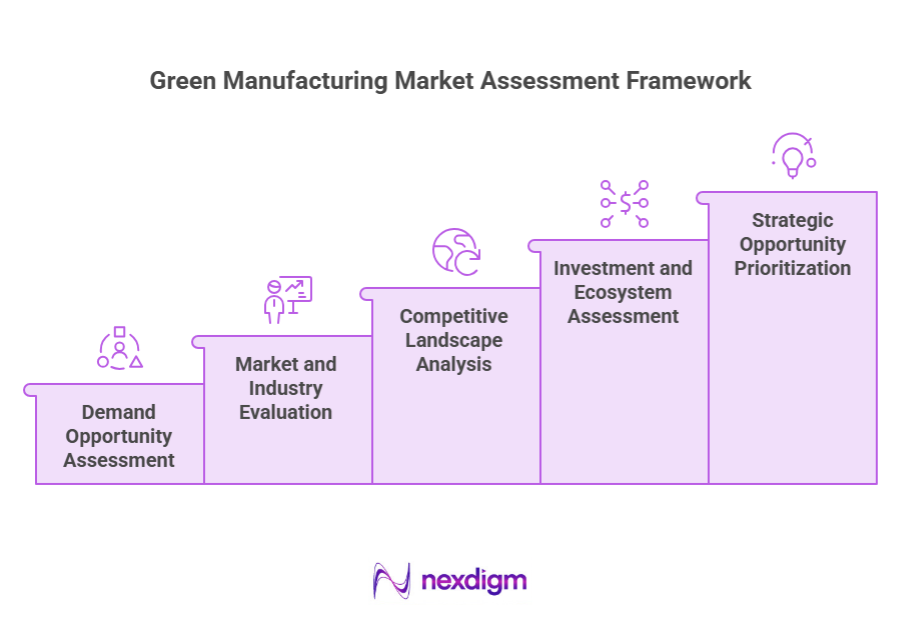
- Demand Opportunity Assessment: Evaluate demand across clean energy technologies, resource-efficient solutions, low-carbon materials, circular economy applications, and emerging sustainability-driven industries to identify areas with stronger commercial potential and growth prospects.
- Market and Industry Evaluation: Analyze market size, growth outlook, technology adoption trends, policy developments, regulatory frameworks, and sustainability priorities that influence demand across green manufacturing markets.
- Competitive Landscape Analysis: Assess key competitors, market positioning, innovation capabilities, strategic initiatives, product offerings, and competitive intensity to understand market structure and potential differentiation opportunities.
- Investment and Ecosystem Assessment: Examine investment activity, funding trends, supply-chain capabilities, technology ecosystems, industry partnerships, and supporting infrastructure that contribute to green manufacturing market development.
- Strategic Opportunity Prioritization: Identify and rank opportunities based on market attractiveness, growth potential, competitive conditions, business capabilities, and alignment with long-term investment objectives.
Through this structured framework, Nexdigm helps businesses evaluate emerging green manufacturing opportunities and make informed decisions that support sustainable growth and competitive advantage.
Business Impact of Nexdigm’s Green Manufacturing Assessment Framework
A structured market assessment helps businesses move beyond sustainability objectives and identify commercially attractive growth opportunities. By evaluating demand, competition, investment activity, and market readiness, Nexdigm offers businesses with:
- Improved Opportunity Identification: Helps businesses identify green manufacturing segments with stronger demand potential, commercial viability, and long-term market growth prospects.
- Better Investment Prioritization: Supports capital allocation by highlighting opportunities that align with business capabilities, sustainability goals, and strategic objectives.
- Reduced Market Entry Risk: Provides a clearer understanding of market dynamics, competitive conditions, and industry challenges before committing resources.
- Stronger Competitive Positioning: Enables businesses to align products, technologies, and capabilities with evolving sustainability-driven customer and industry requirements.
By translating market intelligence into actionable business insights, Nexdigm helps organizations pursue green manufacturing opportunities with greater confidence and strategic clarity.
Why Businesses Choose Nexdigm
Businesses choose Nexdigm for its ability to combine market intelligence, sustainability trends, industry expertise, and strategic advisory into actionable insights. By evaluating demand opportunities, competitive dynamics, investment activity, and ecosystem readiness, Nexdigm helps organizations identify attractive green manufacturing opportunities and make informed decisions that support sustainable growth and long-term competitiveness.
Nexdigm’s Case
Nexdigm supported an industrial client assessing green manufacturing opportunities across clean energy, resource efficiency, and low-carbon production. The assessment evaluated 12 market segments, screened 25+ demand indicators, and identified high-potential opportunities, helping prioritize investments and focus market-entry efforts on the strongest growth areas.
To take the next step, simply visit our Request a Consultation page and share your requirements with us.
Harsh Mittal
+91-8422857704